The Twelve Sacred Hills of Imerina, Explained
This article contains affiliate links. We may earn a small commission at no extra cost to you if you book through them.
By Jordan Lamont · Last updated 6 October 2026
At a Glance
- What they are: twelve hills of the Imerina highlands sacred to the Merina people
- Consecrated by: King Andrianampoinimerina (late 1700s), building on a set from King Andrianjaka (early 1600s)
- Why they matter: former capitals, royal birthplaces, and tomb sites — the cradle of the Merina kingdom
- Still visitable: Ambohimanga (UNESCO), Ambohidratrimo, Ilafy, Alasora and more, around Antananarivo
Say it like a local: Imerina (ee-MEH-rin); Antananarivo means “the city of the thousand,” Analamanga, its hill, “the blue forest.”
Antananarivo climbs across a cluster of steep highland hills, and to the Merina people those hills are not just geography — they are scripture written in the landscape. Twelve of them are sacred, each one a chapter in how a scattering of rival chiefdoms became the kingdom that would eventually rule most of Madagascar. Most visitors photograph the capital’s skyline without knowing they are looking at the foundation myth of a nation. Here is what the twelve hills actually mean.
A kingdom built on twelve hills
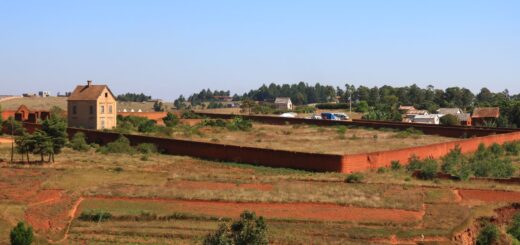
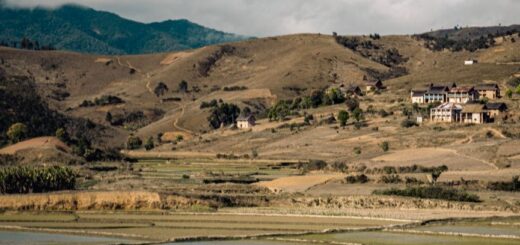
The sacred hills of Imerina are scattered across the central highlands around Antananarivo, and each earned its status for a concrete reason: it had been an ancient capital, the birthplace of an important ruler, or the tomb site of a revered political or spiritual leader. They are, in effect, the kingdom’s family album — the places where the Merina royal line was born, governed, and buried. To stand on one is to stand where Malagasy history turned.
Why twelve, and why it mattered
The number was not arbitrary. An earlier set of sacred sites had been designated by the early-17th-century king Andrianjaka, the ruler traditionally credited with founding Antananarivo. But it was the great unifier Andrianampoinimerina, at the end of the 1700s, who fixed the idea in its famous form. Twelve was a sacred number, and to seal the unity of the quarrelling Imerina chiefdoms he consecrated twelve hills — and, in the same spirit of binding rivals together, married twelve women drawn from the principal villages. The hills and the marriages were a single political act: a map of alliances made holy.
The hills you can still visit
The traditional list varies slightly by source, but it gathers the great names of early Imerina — among them Analamanga (the hill of Antananarivo itself), Ambohimanga, Ambohidratrimo, Ilafy, Alasora, Imerimanjaka, Antsahadinta and Ambohimanambola. Several remain rewarding to visit. Ambohimanga — “the blue hill” — was the spiritual heart of the kingdom and the launchpad of Andrianampoinimerina’s conquests; it is today Madagascar’s only cultural UNESCO World Heritage site. Ambohidratrimo holds royal tombs; Antsahadinta and Ilafy preserve old rova (fortified royal compounds) and sweeping highland views.
Reading a hill like a local
To a Merina visitor, a sacred hill is a stack of signs. A ring of defensive ditches and a stone disc gateway mark a royal rova. A cluster of tall, narrow tombs marks the ancestors who still, in belief, watch over the living. Sacred trees — often aviavy figs — mark where kings were proclaimed. None of it is decorative; every feature records a claim about who ruled, who descended from whom, and whose blessing the land carries. It is the opposite of a ruin: a working piece of memory.
Why it matters today
The twelve hills explain the city you fly into. Antananarivo is not laid out like a colonial grid because it did not grow from one — it grew upward and outward from a sacred hill, ringed by others that were already holy before the French arrived. Understanding them turns a chaotic-looking capital into something legible. Base yourself in the central highlands, read our Antananarivo travel guide, and give a day to Ambohimanga — the one hill that gathers the whole story into a single visitable place. For the bigger picture, start with our Madagascar travel guide.
FAQ
What are the twelve sacred hills of Imerina?
Twelve hills around Antananarivo of deep significance to the Merina — former capitals, birthplaces of rulers, or royal tomb sites — consecrated as a sacred set in the late 18th century.
Who created the twelve sacred hills?
An earlier set was designated by King Andrianjaka in the early 1600s; King Andrianampoinimerina re-sanctified and fixed twelve hills at the end of the 1700s to unify the kingdom.
Can you visit them?
Yes — several are easy day trips from Antananarivo, including Ambohimanga (a UNESCO World Heritage site) and Ambohidratrimo.
Why twelve?
Twelve was a sacred number; Andrianampoinimerina also famously married twelve women from principal villages to seal the kingdom’s unity.
Travel insurance for Madagascar
Medical evacuation from Madagascar’s interior can cost USD 30,000–80,000, so travel medical cover is worth arranging before you go. SafetyWing is the disclosed partner we mention on this site — a monthly-subscription travel medical plan. Check SafetyWing’s plans.
Plan Your Trip to Madagascar
- Read the full Madagascar Travel Guide
- Explore itineraries by style and duration
- Explore the full destination guide
Where to Stay