Wildlife-Only Madagascar Itinerary: 7 Parks in 14 Days 2026
This post contains affiliate links. We may earn a small commission at no extra cost to you.
Madagascar has more species found nowhere else on Earth than almost any other country. For wildlife-focused travellers — birders, herpers, mammal-watchers, ecologists and conservation travellers — a trip that prioritises parks over beaches is the deepest possible version of a Madagascar journey. This itinerary visits seven distinct protected areas in 14 days, covering rainforest, dry forest, spiny forest, coastal reef and highland ecosystems. You will see Indri, Aye-Aye (if timing and luck cooperate), golden bamboo lemur, fossa, chameleons in extraordinary variety, and endemic birds that your field guide has been waiting years to tick. It requires some long travel days and a high tolerance for early starts — rewards are proportionally enormous.
Recommended Gear for Your Madagascar Wildlife Trip
You’re Flying 10,000km to See Lemurs, Chameleons, and Fossa — Don’t Document It With a Phone Camera
Indri lemurs calling across the canopy of Andasibe. Panther chameleons in electric blue and orange. The fossa spotted on a night walk in Kirindy. A smartphone sensor in low rainforest light produces grainy, blurred images. The Sony a6400 with Real-Time Eye Autofocus locks onto animal eyes instantly — even through undergrowth and low light. APS-C sensor, 4K video, flip-up touchscreen.
Check current price and availability on Amazon →
Madagascar Has Over 100 Species of Lemur and 280 Species of Bird — You’ll Miss Most of Them Without Binoculars
Sifaka lemurs leap between canopy trees 30 metres up. The Madagascar fish eagle perches on a branch 200 metres across a lake. Without binoculars, you’re looking at distant shapes and taking your guide’s word for it. The Vortex Diamondback HD 10×42 delivers HD optical clarity with edge-to-edge sharpness. Waterproof, fog-proof, backed by Vortex’s unconditional lifetime warranty.
Check current price and availability on Amazon →
Madagascar Goes Completely Dark After Sunset — Don’t Navigate It Blind
Outside of Antananarivo’s main streets, Madagascar has virtually no street lighting. Wildlife walks in Ankarana, night lemur spotting in Ranomafana, the path to your bungalow — all navigated in total darkness. The Black Diamond Spot 400-R delivers 400 lumens with a 100-metre beam, USB-C rechargeable, IPX8 waterproof, with red night-vision mode for wildlife observation without disturbing animals.
Check current price and availability on Amazon →
Madagascar Has Some of the Highest Malaria Risk in the World
The rainforests of Andasibe, the wetlands of Morondava, the rice paddies outside every village — mosquitoes are relentless and bite at dusk and dawn. DEET burns skin and destroys gear. Natrapel 20% Picaridin is the CDC-recommended alternative that repels mosquitoes, ticks, and sandflies for up to 12 hours without damaging your equipment.
Check current price and availability on Amazon →
No Grid, No Problem — Charge Your Devices From the Sun in Madagascar’s Remote Parks
Marojejy. Andringitra. Tsingy de Bemaraha. Madagascar’s most spectacular parks are its most isolated — no power outlets, no phone signal. A 3-day wilderness circuit means running on whatever charge you left camp with. The BLAVOR Solar Power Bank pairs 10,000mAh with a fold-out solar panel that recharges itself from sunlight as you trek.
Check current price and availability on Amazon →
Madagascar’s Power Cuts Will Kill Your Phone — Here’s 4 Full Charges of Insurance
Délestage — Madagascar’s rolling blackouts — can last 8 to 14 hours a day. Your navigation app, offline maps, and boarding pass for tomorrow’s Tsaradia flight will all be dead. The Anker PowerCore 20,000mAh gives 4 full phone charges with fast USB-C delivery. Charge it during the hotel’s morning power window and you’re covered all day.
Check current price and availability on Amazon →
Madagascar Uses European Plugs Only — Your North American Charger Won’t Work Without This
Madagascar runs on Type C and E/F European plugs, 220V. North American plugs don’t fit. The TESSAN European adapter accepts North American plugs and adds 2 USB ports, so you can charge your phone and power bank simultaneously from a single outlet. Compact, grounded — one of those items that’s obvious in hindsight and impossible to find when you need it.
Check current price and availability on Amazon →
One Adapter for Every Country on Your Madagascar Journey — Including Stopovers in Paris or Réunion
Many travellers reach Madagascar via Paris CDG or Réunion — and face a different outlet at each stop. The GaN Universal Adapter covers all outlet types worldwide with USB-C PD fast charging — one device, 4 ports, every country. GaN technology runs cooler and charges faster than standard adapters.
Check current price and availability on Amazon →
Plan your Madagascar trip:
- Browse Madagascar tours and experiences (GetYourGuide)
- Get travel insurance for Madagascar (SafetyWing)
- World Nomads — covers adventure activities: trekking, diving, motorbikes. Compare both.
At a Glance: 7-Park Madagascar Wildlife Circuit
At a Glance
- Duration: 14 days / 13 nights
- Parks covered: Andasibe, Ranomafana, Isalo, Kirindy, Ankarafantsika, Lokobe (Nosy Be), Nosy Tanikely Marine Reserve
- Best season: September–November (dry, wildlife most active)
- Budget: €2,200–€3,800 per person (excluding international flights)
- Book guided wildlife tours now: Browse Madagascar wildlife tours on GetYourGuide
This circuit maximises species diversity by crossing five distinct biomes. Read our guide to where to see lemurs in Madagascar and Andasibe National Park before departure for pre-trip species planning.
Your 7-Park Wildlife Itinerary: Day by Day
Days 1–3: Andasibe-Mantadia — Indri and Eastern Rainforest
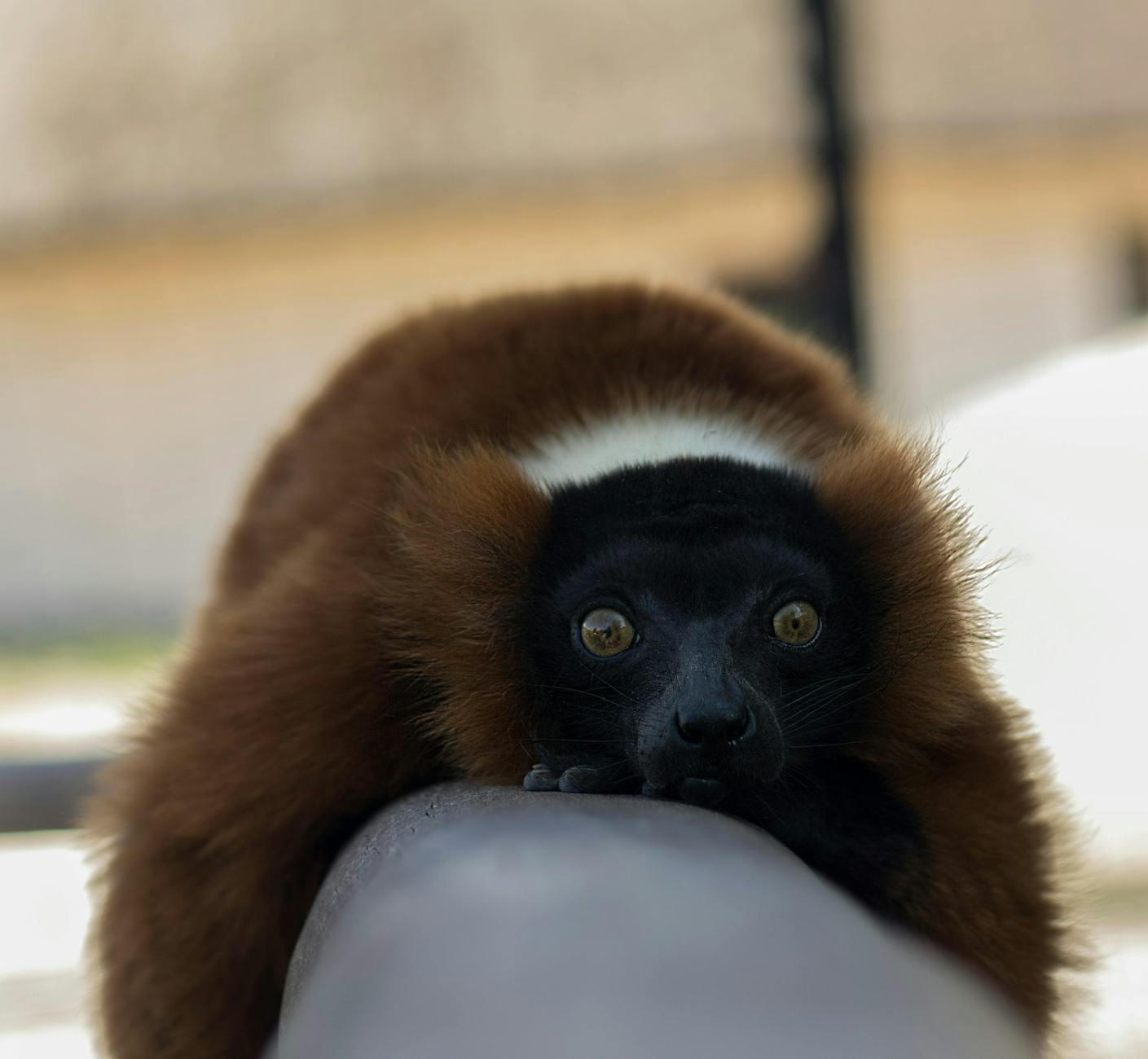
Start at Madagascar’s most rewarding wildlife destination. Two morning Indri treks in Andasibe-Mantadia National Park (Indri guaranteed with a good guide in dry season). One night walk: mouse lemurs, woolly lemurs, chameleons and sleeping birds. Add a morning at the Special Reserve for black-and-white ruffed lemurs and the remarkable variety of frogs in the thermal stream. The diversity of reptile and amphibian species at Andasibe is as extraordinary as the lemur viewing. Book guided Andasibe wildlife tours here.
Days 4–6: Ranomafana — Golden Bamboo Lemur
Drive 5 hours south to Ranomafana National Park. This park was established specifically to protect the golden bamboo lemur, discovered here in 1986. Day 4: morning and afternoon trek (guide essential — these lemurs move through dense forest and require expert tracking). Day 5: full-day deep-forest circuit targeting red-fronted brown lemur, greater bamboo lemur and Milne-Edwards’ sifaka. Night walk at the park boundary for chameleons and mouse lemurs. Day 6: morning birding with a specialist guide — Ranomafana has 115 bird species including 12 Madagascar endemics rarely seen elsewhere.
Days 7–8: Isalo — Canyon Wildlife
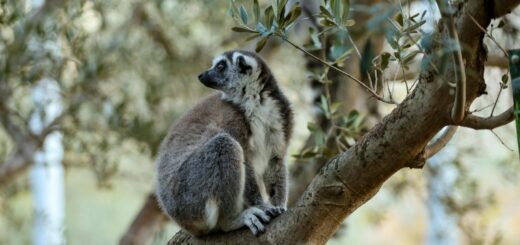
Drive to Isalo National Park (3 hours). The Isalo massif supports ring-tailed lemurs (easier to find here than almost anywhere), Verreaux’s sifaka, and a remarkable rupicoline bird community. Day 7: early morning canyon walk targeting sifaka and ring-tails. Day 8: piscine circuit and afternoon birding on the massif edge — hook-billed vanga, Madagascar kestrel and running couas are regular sightings.
Days 9–10: Kirindy Forest — Fossa and Dry Forest Lemurs
Drive north to Kirindy (4 hours). Kirindy is the best place in the world to see the fossa — Madagascar’s apex predator — in the wild. October–November (breeding season) offers the best sightings. Day 9: afternoon guided walk targeting Coquerel’s sifaka, red-tailed sportive lemur and Madame Berthe’s mouse lemur (the world’s smallest primate). Day 9 evening/night: fossa stake-out walk. Day 10: dawn walk for birds (giant coua, giant jumping rat) before driving to Morondava for the flight north.
Days 11–12: Ankarafantsika — Dry Forest Endemics
Fly from Morondava to Mahajanga (or Tana connection). Drive to Ankarafantsika National Park (1 hour from Mahajanga). This undervisited dry deciduous forest park has 11 lemur species including Coquerel’s sifaka, and the endemic brown mesite — a ground-nesting rail-like bird seen almost nowhere else. Day 12: full day birding plus lemur walk, then transfer to Mahajanga for the evening flight to Nosy Be.
Days 13–14: Lokobe Reserve and Nosy Tanikely Marine Reserve
Lokobe Reserve on Nosy Be is Madagascar’s smallest national park — but it holds the black lemur, one of the few lemur species with striking sexual dimorphism (males black, females rufous). Day 13: morning boat to Lokobe, guided forest walk with a local guide who knows the territories. Day 14: snorkelling tour to Nosy Tanikely Marine Reserve — completing the wildlife circuit in the ocean with sea turtles, hawksbill sharks and 200+ fish species. See our guide to Madagascar’s best beaches for marine wildlife context.
Read also:
Book activities in Madagascar:
Getting There and Between Parks
This circuit requires three domestic flights: Tana–Morondava or Tana–Mahajanga, and Mahajanga–Nosy Be. Book all legs on Tsaradia well in advance. For ground transport between parks (Andasibe → Ranomafana → Isalo → Kirindy), hire a private driver for the full RN7 section — taxi-brousse connections between these parks are slow and poorly timed for wildlife schedules. For car rental comparisons, use Carla. If domestic flights are disrupted, AirAdvisor handles compensation claims.
Accommodation Near Madagascar’s National Parks
Each park has lodges within walking distance of the gate. These are not luxury resorts — they are functional wildlife lodges with knowledgeable staff, good local food and the critical advantage of allowing early morning and late evening access to park trails. Book directly with lodges where possible; Andasibe and Ranomafana lodges often fill up 3–4 weeks ahead in October–November peak season. Compare baseline pricing across all Madagascar properties on Agoda.
Ready to book your Madagascar trip?
Frequently Asked Questions
What is the best park in Madagascar for wildlife?
Andasibe for overall experience (Indri, variety, accessibility). Ranomafana for serious naturalists (golden bamboo lemur, bird diversity). Kirindy for fossa. Masoala for the most biodiverse single ecosystem — but requires planning a separate expedition.
When is the best time for wildlife watching in Madagascar?
September–November is peak: dry season, lemurs active, migratory birds present, chameleons visible. October–November is fossa mating season at Kirindy. July–September adds whale watching at Île Sainte-Marie if incorporating the coast.
Do I need a guide in Madagascar’s national parks?
Yes — guides are mandatory in all ANGAP-managed parks and strongly recommended in all others. A good guide dramatically increases species sightings; an average guide means missing 80% of what is present.
Can I see the Aye-Aye in Madagascar?
The Aye-Aye is nocturnal and extremely cryptic. The best chance is Aye-Aye Island near Mananara or the Vohimana Reserve near Andasibe. It requires specific advance booking with specialist guides and is not guaranteed.
Is 14 days enough to visit 7 parks?
Yes, with efficient logistics. The key is booking transport between parks in advance (especially the domestic flights) and not trying to do full-day treks in every park. One key trek per park is better than rushing through two.
Seven parks in 14 days is ambitious, rewarding and genuinely exhausting in the best possible way. Madagascar’s wildlife is not a show performed for tourists — it is a living ecosystem that requires patience, early starts and excellent guides to reveal itself. When it does, there is nothing else like it on Earth. Before departure, get comprehensive travel insurance that covers remote wilderness: SafetyWing Nomad Insurance includes emergency evacuation from national parks and remote reserves — essential coverage for any serious wildlife trip.
Start planning your Madagascar adventure today
Browse Madagascar experiences on GetYourGuide
Affiliate link – commission earned at no extra cost to you.
Plan Your Trip to Madagascar
- Read the full Madagascar Travel Guide
- Explore itineraries by style and duration
- Best Tours and Guided Experiences
Where to Stay