Honey and Ylang-Ylang: the Scented Harvests of Nosy Be
This article contains affiliate links. We may earn a small commission at no extra cost to you if you book through them.
By Jordan Lamont · Last updated 10 October 2026
At a Glance
- The island: Nosy Be, off northwest Madagascar — “l’ile aux parfums”
- The star crop: ylang-ylang, a cornerstone of French perfumery
- The ratio: ~50 kg of flowers to distil ~1 kg of essential oil
- The other harvest: rare Malagasy honeys from an endemic bee
- Stay: Nosy Be guide · Nosy Be hotels on Agoda
Say it like a local: Nosy Be (NOO-see BEH) — literally “big island”; ylang-ylang (EE-lang EE-lang) — the perfume flower.
Pilots who fly into Nosy Be like to say you can smell the island before you land. On warm evenings the air over Madagascar’s northwest carries a heavy, sweet, almost narcotic sweetness — the scent of thousands of ylang-ylang trees in flower. It is the smell of fine perfume, drifting off a tropical island most of the world has never heard of. This is the story of the two sweet harvests that define Nosy Be: the flower that scents the world, and the rare honeys of an island few outsiders ever taste.
The Perfume Island
Nosy Be is Madagascar’s best-known island, a volcanic dot off the northwest coast ringed by beaches and clove, coffee and cocoa plantations. But its lasting nickname is “l’ile aux parfums” — the island of perfumes — and that comes down to one crop. Nosy Be, together with the nearby mainland region of Ambanja, is the heart of Madagascar’s ylang-ylang industry: dozens of family plantations and hundreds of smaller orchards of the curious, drooping-petalled tree whose flowers are among the most valuable in perfumery.
Ylang-ylang (from a Tagalog phrase meaning roughly “flower of flowers”) is not native to Madagascar at all. The tree originates in the islands of Southeast Asia, probably the Philippines, and was carried west across the Indian Ocean in the age of empire. It took root on Nosy Be beautifully — and today Madagascar, with the neighbouring Comoros, is one of the world’s leading sources of ylang-ylang essential oil.
From a flower to Chanel No. 5
What makes ylang-ylang matter is what happens after the harvest. The oil is one of the classic building blocks of French perfumery, famously associated with Chanel No. 5 and used by houses from Guerlain to Dior. That heady, creamy-floral note you cannot quite place in an expensive scent may well have started life on a hillside above Hell-Ville.
Getting it out of the flower is slow, exacting work. The blooms are picked by hand, usually in the cool of early morning when the fragrance is strongest, and then steam-distilled in simple copper stills. The yield is tiny: it takes roughly 50 kilograms of flowers to produce about 1 kilogram of essential oil. The first, most prized fraction of the distillation — “extra” grade — commands the highest prices; later fractions go into soaps and cheaper fragrances. Stand near a working still and the whole clearing smells like the inside of a perfume bottle.
A scent the colonists planted
Ylang-ylang is a relatively recent arrival. It was established on Nosy Be and across northern Madagascar in the 1920s, under French colonial rule, as a cash crop for the European perfume trade. It landed on fertile ground — quite literally. Nosy Be had already been a plantation island: for a long stretch it was a major centre of sugarcane and its by-products, sugar and rum (the island’s Dzama rum is still well known). As sugar faded, tourism and ylang-ylang rose to take its place, and the flower became the island’s signature.
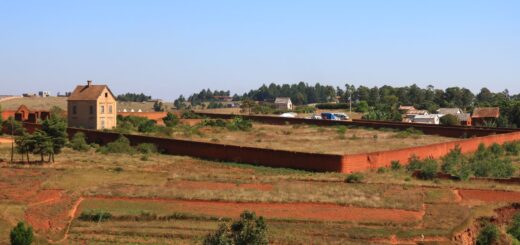
That history is why the landscape looks the way it does — not wild jungle but a worked, fragrant countryside of plantations, where the same families have tended the same trees for generations. If you are drawn to Madagascar’s aromatic crops, the island’s other great export story is told in our guide to Madagascar vanilla from the SAVA region.
The island’s other sweet harvest
There is a second, quieter harvest on Madagascar, and it is just as distinctive: honey. The island has its own endemic honeybee, Apis mellifera unicolor — a robust, relatively gentle bee found nowhere else, which pollinates a huge share of Madagascar’s unique plants as well as export crops like lychee.
Because the island’s ecosystems flower in overlapping waves, Malagasy beekeepers can take up to four honey harvests a year, where a single harvest is the global norm; a healthy hive yields anywhere from 10 to 60 kilos. The result is a run of honeys you will not find on an ordinary shelf — lychee honey, delicate and rose-scented; plus mangrove, rosewood and jujube honeys, each carrying the flavour of a different Malagasy forest. Like ylang-ylang and the island’s Christmas lychee, honey is one of the sweet, scented harvests that connect a small Malagasy grower to a shelf on the other side of the world.
Why it matters today
Nosy Be’s perfume and the island’s rare honeys tell the same story: Madagascar’s gift for turning its climate and isolation into things the rest of the world cannot easily make. A bottle of ylang-ylang oil or a jar of lychee honey is a souvenir with a real place behind it — and a reminder that this island feeds the world’s senses far more than its profile suggests. Discover more in our guide to what Madagascar really eats.
See it for yourself — Nosy Be is Madagascar’s main northwest island, reached by flight to Fascene or by road and ferry via Ankify. Several small distilleries near Hell-Ville welcome visitors in the picking season.
- Where to stay on Nosy Be (Agoda) — book ahead for the July–September peak
- Nosy Be tours & plantation visits on GetYourGuide
- Compare car rental on Carla
FAQ
Why is Nosy Be called the Perfume Island?
For its ylang-ylang. Nosy Be and the nearby Ambanja region are the heart of Madagascar’s ylang-ylang industry, and the sweet scent of the flower earned the island the nickname “l’ile aux parfums” — the island of perfumes.
Is Nosy Be ylang-ylang really used in Chanel No. 5?
Ylang-ylang is one of the classic ingredients of fine perfumery and is famously associated with Chanel No. 5, as well as fragrances by houses such as Guerlain and Dior. Much of the world’s ylang-ylang oil comes from Madagascar and the neighbouring Comoros.
How is ylang-ylang oil made?
The flowers are hand-picked, usually early in the morning, and the oil is extracted by steam distillation. It takes roughly 50 kilos of flowers to produce about 1 kilo of essential oil, which is part of why it is so prized.
What kinds of honey does Madagascar produce?
Thanks to its endemic honeybee and unusual flora, Madagascar produces honeys found almost nowhere else — lychee, mangrove, rosewood and jujube among them. Its ecosystems allow up to four harvests a year, where one is the global norm.
Travel insurance for Madagascar
Medical evacuation from Madagascar’s interior can cost USD 30,000–80,000, so travel medical cover is worth arranging before you go. SafetyWing is the disclosed partner we mention on this site — a monthly-subscription travel medical plan. Check SafetyWing’s plans.
Sources
Plan Your Trip to Madagascar
- Read the full Madagascar Travel Guide
- Explore itineraries by style and duration
- Explore the full destination guide
Where to Stay