Madagascar vs Kenya: Which Is Better for Wildlife in 2026?
This post contains affiliate links. We may earn a small commission at no extra cost to you.
At a Glance
- Madagascar headline: ~107 lemur species, 250+ endemic reptiles, 96% of mammals found nowhere else
- Kenya headline: Big Five megafauna in classic savanna — Masai Mara wildebeest migration July to October
- Daily wildlife budget (mid-range): Madagascar $90 to $140, Kenya $250 to $450 per person per day
- Flight access from Europe: Kenya 8 hours direct from Paris/London; Madagascar 11 to 14 hours with stop
- Flight delays or cancellations: Check your EC 261 claim free on AirAdvisor
- Hotels in Antananarivo: Compare on Agoda
- Trip insurance for both: SafetyWing
🐿 Wildlife-Watching Gear for Madagascar
The right kit turns a good wildlife trip into a great one:
- 8×42 binoculars — essential for spotting lemurs and chameleons in the canopy. See on Amazon →
- Rechargeable headlamp — essential for night walks; red mode won’t disturb wildlife. See on Amazon →
- Trekking poles — ultralight support for long park hikes. See on Amazon →
- Hiking daypack — comfortable pack for water, camera and layers. See on Amazon →
- Picaridin insect repellent — DEET-free protection against malaria mosquitoes. See on Amazon →
As an Amazon Associate we earn from qualifying purchases.
Madagascar and Kenya answer two different wildlife questions. Kenya gives you the iconic African safari at well-developed lodges and tour networks. Madagascar gives you endemic species you cannot see anywhere else on Earth, at roughly half the daily cost. The right answer in 2026 depends on whether you prioritise familiar Big Five sightings or genuine endemism — this guide breaks down both sides on cost, access, wildlife density and ease.
Wildlife: Endemism vs Iconic Big Five
Kenya delivers the safari postcard. In a single morning game drive in the Masai Mara you can realistically see lion, elephant, cape buffalo, giraffe, zebra, hippo, and at least one big cat hunt scene per three-day stay. Leopard and rhino take more effort. The wildebeest migration (July to October) is genuinely spectacular and crosses the Mara River with crocodiles. Density is the Kenyan strength: you sit in one vehicle and the animals come to you.
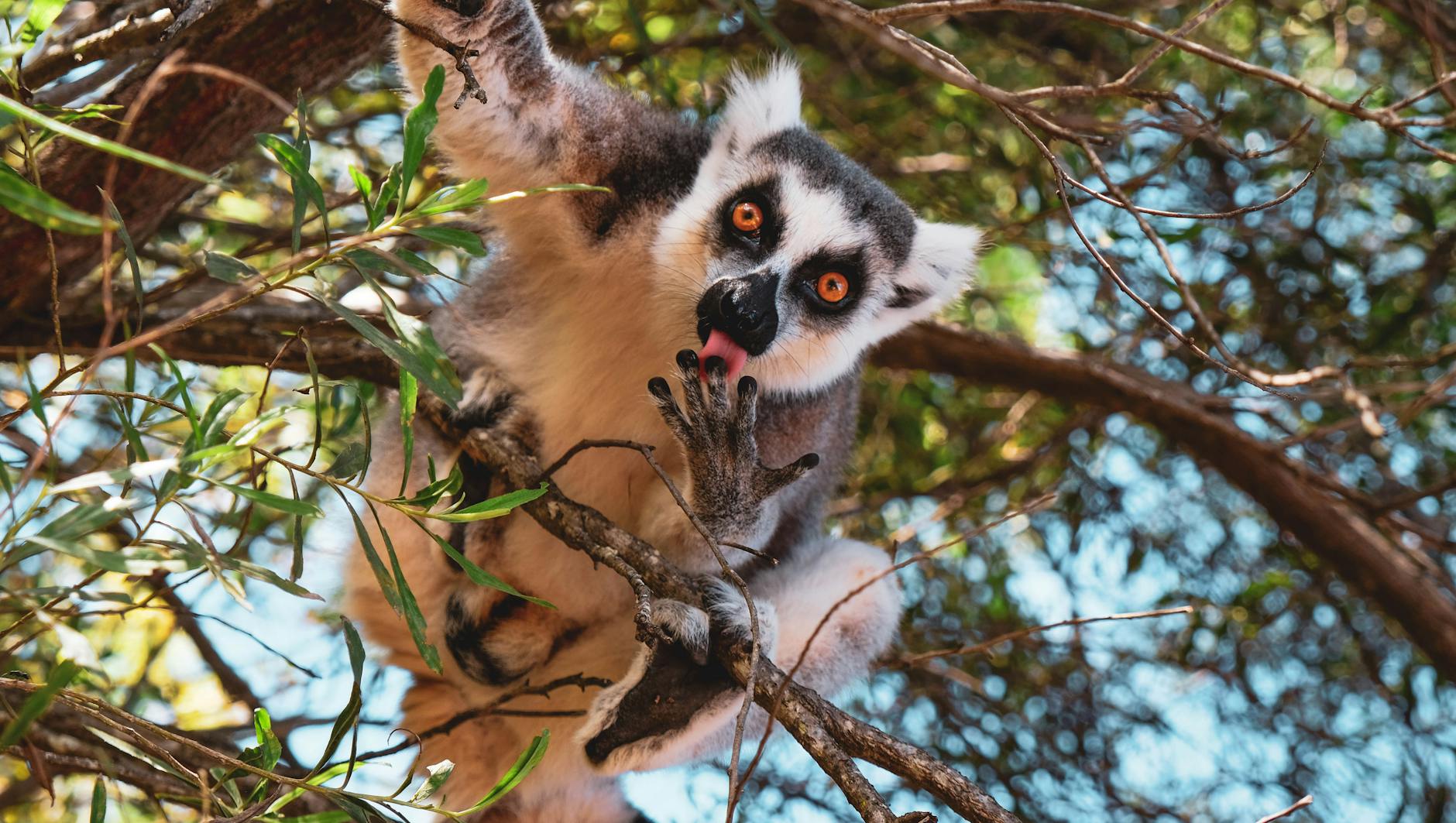
Madagascar plays a different game. Roughly 96% of its mammals, 92% of its reptiles and 50% of its birds are endemic. You will not see Big Five — there are no lions, elephants, zebras or rhino. You will see indri (the largest lemur, only at Andasibe and a few northern parks), ring-tailed lemurs at Anja and Isalo, sifaka leaping vertically through Madagascar’s spiny forest, fossa (the cryptic apex predator), and chameleons that exist on no other continent. If your benchmark is “have I seen this animal before in nature documentaries”, Kenya wins. If your benchmark is “have I seen species nobody back home will recognise”, Madagascar wins. Plan the wildlife side with our guide to seeing lemurs in Madagascar.
Costs: A Stark Difference
A standard Kenya mid-range safari runs $250 to $450 per person per day all-inclusive (Mara, Amboseli, Lake Nakuru). High-end is $600 to $1,500. That covers a 4×4 with driver-guide, full board at a tented camp, park fees ($80 per day Mara from 2024), and shared game drives. Tipping adds $15 to $25 per day per guest. A 7-day Kenya safari for two lands at roughly $4,500 to $7,500 plus international flights.
Madagascar at the same trip length, two people, mid-range, runs $1,400 to $2,100 plus flights. National park entry is roughly $10 to $25 per day, mid-range lodges $40 to $90 per room, a private 4WD with driver fuel inclusive ranges from $90 to $130 per day shared between travellers. The big saving is that Madagascar tours are by 4WD on public roads, not by exclusive vehicle inside a reserve — so per-day costs collapse. Lock in lodging where it matters with our Madagascar travel budget guide, and check Antananarivo hotels on Agoda.
Access and Logistics
Kenya wins access. Direct overnight flights from Paris and London to Nairobi take roughly 8 hours; multiple daily options on Kenya Airways, Air France, British Airways. Domestic safari hops on SafariLink or AirKenya are 45 to 90 minutes. From landing at JKIA to your first game drive can be under 24 hours. e-Visa is straightforward and $51.
Madagascar is harder. There is no direct flight from London or any North American city — you stop in Paris, Nairobi, Addis Ababa or Mauritius. Total transit is 11 to 14 hours from Europe. From Tana, internal connections to Tulear, Diego or Nosy Be add 1 to 2 hours, and overland drives to Andasibe (3 hours) or Tsingy (12 to 14 hours) are slow. The e-Visa is $35 to $50 on arrival or pre-issued online. If your flight to Tana gets disrupted, EU regulation EC 261 may entitle you to up to €600 — check your AirAdvisor claim free. Build the connecting itinerary with our 10-day Madagascar itinerary.
Verdict: Who Should Choose Which
Choose Kenya if: you have not yet seen Big Five, you want a frictionless first African safari, you can spend $4,500 to $7,500+ for two for a week, you have one to two weeks not three, you prioritise vehicle-based viewing over walking, and you want photographs that immediately read as “Africa” to people at home. The Mara during migration months and Amboseli for elephants with Kilimanjaro backdrop are unmatched.
Choose Madagascar if: you have done at least one classic safari already, you care about endemism and wildlife biology over scale, you have 12 to 16 days, you are okay with longer drives and rougher infrastructure, and you want to spend roughly half what Kenya costs. The biodiversity hit is genuinely greater — Madagascar has wildlife found on no other continent — but the experience is slower, lower-density and requires more patience. Insure both trips because evacuation from rural areas in either country runs $30,000 to $80,000. Get SafetyWing before you fly.
Frequently Asked Questions
Can I combine Madagascar and Kenya in one trip?
Yes, and it works well logistically. Kenya Airways flies Nairobi to Antananarivo three to four times a week in about 3 hours. A 14-day combo of 6 days Kenya safari plus 7 days Madagascar wildlife is realistic, with Nairobi as the hub.
Which has the better photography for wildlife?
Kenya for telephoto megafauna in open habitat. Madagascar for macro and primate close-ups in forest light. Different gear, different output.
Is malaria risk the same in both?
Both require malaria prophylaxis in lowland areas. Highland Antananarivo and Nairobi city itself are low risk. Confirm current CDC and NHS guidance before departure and pack DEET 30%+.
Pick Kenya for an easy, classic, high-density first safari. Pick Madagascar for half the cost and species you cannot photograph elsewhere — but with longer drives and patchier infrastructure. Whichever you choose, evacuation from rural areas in both countries costs $30,000 to $80,000 and is the single biggest financial risk of the trip. Get SafetyWing before you fly.
Travel Insurance for Madagascar
Medical evacuation from Madagascar costs $30,000–$80,000. Don’t travel without cover.
- SafetyWing — monthly-subscription travel medical cover; you can check their plans.
- World Nomads — single-trip travel insurance with adventure-activity options.
Plan Your Trip to Madagascar
- Read the full Madagascar Travel Guide
- Explore itineraries by style and duration
- Explore the full destination guide
Where to Stay