Madagascar vs Tanzania vs Costa Rica for Wildlife Photography 2026: Which Is Best?
Affiliate disclosure: This article contains sponsored links to hotels, tour operators, insurance providers, and other travel services. We earn a small commission if you book through our links, at no extra cost to you.
Madagascar vs Tanzania vs Costa Rica for Wildlife Photography 2026 — At a Glance
- Tanzania: the big-game icon — lions, elephants, the Great Migration, open savanna, easy light, but busy and shared species
- Costa Rica: accessible, dense biodiversity — sloths, frogs, birds — easy infrastructure, great for first-timers, but heavily visited
- Madagascar: unique endemic subjects — lemurs, chameleons — found nowhere else, in harder forest conditions and far fewer crowds
- The verdict in one line: Tanzania for iconic big game, Costa Rica for easy biodiversity, Madagascar for originality you can’t get anywhere else
- Book Madagascar wildlife tours: wildlife tours on GetYourGuide
- Plan a Madagascar photo trip: a resident specialist can build your itinerary — contact Carla
- Flight protection: EU261 €600 per passenger on disrupted European inbound flights
- Travel insurance: SafetyWing Nomad Insurance — cover your gear and yourself
- Where to stay in Madagascar: park-gateway stays on Agoda
🐿 Wildlife-Watching Gear for Madagascar
The right kit turns a good wildlife trip into a great one:
- 8×42 binoculars — essential for spotting lemurs and chameleons in the canopy. See on Amazon →
- Rechargeable headlamp — essential for night walks; red mode won’t disturb wildlife. See on Amazon →
- Trekking poles — ultralight support for long park hikes. See on Amazon →
- Hiking daypack — comfortable pack for water, camera and layers. See on Amazon →
- Picaridin insect repellent — DEET-free protection against malaria mosquitoes. See on Amazon →
As an Amazon Associate we earn from qualifying purchases.
If you’re a wildlife photographer choosing your next big trip, three destinations sit near the top of many lists: Tanzania, the home of the African safari and the Great Migration; Costa Rica, the accessible, biodiversity-packed jewel of Central America; and Madagascar, the wild island of endemic creatures found nowhere else. They offer very different photographic experiences, and the right choice depends on what you want from your images — iconic big game, easy and abundant biodiversity, or genuine originality. This guide compares all three honestly across subjects, ease, light, crowds, and cost, so you can match the destination to the images you actually want rather than to its reputation. For the full picture of what Madagascar offers, see our Madagascar wildlife photography guide.
The short version: Tanzania wins on iconic big game and easy light, Costa Rica on accessible abundance, and Madagascar on uniqueness and solitude. Tanzania and Costa Rica are famous, well-developed, and relatively easy to photograph; Madagascar is harder — forest light, fast or small subjects, remote locations — but rewards you with images of creatures that exist nowhere else on Earth, in far less crowded conditions. Below, we set out each destination’s character and then compare them head to head across what matters most to a wildlife photographer. For the wider photographic context, see our Madagascar photography guide.
Tanzania: The Big-Game Icon
Tanzania is, for many, the definitive wildlife photography destination — home to the Serengeti, the Ngorongoro Crater, and the Great Migration, where lions, elephants, leopards, cheetahs, and vast herds play out on open plains under big, clean light. Its appeal is iconic big game in easy conditions: open savanna means clear sightlines and good light, the animals are large and (often) approachable from a vehicle, and the density of charismatic megafauna is unmatched. For dramatic action, predators, and classic safari portraits, Tanzania is hard to beat. The Ngorongoro Crater alone concentrates an astonishing density of big game in a compact, photogenic bowl, and the migration’s river crossings offer some of the most dramatic wildlife action on the planet — spectacle on a scale Madagascar’s intimate forests never attempt.
The trade-offs: the famous parks are busy, sometimes with lines of vehicles at a sighting, so solitude is rare on the headline circuits; the species, magnificent as they are, are shared with much of East Africa and shot by thousands of photographers; and it is a vehicle-based experience, photographing from a 4×4 rather than on foot. Tanzania is the choice for the photographer whose dream is the big African mammals and the migration, who values ease and iconic subjects over rarity and solitude. It is also unrivalled for action and drama — a hunt, a river crossing, a pride at a kill — and for the sheer scale of the spectacle, which no forest destination can match. If your portfolio goal is the classic, powerful safari image, Tanzania delivers it more reliably than anywhere, and the guaranteed sightings of the headline animals make it low-risk for a once-in-a-lifetime trip. The cost is that those images, however magnificent, have been made by countless photographers before you.
Costa Rica: Accessible Biodiversity
Costa Rica offers perhaps the most accessible wildlife photography of the three: a small, safe, well-developed country packed with biodiversity — sloths, monkeys, frogs, hummingbirds, toucans, and a wealth of rainforest and cloud-forest species — much of it photographable with minimal effort, often from lodges and easy trails. Its strength is abundance and ease: a huge variety of photogenic subjects, excellent infrastructure, short distances, and a gentle learning curve, making it ideal for first-time wildlife photographers and those wanting maximum keepers for minimum hardship. The cloud forests of Monteverde, the rainforests of the Osa Peninsula, and the dry forests of Guanacaste each offer distinct biodiversity within easy reach, and the country’s strong eco-tourism culture means well-run lodges and knowledgeable guides are the norm rather than the exception.
The trade-offs mirror the others’: Costa Rica is heavily visited, so the popular spots are busy and the species widely photographed; and while the biodiversity is dazzling, the animals are largely shared across the Neotropics rather than unique to the country. Costa Rica is the choice for the photographer who wants easy, abundant, varied wildlife in comfortable conditions, and who is happy that the subjects, while beautiful, are not found-nowhere-else rarities. Its other great strength is the sheer hit rate: feeder-visiting hummingbirds and toucans, habituated sloths, and frog-filled gardens mean you can fill a card in a day with minimal fieldcraft, which makes it forgiving for beginners and productive for everyone. Many photographers cut their teeth here before tackling harder destinations, and the comfort and safety make it an easy sell for a mixed-interest trip or a photographer travelling with non-photographing family.
Madagascar: Unique Endemic Subjects
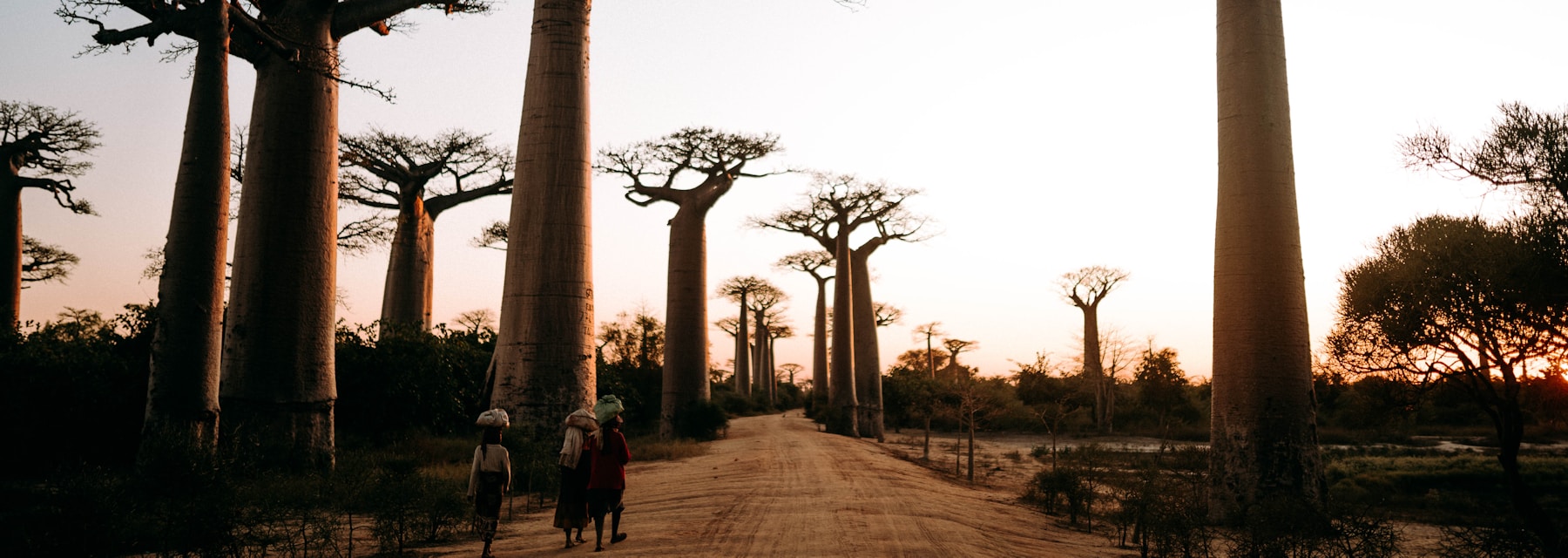
Madagascar offers something neither rival can: subjects found nowhere else on Earth. Roughly nine in ten of its species are endemic, so the lemurs, chameleons, leaf-tailed geckos, and frogs you photograph here cannot be shot anywhere else in the world. That originality is the island’s defining draw for a photographer — your portfolio is not another set of the same shared species, but a record of genuinely rare and unusual creatures, in landscapes (baobabs, tsingy, rainforest) equally unique.
The trade-offs are conditions and effort: rainforest light is low, lemurs are fast and often high, many subjects are small or nocturnal, and the locations are remote and reached on rough roads. It is harder work than Tanzania’s open plains or Costa Rica’s easy lodges, and much of the wildlife is photographed on foot, on forest trails. But for the photographer who values rarity and originality over ease, and who relishes working for the image, Madagascar is unmatched — and far less crowded than either rival. The island’s appeal is also its strangeness: the wildlife looks like nowhere else, evolved in isolation into forms — the aye-aye’s skeletal finger, the leaf-tailed gecko’s impossible camouflage, the indri’s haunting song — that feel almost otherworldly through a lens. For the photographer drawn to the unusual, that strangeness is the whole appeal, and it is something neither the savanna nor the Neotropics can offer. See our lemurs guide.
Head to Head: Subjects and Uniqueness
This is Madagascar’s decisive advantage. Tanzania offers magnificent but shared big game; Costa Rica a dazzling but largely shared biodiversity; Madagascar offers subjects found nowhere else — the lemurs, the chameleons, the bizarre leaf-tailed geckos, an entire endemic fauna. If your goal is images of charismatic megafauna in action, Tanzania wins; if it’s variety and abundance with ease, Costa Rica; but if it’s originality — photographs no one else can take elsewhere — Madagascar is in a class of its own. It is also the only one of the three where the landscapes are as unique as the wildlife, so your portfolio gains a coherence — strange creatures in strange settings — that a savanna or rainforest backdrop, however lovely, cannot give. The lemur framed against a baobab or granite dome is unmistakably Madagascar in a way no Tanzania or Costa Rica image announces its origin.
The distinction matters for what your portfolio says. A superb lion or sloth image, however beautiful, joins millions of others; a fine portrait of an indri or a Parson’s chameleon is a record of a creature most viewers have never seen. For the photographer who values rarity and the thrill of the unusual, Madagascar’s endemic subjects are reason enough to choose it. It is worth being clear-eyed about the trade, though: you will likely come home with fewer frames than from Costa Rica and less guaranteed big-animal drama than from Tanzania, but the keepers you do get will be of subjects almost no one else has photographed. Quality and rarity over quantity and certainty — that is the Madagascar bargain. There is also a conservation-storytelling weight to Madagascar’s wildlife: many of its species are threatened and little-documented, so your images carry value beyond their beauty, contributing to the awareness these creatures urgently need. For a photographer who wants their work to mean something as well as look good, that significance is a quiet but real draw. For the deep dive on those subjects, see our chameleons guide.
Head to Head: Ease and Conditions
On ease, the order reverses. Costa Rica is the easiest — short distances, great infrastructure, abundant accessible subjects, gentle conditions; Tanzania is easy too, with open light and vehicle-based shooting of large animals; Madagascar is the hardest, with low forest light, fast or small subjects, remote locations, and on-foot trails. If you want maximum results with minimum difficulty, Costa Rica or Tanzania; if you accept difficulty as the price of originality, Madagascar. Physical comfort differs too: Tanzania is vehicle-based and undemanding on the body, Costa Rica gentle and well-served, while Madagascar involves more walking, rough roads, basic lodges in places, and the early starts and night walks that wildlife photography rewards. None of it is extreme, but Madagascar asks more of a photographer’s stamina and patience than the others — which is precisely why fewer make the trip, and why those who do find it so uncrowded.
This is the central trade-off of the three. Madagascar demands more — the right gear, fieldcraft, patience, and a good guide — and rewards it with rarer images; the other two give up some uniqueness for far greater ease. Neither approach is wrong; it depends on whether you photograph for the challenge and the rarity, or for the comfort and the keeper rate. Worth noting: Madagascar’s difficulty has eased in recent years thanks to better mirrorless cameras (clean high-ISO files, fast autofocus) that tame the forest light, and a good photo guide closes much of the gap by knowing exactly where and when the animals appear. It will never be Costa Rica-easy, but it is far more achievable than its reputation suggests for a prepared photographer. For how to handle Madagascar’s conditions, see our wildlife photography guide.
Head to Head: Light and Setting
For light, Tanzania wins outright: open savanna under big skies gives clean, golden, dramatic light that flatters wildlife and lets you shoot at lower ISOs. Costa Rica and Madagascar are both largely forest, where the light is low and diffuse — beautiful in its own soft way, but demanding fast lenses and high ISOs. For setting, though, Madagascar offers the most distinctive backdrops: lemurs against granite, chameleons in surreal forest, wildlife framed by baobabs and tsingy found nowhere else, where Tanzania gives classic savanna and Costa Rica lush jungle.
So Tanzania is easiest for light, Madagascar most distinctive for setting, Costa Rica somewhere between. If your images depend on golden open light and dramatic action, Tanzania; if on unique, strange, original settings, Madagascar. The forest-light challenge that Madagascar and Costa Rica share is real but manageable with modern high-ISO cameras and fast glass. There is also a creative upside to the forest’s soft light: it avoids the harsh shadows and blown highlights that midday savanna sun can bring, flatters detail and colour, and lends an intimate, atmospheric quality to wildlife portraits that the open plains cannot. Many photographers come to prefer the mood of forest light once they have the tools to handle it, and Madagascar’s misty rainforest mornings can be magical.
Head to Head: Crowds and Solitude
If solitude matters, Madagascar wins clearly. Tanzania’s famous parks and Costa Rica’s popular reserves are heavily visited, with vehicles or visitors clustering at the best sightings; the wilderness feeling and the sense of discovery are diluted. Madagascar, by contrast, sees a tiny fraction of the visitors, so you photograph in genuine quiet, often with no other foreign photographer in sight, and the sense of finding rather than queuing for your subjects.
For some photographers the buzz of a famous sighting is part of the appeal, and the crowds come with the convenience of well-developed destinations. But for those who value space, quiet, and the feeling of genuine wildlife encounter over a shared spectacle, Madagascar offers something its more famous rivals largely cannot. It is one of the last great uncrowded wildlife photography destinations. The practical benefit goes beyond atmosphere: with no queue of vehicles or photographers at a sighting, you can take the time to work a subject properly — wait for behaviour, try different angles, let the light come right — without pressure to move on or jostling for position. That freedom to linger is itself a creative advantage, and it is increasingly hard to find at the world’s famous wildlife hotspots.
Head to Head: Cost
All three span a range of budgets. Tanzania is generally the most expensive for a classic safari, with high park fees and premium lodges, though it delivers density and ease. Costa Rica is mid-range, with good-value infrastructure and short distances keeping costs reasonable. Madagascar sits in the middle: daily living is cheap, but the guided, logistically-involved nature of reaching remote reserves — guides, transport, longer stays for the images — adds up, especially on a photography-paced trip.
In all three, value depends on what you want: Tanzania’s cost buys density and ease; Costa Rica’s buys variety and convenience; Madagascar’s buys rarity and solitude. One practical point: because Madagascar’s daily living is so cheap, a longer stay there adds less per day than extending a Tanzania safari, so the patient, photography-paced trip that Madagascar rewards need not break the bank once you’ve reached the island. Sharing a small group’s fixed guiding and transport costs lowers the per-person price further, as it does everywhere. For the detailed numbers on a Madagascar photo trip, see our photography tour cost guide, and for the parks our national parks guide.
Which Should You Choose?
Choose Tanzania if your dream is iconic African big game — lions, elephants, the Great Migration — in easy, golden-lit, vehicle-based conditions, and you don’t mind the crowds and the cost. Choose Costa Rica if you want abundant, varied, accessible biodiversity in a safe, comfortable, easy country, ideal for a first wildlife trip or for maximum keepers with minimum hardship. Choose Madagascar if you want subjects found nowhere else on Earth, value originality and solitude over ease, and relish working for genuinely rare images.
For many wildlife photographers, the deciding factor is uniqueness — and on that, Madagascar is unmatched, offering a portfolio of endemic creatures the more famous destinations simply cannot provide. If that originality appeals, and you’re willing to work for it in less crowded, more challenging conditions, Madagascar is the choice, and a resident specialist can build the trip around your target species. The choice ultimately comes down to a simple question: do you want the best version of images many photographers already have, or images that are unmistakably your own? Tanzania and Costa Rica excel at the former; Madagascar is the answer to the latter. There is also no rule that you must choose only one in a lifetime — many wildlife photographers work through all three over the years, and a common path is to start with the easier, iconic destinations and graduate to Madagascar once you have the skills and the appetite for something rarer and harder-won. Seen that way, Madagascar is the natural next step for the photographer who has shot the savanna and the rainforest and now wants the truly unique. Browse Madagascar wildlife tours on GetYourGuide to start planning.
Best Time and Can You Combine Them?
The three have broadly compatible dry-season windows — Tanzania’s prime migration months (roughly June–October), Costa Rica’s drier season (December–April), and Madagascar’s dry months (April–November) — so any can fit a given travel window, though they only partly overlap. They are far apart geographically, so combining two on one trip is a major undertaking rather than a casual add-on, and each rewards a dedicated trip. Most photographers pick the one that matches their priorities now and save the others.
Within Madagascar, though, combining is easy and rewarding: a single trip can pair wildlife with the iconic baobab and tsingy landscapes, giving the variety some photographers seek across multiple countries. That internal range — endemic wildlife plus surreal landscapes, all on one island — is part of what makes Madagascar such strong value for a photographer’s time. On timing specifically, Madagascar’s late dry season (September–November) brings newborn lemurs and very active wildlife, a sweet spot for the wildlife photographer, while the green months after the rains favour the macro and amphibian shooter; matching your visit to your target subjects matters as much here as the broad season. See our photography guide to plan the mix.
Getting There and Travelling Well
Madagascar is reached by connecting flights via Europe, the Gulf, or Africa, landing at Antananarivo. Book international flights early and protect European-routed ones: under EU regulation EC261, a long delay, cancellation, or denied boarding on an inbound European flight can entitle you to up to €600 per passenger — useful when travelling with valuable gear. Register your flight for EU261 coverage with AirAdvisor. Reaching the reserves means drives on rough roads; Carla can arrange transport.
Travel insurance is essential for any wildlife trip — and photographers should ensure it covers high-value camera gear as well as medical and remote-area evacuation. SafetyWing Nomad Insurance covers the traveller; check separate or additional cover for your equipment before travelling with thousands of euros of kit.
Carla / Voyagiste Madagascar (plan a Madagascar photo trip)
Madagascar-resident specialist who can build a wildlife photography trip — choosing the reserves for your target endemic species, building in the time and night walks the images require, and arranging the guides and access that photography here demands. Contact Carla directly for honest advice on whether Madagascar suits your photography, how it compares to your other options, and how to do it well. Local knowledge makes the difference between hoping for a sighting and being in the right place at the right time.
Frequently Asked Questions
Which has the most unique wildlife to photograph?
Madagascar, decisively — roughly nine in ten species are endemic, so its lemurs, chameleons, and geckos are found nowhere else. Tanzania and Costa Rica offer magnificent but largely shared species. See our wildlife photography guide.
Which is easiest to photograph?
Costa Rica, for accessible abundance and gentle conditions; Tanzania too, with open light and vehicle shooting. Madagascar is the hardest — forest light, fast or small subjects, remote — but the most original.
Which is least crowded?
Madagascar, by far. Tanzania’s parks and Costa Rica’s reserves are heavily visited; Madagascar sees a fraction of the visitors, so you photograph in genuine solitude.
Which has the best light?
Tanzania, with its open, golden savanna light. Costa Rica and Madagascar are forest destinations with low, diffuse light that demands fast lenses and high ISOs — but Madagascar offers the most distinctive settings.
Which is cheapest?
Costa Rica is generally mid-range and good value; Tanzania the priciest for a classic safari; Madagascar in the middle, with cheap living but costlier remote logistics. See our cost guide.
Should a first-timer choose Madagascar?
Costa Rica or Tanzania are easier first wildlife-photography trips. Madagascar suits those who value uniqueness and accept the harder conditions — though a good guide and a photo-focused itinerary make it very achievable.
📷 Considering Madagascar? Plan It With Carla
If unique, found-nowhere-else wildlife and genuine solitude appeal, Madagascar is the photographer’s choice. Reach out to Carla, our Madagascar-resident specialist, for honest advice and a trip built around your photography.
Plan Your Trip to Madagascar
- Read the full Madagascar Travel Guide
- Explore itineraries by style and duration
- Explore the full destination guide
Where to Stay