Where to Stay for Tsingy de Bemaraha 2026: Bekopaka Lodges & Morondava
Affiliate disclosure: This article contains sponsored links to hotels, tour operators, insurance providers, and other travel services. We earn a small commission if you book through our links, at no extra cost to you.
At a Glance — Where to Stay for Tsingy de Bemaraha
The short version: To visit the Tsingy de Bemaraha you really need to overnight in Bekopaka, the small gateway village right by the park — it is the only realistic base for an early-morning start. Most travellers tie the trip into the wider western loop from Morondava, the coastal town with the airport and the Avenue of the Baobabs, but Morondava itself is far too far for a day trip to the Tsingy.
- Browse stays now: browse Madagascar stays on Agoda to compare lodges, bungalows and guesthouses with live prices.
- Not sure where to base yourself? contact Carla — she matches you to the right lodge for your budget and trip shape.
- Get there safely: car & driver via Carla — the rough road in needs a proper 4×4 and a driver who knows the route.
- Guided park visits: guided park tours on GetYourGuide.
- Flight delayed or cancelled? You may be owed compensation — check your claim with AirAdvisor.
- Travel cover: SafetyWing Nomad Insurance for the remote western circuit.
The Tsingy de Bemaraha is one of Madagascar’s most extraordinary landscapes — a forest of razor-edged limestone pinnacles, hidden canyons, suspension bridges and via-ferrata climbs that simply does not look like anywhere else on Earth. But the first thing every traveller discovers when they start planning is that the Tsingy is genuinely remote. It sits deep in western Madagascar, reached only by a rough track and a couple of small river ferries, and there are no large towns nearby. That single fact shapes your entire accommodation strategy: where you sleep matters far more here than it does at most parks, because your bed determines whether you can get to the trailhead at first light and whether the long, dusty journey is comfortable or exhausting.
This guide breaks down exactly where to stay when visiting the Tsingy de Bemaraha, the two places that matter — Bekopaka, the gateway village right at the park, and Morondava, the coastal town that anchors the whole western loop — and what to expect from the lodges, bungalows, guesthouses and campsites in each. We’ll cover realistic price tiers (as approximate 2026 estimates), how to book in a region with very limited rooms, and why getting the logistics right is the difference between a magical trip and a miserable one. Prices and availability change constantly out here, so always check live prices on Agoda before you commit, and lean on a local planner to lock the right rooms in the right order.
| Where | What to expect | Rough price tier | Best for |
|---|---|---|---|
| Bekopaka — gateway village | The cluster of lodges and bungalows right by the park entrance. Closest possible base for an early tsingy start; simple but functional, often with generator power and well water. | Varies widely — basic to comfort | Everyone visiting the Tsingy; first-light hikes |
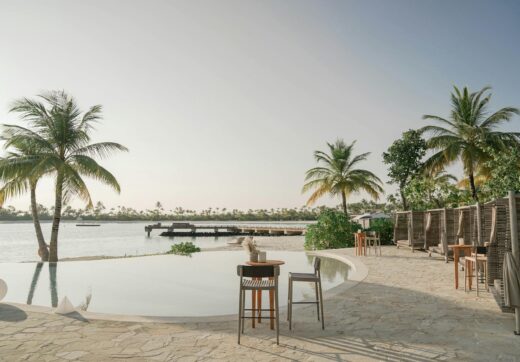
| Bekopaka eco-lodges | A handful of nicer bungalow-style eco-lodges with pools, better beds and on-site restaurants. The most comfortable end of a limited market. | ~€90–180 / night (approx.) | Couples, comfort-seekers, slower itineraries |
| Budget guesthouses in Bekopaka | Simple rooms or basic bungalows, shared or cold-water bathrooms, fan only. Clean enough for a night or two; cash-only. | ~€15–30 / night (approx.) | Backpackers, budget travellers |
| Camping | Pitches at or near the park with very basic facilities. Bring or rent gear; great for stargazing and the lowest cost. | ~€8–18 / night (approx.) | Adventurous, lowest-budget travellers |
| Morondava — coastal town & airport | The base for the whole western loop, with beach hotels, restaurants and the Avenue of the Baobabs nearby. Far from the Tsingy — a long drive away, not a day-trip distance. | Budget to upscale | Arriving/departing nights; baobabs; the wider loop |
| Stopover en route | Very simple roadside guesthouses between Morondava and Bekopaka if you break the drive. Basic only. | ~€15–30 / night (approx.) | Breaking up the long, rough road |
Where to stay: the lay of the land
There are really only two locations in this story, and they sit hours apart. Bekopaka is the small village at the very edge of the Tsingy de Bemaraha. It exists, essentially, because of the park: a handful of lodges, bungalows, guesthouses and campsites strung along the dusty main track, plus the park office and a few small shops and eateries. If you want to be standing at the trailhead when the gates open — which is the right way to do the Tsingy, before the heat builds and the crowds arrive on the via-ferrata circuits — then you must overnight in Bekopaka. There is no closer option, and the remoteness means there is no sneaking in for a quick visit from somewhere else.
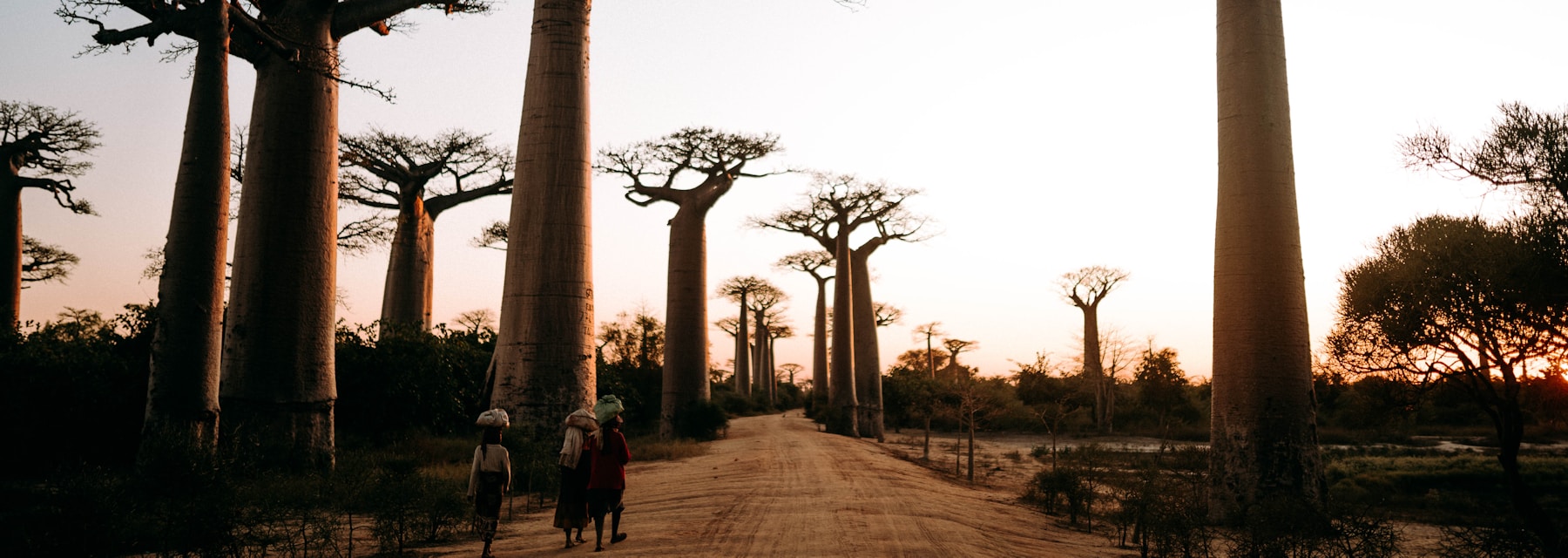
Morondava, by contrast, is the coastal gateway town for the entire western region. It has the regional airport, beach hotels, restaurants and a proper choice of accommodation, and it sits right beside the iconic Avenue of the Baobabs. Almost every Tsingy trip begins and ends in Morondava because that is where you fly in, hire the vehicle and pick up your driver. But here is the crucial point that trips up many first-time planners: Morondava is far too far from the Tsingy for a day trip. The drive between the two takes the better part of a day in each direction along a rough track with two river ferry crossings. You simply cannot stay in Morondava and “pop over” to the Tsingy — the geography does not allow it. Morondava is for your arrival and departure nights and for the baobabs; Bekopaka is for the park itself.
So the standard shape of a western-loop trip looks like this: fly into Morondava, spend a night (often with a sunset at the baobabs), then drive the long, scenic, bumpy route up to Bekopaka and overnight there for the actual Tsingy days, before retracing the route back to Morondava for your flight out. Your accommodation plan, therefore, almost always involves both places — a night or two in Morondava bracketing two or more nights in Bekopaka.
Bekopaka lodges & bungalows
Accommodation in Bekopaka is best thought of as functional rather than fancy. Because the village is so remote — everything from fuel to fresh produce to building materials has to be trucked in over that rough road — the lodges here are simpler and, relative to what you get, often pricier than you might expect for Madagascar. That is the cost of being at the end of the line. Don’t arrive expecting big-city polish; do arrive expecting friendly hosts, decent food cooked on-site, and a bed within striking distance of one of the planet’s strangest landscapes.
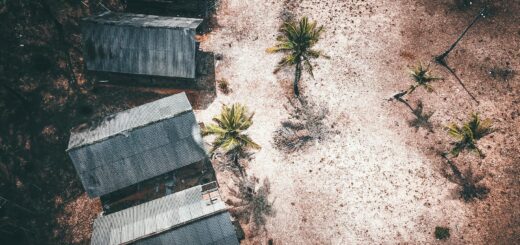
The typical Bekopaka property is a cluster of free-standing bungalows set in a garden compound, with an open-sided restaurant-bar at the centre. Power usually comes from a generator that may run only at certain hours (often evenings), water from a well or tank, and Wi-Fi and phone signal are patchy to non-existent. Most lodges sit somewhere on a spectrum from very basic to genuinely comfortable, and because the choice is limited, the few nicer options book out first in high season. The realistic options range from simple en-suite bungalows with a fan, through mid-range lodges with reliable hot water and good beds, up to a small number of eco-lodges with swimming pools — a real luxury after a hot, dusty day on the limestone.
Whatever tier you choose, the single most valuable feature of a Bekopaka lodge is simply its location: being five minutes from the park gate means you can be at the trailhead at opening time, beat the heat and the crowds, and still be back for a long lunch and a swim. That is worth more than thread count out here. Because tiers, names and standards shift from season to season, always browse Madagascar stays on Agoda to compare current options and live prices rather than relying on any single recommendation.
Budget vs mid-range vs comfort in Bekopaka
It helps to think in tiers when you plan your Bekopaka nights. All of these are approximate 2026 estimates — remoteness pushes prices up, rates move with the season, and you should always check live prices on Agoda before booking.
Budget (~€15–30 per night). Simple guesthouse rooms or basic bungalows: a bed, a fan, often a shared or cold-water bathroom, and not much else. Perfectly fine for backpackers and anyone who just needs a clean place to sleep between hikes. Expect cash-only payment and limited power.
Mid-range lodge (~€40–80 per night). The sweet spot for most travellers: a private en-suite bungalow, usually with hot water (at least when the generator is running), a comfortable bed, a mosquito net and an on-site restaurant serving Malagasy and simple international dishes. Reliable, pleasant, and the right call if you want comfort without paying eco-lodge rates.
Nicer eco-lodge (~€90–180 per night). The top of the local market: well-appointed bungalows, a swimming pool, better furnishings, attentive service and good food. There are only a handful of these in Bekopaka, and they are the first to sell out in peak season, so book early if comfort matters to you. Even at this tier, remember you are in a remote village — “luxury” here is relative, and power and water can still be intermittent.
Across every tier, the message is the same: the range of choice is narrow, standards vary, and the smart move is to compare what’s actually available for your dates rather than fixating on a single property. A local planner can be invaluable here because they know which lodges are genuinely operating well this season — Bekopaka properties open, close and change hands more than you’d think.
Camping
If you’re travelling on the tightest budget, or you simply love sleeping under one of the clearest night skies in the world, camping is an option around Bekopaka (~€8–18 per night, approximately). Some lodges and the park area offer simple pitches with very basic shared facilities, and you can usually either bring your own tent or arrange gear locally. The stargazing out here, with almost no light pollution, is spectacular, and waking up close to the trailhead means you’re perfectly placed for a dawn start.
Be realistic about what camping in the deep western dry zone involves, though. Days are hot, the dust is constant, facilities are minimal, and you’ll want a good sleeping mat, plenty of water and sun protection. It’s an adventurous, characterful way to do the Tsingy on a shoestring — but it is not for everyone, and many travellers prefer to spend a little more on a basic bungalow for the comfort of a real bed and a cold shower after a long, sweaty hike. If you’re unsure whether camping suits your trip, it’s worth talking it through with someone who knows the current setup on the ground.
Morondava as your western-loop base
Morondava is where almost every western-Madagascar adventure begins and ends. It’s the coastal town with the regional airport, a relaxed beach-town feel, a decent spread of hotels from budget guesthouses to comfortable beachfront places, restaurants serving fresh seafood, and — its star attraction — the Avenue of the Baobabs just outside town. The classic move is to fly into Morondava, spend your first night here, catch sunset at the baobabs, and then set off on the long drive to Bekopaka for the Tsingy, returning to Morondava for a final night before your flight home.
Because Morondava has a proper choice of accommodation and far more reliable power, water and connectivity than Bekopaka, it’s the comfortable bookend to your trip. Treat your Morondava nights as the place to clean up, recharge, eat well and enjoy the coast and the baobabs — not as a base for the Tsingy itself. To repeat the point one more time, because it genuinely catches people out: you cannot day-trip to the Tsingy from Morondava. The distance and the road make it impossible. Plan a night in Morondava on the way out and another on the way back, pair them with the baobabs, and keep your park nights in Bekopaka. To compare beachfront hotels and town guesthouses with current rates, browse Madagascar stays on Agoda. For the baobabs and the rest of the circuit, see our Avenue of the Baobabs complete guide and our full western Madagascar baobabs & Tsingy itinerary.
How to book & what to watch for
Booking accommodation for the Tsingy de Bemaraha is not like booking a city hotel, and a few realities are worth knowing before you start.
Rooms are very limited — book well ahead. Bekopaka has only a handful of properties, and in peak season (roughly June–September) they fill up fast, especially the nicer eco-lodges. If you’re travelling in those months, reserve your rooms as far in advance as you can; leaving it late can mean no room at the inn in a village with no overflow.
Cash is king. Out here, card machines are essentially non-existent and ATMs are back in the bigger towns. Bring enough cash (in the local currency, the ariary) to cover your lodge, meals, park fees, guides and tips. Our Madagascar money & currency guide walks through exactly how much to carry and where to change it.
Power and water are limited. Expect generator electricity that may only run at certain hours, and water from wells or tanks. Charge everything when the power is on, bring a power bank and a head torch, and don’t count on hot showers being available around the clock.
It’s hot, dry and seasonal. The western dry zone is exactly that — hot and dry — and the Tsingy is realistically only accessible in the dry season, as the road becomes impassable in the rains and the park typically closes. That concentrates everyone into the same months, which is another reason rooms are tight. For timing, see our best time to visit Madagascar guide.
The road means you arrive late. The drive in is long and rough, with river ferry crossings that can add hours. Plan your first Bekopaka night assuming you’ll arrive tired and in the late afternoon or evening — not in time for an afternoon hike. Build that into your itinerary so you’re not disappointed.
Booking the smart way
Given all of the above — limited rooms, shifting standards, cash-only payment, a brutal road and a tight seasonal window — the smart way to book is to combine two tools. First, use Agoda to see what’s genuinely available for your dates and to compare live prices across Bekopaka and Morondava, so you have a clear picture of the market and can lock in the properties that take online bookings. Second, and just as importantly, lean on a local planner for the parts the booking sites can’t handle: confirming which Bekopaka lodges are actually running well this season, sequencing your nights correctly across the loop, and arranging the 4×4, driver and park guide that turn the logistics from a headache into a smooth trip.
That combination — Agoda for transparent room comparison, a trusted local for the on-the-ground reality — is exactly how experienced travellers handle a destination as remote as the Tsingy. If you’d rather not piece it together yourself, contact Carla and she’ll match you to the right lodges and handle the vehicle and guide as a package.
Getting There & Travelling Well
Reaching the Tsingy almost always means a domestic flight into Morondava followed by the long overland drive to Bekopaka, and domestic flights in Madagascar are notorious for delays and cancellations. If your flight is significantly delayed or cancelled, you may be entitled to compensation — it’s worth checking your eligibility and filing a claim with AirAdvisor, which handles the paperwork for you.
Out on the remote western loop, good travel insurance is not optional. You’ll be hours from the nearest proper hospital, on rough roads, in a hot and dusty climate, far from pharmacies and reliable services. SafetyWing Nomad Insurance is a popular, flexible choice for exactly this kind of off-the-beaten-track travel, covering medical care and trip disruptions at a sensible price. Before you set off into a region with so little infrastructure, make sure you’re properly covered — sort your SafetyWing cover here so a flat tyre, a stomach bug or a missed connection doesn’t turn into a crisis.
Let Carla Plan Your Tsingy Stay
The Tsingy de Bemaraha rewards travellers who get the logistics right — and that is exactly where a local planner earns her keep. Carla knows which Bekopaka lodges are genuinely worth your money this season, how to sequence your Morondava and Bekopaka nights so the long road works in your favour, and how to lock in the limited rooms before they vanish in peak season. Just as importantly, she arranges the essential pieces that no booking site covers: the right 4×4 for the rough track, an experienced driver who knows the ferries and the route, and a licensed park guide for the via-ferrata circuits. Given the remoteness, having one person coordinate the lodge, the vehicle and the guide is the difference between a smooth adventure and a stressful scramble. Contact Carla to plan your stay, and arrange your car & driver via Carla at the same time.
Frequently Asked Questions
Do I have to stay in Bekopaka to visit the Tsingy de Bemaraha?
In practice, yes. Bekopaka is the gateway village right by the park and the only realistic base for visiting the Tsingy, especially if you want an early-morning start before the heat and crowds. There is no closer accommodation, and the remoteness rules out staying anywhere else and visiting from a distance.
Can I day-trip to the Tsingy from Morondava?
No. Morondava is far too far — the drive takes the better part of a day in each direction over a rough track with river ferry crossings. You cannot realistically day-trip; you must overnight in Bekopaka. Use Morondava only for your arrival and departure nights and for the Avenue of the Baobabs.
Do I need to book accommodation well ahead?
Yes, especially in peak season (roughly June–September). Bekopaka has only a handful of properties and the nicer eco-lodges sell out first. Book as far in advance as you can, and compare live availability and prices on Agoda for both Bekopaka and Morondava.
Are there budget options near the Tsingy?
Yes. Bekopaka has simple guesthouses and basic bungalows from roughly €15–30 per night (approximate 2026 estimate), plus camping from around €8–18. Bring cash, as payment is cash-only, and expect basic facilities with limited power and water. Always check current prices, as rates vary.
Is there camping at the Tsingy?
Yes — there are basic campsites in and around Bekopaka with simple shared facilities, at roughly €8–18 per night (approximate). It’s the cheapest option and offers superb stargazing, but be prepared for heat, dust and minimal amenities. Many travellers prefer a basic bungalow for a bit more comfort after a long hike.
Plan Your Tsingy Stay with Carla
Visiting the Tsingy de Bemaraha is all about getting the logistics right — the right Bekopaka lodge, the nights sequenced correctly across the western loop, and a proper 4×4 with an experienced driver and park guide. Don’t leave it to chance in a region with so few rooms and such a rough road.
Contact Carla to match you to the right lodge and arrange your car & driver, or browse Madagascar stays on Agoda to compare live prices. Planning the wider trip? See our best of Tsingy de Bemaraha guide, things to do at the Tsingy, tour packages and trip cost breakdown.
Plan Your Trip to Madagascar
- Read the full Madagascar Travel Guide
- Explore itineraries by style and duration
- Plan a 10-Day Madagascar Itinerary
Where to Stay