Zebu Carts: the Highway System Before Highways
This article contains affiliate links. We may earn a small commission at no extra cost to you if you book through them.
By Jordan Lamont · Last updated 10 October 2026
At a Glance
- What: the omby sarety, Madagascar’s zebu-drawn cart
- Role: the rural “highway system” where no motor roads reach
- Cost: ~USD 400 to build; the zebu are years of savings
- Where: the west, the south, and the central highlands
- Read next: A day in Malagasy life
Say it like a local: omby sarety (OOM-bee sah-RET) — zebu cart, from omby (zebu) + sarety (cart).
Drive any distance off Madagascar’s few paved roads and you will meet them: wooden two-wheeled carts, piled with rice sacks or bricks or whole families, drawn slowly by a pair of humped zebu. The omby sarety is so ordinary that visitors barely register it — and yet it is one of the most important machines in the country. Long before highways, and still today where highways never came, the zebu cart is the transport network. For the wider rhythm of rural life, see a day in Malagasy life.
The highway system before highways
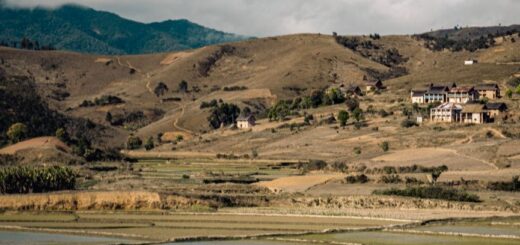
Madagascar is vast, mountainous and thinly roaded; huge areas have no reliable motor access at all. Into that gap rolls the zebu cart. It carries rice from the paddies to the market, building materials to a construction site, and passengers where no taxi-brousse can reach. In much of the countryside it is not a quaint survival but the actual infrastructure of daily life — the difference between a harvest that reaches a buyer and one that rots in the field.
A cart is a small business
Owning one changes a family’s fortunes. The cart itself is modest — a simple two-wheeled design that takes about a week to build and costs around USD 400. The expensive part is the engine: the zebu. A good animal can represent what a rural family saves in years, and a pair strong enough to pull a loaded cart is generational wealth. Families who own a working cart effectively become informal logistics companies, hiring out haulage and using the income for school fees and medical costs. The cart is both tool and investment.
Where the carts rule
You will see the omby sarety across the island, but it is most woven into life on the west coast, in the south, and throughout the central highlands of the Merina and Betsileo — the same highlands where the zebu’s cultural weight is heaviest. There, the slow creak of cartwheels on a red-earth track is one of the defining sounds of the countryside.
Why it matters today
The zebu cart is a window into rural Madagascar’s real economy — patient, animal-powered, and resourceful. It explains why the zebu is wealth as much as meat, and why “getting there” in the deep countryside still runs at the pace of an ox. Pair this with the zebu’s place at the table, and if you are planning your own journeys, see our guide to getting around and renting a car.
FAQ
What is a zebu cart called in Malagasy?
Omby sarety — literally “zebu cart.” It is a simple two-wheeled cart pulled by one or more zebu, and a defining sight of rural Madagascar.
How much does a zebu cart cost?
The cart itself takes about a week to build and costs on the order of USD 400. The zebu are the real expense: a good animal can represent years of a rural family’s savings, and a strong pair is serious wealth.
Where will I see them?
Everywhere off the main roads, but especially on the west coast, in the south, and across the central highlands of the Merina and Betsileo.
Are they still important?
Very. In areas without motor vehicles, the zebu cart still moves rice, building materials and people — and a family’s cart can be its main source of income.
Travel insurance for Madagascar
Medical evacuation from Madagascar’s interior can cost USD 30,000–80,000, so travel medical cover is worth arranging before you go. SafetyWing is the disclosed partner we mention on this site — a monthly-subscription travel medical plan. Check SafetyWing’s plans.
Plan Your Trip to Madagascar
- Read the full Madagascar Travel Guide
- Explore itineraries by style and duration
- Best Tours and Guided Experiences
Where to Stay