3-Day Andasibe Itinerary: Lemurs, Night Walks and Baobab Forest
This post contains affiliate links. We may earn a small commission at no extra cost to you.
At a Glance
- Distance from Tana: 140km east on RN2 — 2.5 to 3 hours by private vehicle
- Best time: October–April (indri breeding season, highest calling frequency)
- Must-do: Indri dawn chorus walk, Vakona private reserve lemur island, Mantadia day trek
- Budget: ~$60–90/day including park entry and guides
- Book lemur walks and night tours: Browse Andasibe wildlife tours on GetYourGuide
- Book hotels near the park: Compare Andasibe lodges on Agoda
Flight delayed or cancelled? Flights to Madagascar usually connect through Paris, Nairobi or Istanbul. If your connection was delayed 3+ hours, cancelled, or overbooked, EU Regulation EC 261 may entitle you to up to €600 per passenger — this is separate from travel insurance and you don’t need a policy to claim. Check your claim free on AirAdvisor →
Andasibe-Mantadia National Park is Madagascar’s most accessible wildlife destination — 140 kilometres east of Antananarivo on a sealed road, with lodge infrastructure that rivals anywhere in Africa. The indri, the world’s largest living lemur, calls from the park’s canopy each morning in a wailing chorus audible two kilometres away. Three days here covers the main Analamazaotra reserve, the wilder Mantadia sector, an evening night walk, and a half-day at Vakona’s habituated lemur island.
Recommended Gear for Your Madagascar Wildlife Trip
You’re Flying 10,000km to See Lemurs, Chameleons, and Fossa — Don’t Document It With a Phone Camera
Indri lemurs calling across the canopy of Andasibe. Panther chameleons in electric blue and orange. The fossa spotted on a night walk in Kirindy. A smartphone sensor in low rainforest light produces grainy, blurred images. The Sony a6400 with Real-Time Eye Autofocus locks onto animal eyes instantly — even through undergrowth and low light. APS-C sensor, 4K video, flip-up touchscreen.
Check current price and availability on Amazon →
Madagascar Has Over 100 Species of Lemur and 280 Species of Bird — You’ll Miss Most of Them Without Binoculars
Sifaka lemurs leap between canopy trees 30 metres up. The Madagascar fish eagle perches on a branch 200 metres across a lake. Without binoculars, you’re looking at distant shapes and taking your guide’s word for it. The Vortex Diamondback HD 10×42 delivers HD optical clarity with edge-to-edge sharpness. Waterproof, fog-proof, backed by Vortex’s unconditional lifetime warranty.
Check current price and availability on Amazon →
Madagascar Goes Completely Dark After Sunset — Don’t Navigate It Blind
Outside of Antananarivo’s main streets, Madagascar has virtually no street lighting. Wildlife walks in Ankarana, night lemur spotting in Ranomafana, the path to your bungalow — all navigated in total darkness. The Black Diamond Spot 400-R delivers 400 lumens with a 100-metre beam, USB-C rechargeable, IPX8 waterproof, with red night-vision mode for wildlife observation without disturbing animals.
Check current price and availability on Amazon →
Madagascar Has Some of the Highest Malaria Risk in the World
The rainforests of Andasibe, the wetlands of Morondava, the rice paddies outside every village — mosquitoes are relentless and bite at dusk and dawn. DEET burns skin and destroys gear. Natrapel 20% Picaridin is the CDC-recommended alternative that repels mosquitoes, ticks, and sandflies for up to 12 hours without damaging your equipment.
Check current price and availability on Amazon →
No Grid, No Problem — Charge Your Devices From the Sun in Madagascar’s Remote Parks
Marojejy. Andringitra. Tsingy de Bemaraha. Madagascar’s most spectacular parks are its most isolated — no power outlets, no phone signal. A 3-day wilderness circuit means running on whatever charge you left camp with. The BLAVOR Solar Power Bank pairs 10,000mAh with a fold-out solar panel that recharges itself from sunlight as you trek.
Check current price and availability on Amazon →
Madagascar’s Power Cuts Will Kill Your Phone — Here’s 4 Full Charges of Insurance
Délestage — Madagascar’s rolling blackouts — can last 8 to 14 hours a day. Your navigation app, offline maps, and boarding pass for tomorrow’s Tsaradia flight will all be dead. The Anker PowerCore 20,000mAh gives 4 full phone charges with fast USB-C delivery. Charge it during the hotel’s morning power window and you’re covered all day.
Check current price and availability on Amazon →
Madagascar Uses European Plugs Only — Your North American Charger Won’t Work Without This
Madagascar runs on Type C and E/F European plugs, 220V. North American plugs don’t fit. The TESSAN European adapter accepts North American plugs and adds 2 USB ports, so you can charge your phone and power bank simultaneously from a single outlet. Compact, grounded — one of those items that’s obvious in hindsight and impossible to find when you need it.
Check current price and availability on Amazon →
One Adapter for Every Country on Your Madagascar Journey — Including Stopovers in Paris or Réunion
Many travellers reach Madagascar via Paris CDG or Réunion — and face a different outlet at each stop. The GaN Universal Adapter covers all outlet types worldwide with USB-C PD fast charging — one device, 4 ports, every country. GaN technology runs cooler and charges faster than standard adapters.
Check current price and availability on Amazon →
Plan your Madagascar trip:
- Browse Madagascar tours and experiences (GetYourGuide)
- SafetyWing — monthly-subscription travel medical cover; you can check their plans.
- World Nomads — single-trip travel insurance with adventure-activity options.
Getting There and Day 1: Analamazaotra Reserve — the Indri Dawn Chorus
The RN2 from Antananarivo to Andasibe is Madagascar’s best-maintained road — sealed, well-signposted, with fuel at Moramanga 50 kilometres before the park. Leave Tana by 6:30 AM to arrive by 9 AM and catch the tail end of the morning indri calling session. Alternatively, arrive the evening before and stay overnight for a proper 5:30 AM start the next day. Park entry and mandatory guide: 55,000 MGA + 30,000–50,000 MGA. The indri’s call — a haunting series of rising and falling wails that travel through dense forest — begins at dawn and peaks between 6 and 8 AM. Your guide locates the family group by sound; the walk to reach them takes 20 minutes to 1 hour depending on where they have moved overnight. Once found, indri groups typically remain in the same trees for 45–90 minutes, allowing extended observation and photography. The park also holds diademed sifaka, black-and-white ruffed lemur, and 11 other lemur species. The best national parks for first-time visitors guide ranks Andasibe as the top choice for reliable, accessible lemur encounters.
Day 1 Evening: Night Walk and the Forest After Dark
After the afternoon rest, book the evening night walk from your lodge (20,000–35,000 MGA, guides mandatory). Andasibe’s night forest produces species invisible during daylight: fat-tailed dwarf lemurs hanging from branches by their hind legs, mouse lemurs bouncing between saplings, eastern woolly lemurs sitting motionless in the torchlight. The park’s reptile and amphibian diversity peaks at night — Parson’s chameleon, leaf-tailed gecko, Madagascar tree boa, and the Boophis tree frog family are all regularly encountered on the main trail after dark. Your guide carries a red-light torch to avoid disturbing sleeping animals; the slow pace and silence of the walk is as memorable as the species themselves. For a full breakdown of what wildlife Madagascar’s parks hold by season and altitude, the Madagascar wildlife reference guide covers every major species by region, park, and season. Return to your lodge by 9 PM; most guided night walks last 90 minutes to 2 hours.
Read also:
Book activities in Madagascar:
Day 2: Vakona Private Reserve and the Mantadia Sector
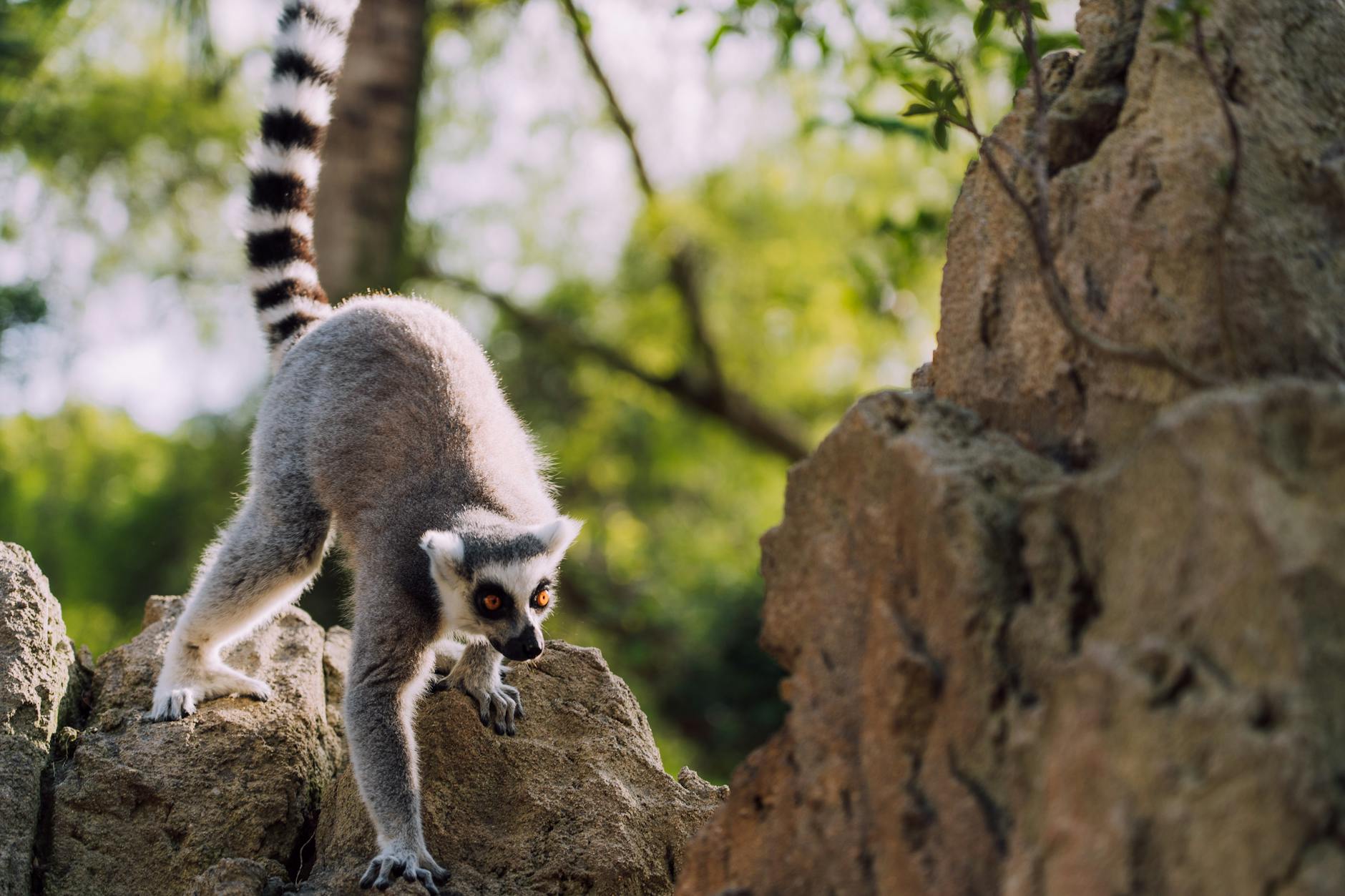
Vakona Forest Lodge operates a private reserve adjacent to the national park, including a lemur island in a lake where four habituated species — ring-tailed lemurs, black-and-white ruffed lemurs, diademed sifakas, and bamboo lemurs — roam free on a small forested island. Boat access costs around 20,000 MGA; lemurs approach and interact with visitors freely. This is the most photogenic lemur encounter in all of Madagascar — not because it is natural (the island is managed), but because the proximity and light are unmatched. Afternoon: drive 20 kilometres north to the Mantadia sector, the wilder, less-visited half of the national park. The Mantadia trails reach primary forest with larger canopy trees and higher bird density than Analamazaotra. Guided Mantadia trek operators via GetYourGuide offer combined Analamazaotra and Mantadia day programs. Allow 4–5 hours for the main Mantadia circuit; the terrain is steeper than Analamazaotra and requires good shoes.
Day 3: Orchid Garden, RN2 Return and Toamasina Option
The Andasibe Orchid Garden, just outside the national park entrance, holds over 180 endemic Madagascar orchid species in a structured garden setting — a 45-minute visit that suits botanically curious travellers and photographers. Entry: 5,000 MGA. By late morning, begin the return drive to Antananarivo, or continue east on RN2 to Toamasina (another 2 hours, 160 kilometres). Linking Andasibe with Toamasina creates an efficient east coast sequence — the Toamasina 2-day itinerary covers the Pangalanes Canal and Parc Ivoloina as ideal follow-on destinations. Three-day Andasibe budget: accommodation ($90–360), park entry x2 ($30 total), guides x3 ($45–75), night walk ($10–18), Vakona lemur island ($10), meals ($45–90), Tana transport ($20–40). Total: $250–623. Book lodge accommodation via Agoda Andasibe and vehicle hire through Carla.
Ready to book your Madagascar trip?
Frequently Asked Questions
Is Andasibe worth visiting if I only have one day from Antananarivo?
Yes, but barely. A day trip allows one indri walk (2–3 hours) and possibly Vakona in the afternoon. The night walk and Mantadia are impossible on a day trip. Staying two nights is the minimum for a satisfying experience — three nights opens the full park including the Mantadia sector. Most travellers who do Andasibe as a day trip leave wishing they had stayed.
Can I see indri every visit?
The success rate for indri sightings at Analamazaotra exceeds 95% — it is one of Madagascar’s most reliable wildlife encounters. The indri have been habituated to guides for decades and family groups are tracked daily. The only conditions that reduce sighting success are heavy rain (which muffles the calls and reduces guide navigation) and very hot afternoons when the groups move to higher, quieter forest.
What is the difference between Analamazaotra and Mantadia sectors?
Analamazaotra (the main gate) is more accessible, with well-maintained trails and higher guide-to-visitor ratio. The indri and diademed sifaka are reliably encountered here. Mantadia is 20km north — primary forest, steeper terrain, fewer visitors, and better bird density. The two sectors complement each other: Analamazaotra for reliable lemur encounters, Mantadia for immersive primary forest walking.
Andasibe is Madagascar’s gateway wildlife experience — close to the capital, reliably rewarding, and layered enough to sustain three full days. The indri chorus at dawn is one of those rare wildlife moments that cannot be adequately described and must be experienced. Before you travel, Check the plans with SafetyWing travel insurance — even a straightforward park walk two hours from the capital warrants emergency medical coverage. Book your Andasibe lodge early via Agoda and guided walks through GetYourGuide.
Start planning your Madagascar adventure today
Browse Madagascar experiences on GetYourGuide
Affiliate link – commission earned at no extra cost to you.
Plan Your Trip to Madagascar
- Read the full Madagascar Travel Guide
- Explore itineraries by style and duration
- Best Tours and Guided Experiences
Where to Stay