Best Hotels Near Kirindy Forest: Wildlife Lodge Guide 2026
This post contains affiliate links. We may earn a small commission at no extra cost to you.
Recommended Gear for Your Madagascar Wildlife Trip
You’re Flying 10,000km to See Lemurs, Chameleons, and Fossa — Don’t Document It With a Phone Camera
Indri lemurs calling across the canopy of Andasibe. Panther chameleons in electric blue and orange. The fossa spotted on a night walk in Kirindy. A smartphone sensor in low rainforest light produces grainy, blurred images. The Sony a6400 with Real-Time Eye Autofocus locks onto animal eyes instantly — even through undergrowth and low light. APS-C sensor, 4K video, flip-up touchscreen.
Check current price and availability on Amazon →
Madagascar Has Over 100 Species of Lemur and 280 Species of Bird — You’ll Miss Most of Them Without Binoculars
Sifaka lemurs leap between canopy trees 30 metres up. The Madagascar fish eagle perches on a branch 200 metres across a lake. Without binoculars, you’re looking at distant shapes and taking your guide’s word for it. The Vortex Diamondback HD 10×42 delivers HD optical clarity with edge-to-edge sharpness. Waterproof, fog-proof, backed by Vortex’s unconditional lifetime warranty.
Check current price and availability on Amazon →
Madagascar Goes Completely Dark After Sunset — Don’t Navigate It Blind
Outside of Antananarivo’s main streets, Madagascar has virtually no street lighting. Wildlife walks in Ankarana, night lemur spotting in Ranomafana, the path to your bungalow — all navigated in total darkness. The Black Diamond Spot 400-R delivers 400 lumens with a 100-metre beam, USB-C rechargeable, IPX8 waterproof, with red night-vision mode for wildlife observation without disturbing animals.
Check current price and availability on Amazon →
Madagascar Has Some of the Highest Malaria Risk in the World
The rainforests of Andasibe, the wetlands of Morondava, the rice paddies outside every village — mosquitoes are relentless and bite at dusk and dawn. DEET burns skin and destroys gear. Natrapel 20% Picaridin is the CDC-recommended alternative that repels mosquitoes, ticks, and sandflies for up to 12 hours without damaging your equipment.
Check current price and availability on Amazon →
No Grid, No Problem — Charge Your Devices From the Sun in Madagascar’s Remote Parks
Marojejy. Andringitra. Tsingy de Bemaraha. Madagascar’s most spectacular parks are its most isolated — no power outlets, no phone signal. A 3-day wilderness circuit means running on whatever charge you left camp with. The BLAVOR Solar Power Bank pairs 10,000mAh with a fold-out solar panel that recharges itself from sunlight as you trek.
Check current price and availability on Amazon →
Your Hotel Room Door in Madagascar May Not Lock Properly — This Costs $16 and Fixes That
Budget guesthouses and mid-range hotels across Madagascar share one problem: flimsy door locks. Handles that wiggle, bolts that don’t catch. The Addalock slides over any standard door latch in seconds and makes your door physically impossible to open from outside — regardless of what key someone uses. No screws, no installation, 75 grams.
Check current price and availability on Amazon →
Madagascar Budget Guesthouses Often Don’t Provide Towels — Pack One That Weighs Nothing
Across Madagascar’s affordable guesthouses — especially near national park entrances — towel provision is hit-or-miss. The Rainleaf Microfiber Travel Towel dries you faster than cotton, then air-dries in under an hour in Madagascar’s heat. It packs to the size of a water bottle, weighs 200 grams, and sand doesn’t stick to it — essential for Nosy Be and Île Sainte-Marie beaches.
Check current price and availability on Amazon →
At a Glance
- Stay inside the forest: CFPF Kirindy Camp — $15–25/night, basic bungalows, only option inside the reserve
- Best Morondava base (upscale): Palissandre Côte Ouest — $70–100/night, pool, near Baobab Avenue
- Best Morondava base (mid-range): La Case Bambou — $35–55/night
- Best budget in Morondava: Chez Maggie — $20–35/night, popular with backpackers
- Distance Morondava to Kirindy: 60km, 1.5–2 hours by 4WD on piste
- Book hotels: Check Morondava hotel availability on Agoda
- Car rental (mandatory): Compare 4WD rates on Carla — standard vehicles cannot reach Kirindy
- Travel insurance: SafetyWing
Kirindy Forest Reserve is one of western Madagascar’s most rewarding wildlife destinations — a dry deciduous forest 60km north of Morondava that harbours the fossa (Madagascar’s apex predator), giant jumping rats, sifaka lemurs, mouse lemurs, and over 50 bird species. Most visitors stay in Morondava and make a day trip, but staying overnight inside the CFPF camp dramatically increases your chances of spotting nocturnal species on the evening and dawn walks. This guide covers both options — in-forest camps and Morondava base hotels.
Staying Inside Kirindy Forest Reserve: CFPF Camp
The only accommodation inside Kirindy Forest Reserve is the CFPF camp (Centre de Formation Professionnelle Forestière), operated by the Swiss-Malagasy forestry institution that manages the reserve. Basic bungalows cost $15–25 per night, with simple meals available at the camp canteen for 8,000–15,000 MGA per dish. Electricity is limited to a few hours in the evening, so bring a headlamp. The camp sits directly inside the forest, meaning animals pass through at night — including mouse lemurs and giant jumping rats that approach the cooking area after dark.
Staying at the CFPF camp allows you to join the evening night walk (typically departing 7–9pm) and a dawn walk (5–6am) — both guided by resident naturalists who know exactly where the fossa denning sites and mouse lemur feeding trees are. These walks are the primary reason to stay inside rather than day-tripping. Reserve the camp via the CFPF office in Morondava before driving out — beds are limited and occasionally taken by forestry students. If the CFPF camp is full, check alternative Morondava lodges on Agoda.
Best Hotels in Morondava: Base for Kirindy Day Trips
Palissandre Côte Ouest is Morondava’s most comfortable hotel — a well-run beachfront property with 30 bungalows from $70–100 per night. The pool overlooks the Mozambique Channel, the restaurant serves excellent fresh seafood, and the location is a 15-minute drive from the famous Baobab Avenue (Allée des Baobabs). It is the natural choice for travelers who want comfort after long days of wildlife watching and who plan to visit both Kirindy and the Baobab Avenue sunset in the same trip.
La Case Bambou offers solid mid-range value at $35–55 per night — comfortable bungalows, a functioning pool, and a reliable kitchen. Staff can arrange day-trip transfers to Kirindy and Baobab Avenue. Both hotels are in central Morondava and provide the cleanest and most comfortable base for the area. Morondava itself has a relaxed beach town atmosphere — the fish market is worth a morning visit, and the local rum arrangé is excellent at the port-side bars. Check Morondava hotel availability on Agoda and book your preferred dates before peak season.
Budget Stays in Morondava for Kirindy Visitors
Chez Maggie is Morondava’s most popular budget and backpacker-friendly option — a long-running guesthouse with rooms from $20–35 per night and a lively common area where travelers exchange route tips. The owner is a reliable source of local transport advice and can arrange shared vehicles to Kirindy (reducing the individual cost significantly). Breakfast is available for a small supplement and the wi-fi, while slow, works.
Hôtel Menabe offers very basic rooms from $12–20 per night in Morondava town — clean, with fan cooling and shared facilities. It suits travelers arriving late by taxi-brousse who need somewhere safe to sleep before heading to Kirindy the next morning. Budget travelers visiting Kirindy should factor in transport costs: a shared return transfer from Morondava to Kirindy costs around 25,000–40,000 MGA per person when arranged through a guesthouse, or 80,000–120,000 MGA for a private vehicle. Find the best budget rates in Morondava on Agoda.
Getting to Kirindy Forest: 4WD Access and Timing
Kirindy Forest Reserve is 60km north of Morondava on a dirt track — 1.5 to 2 hours in a 4WD in dry season, longer or impassable after rain. The track passes through the Baobab Avenue area, making it possible to combine a Kirindy day trip with a sunrise or sunset stop at the famous baobabs en route. A standard 2WD vehicle will not reliably complete the Kirindy track and risks getting stuck. Compare 4WD rental options on Carla — booking from Antananarivo or Morondava well ahead of your dates is essential in peak season (June–October).
Morondava is accessible by Tsaradia domestic flight from Antananarivo (approximately 1 hour, several weekly departures, $60–120 one-way) or by a very long taxi-brousse journey of 12–16 hours. The flight is strongly recommended. If your international connection to Madagascar was delayed, EU regulation EC 261 may entitle you to up to €600 — check your claim free on AirAdvisor. The best season for Kirindy wildlife is April–November; the fossa is most visible September–October during mating season.
Frequently Asked Questions
What animals can I see at Kirindy Forest?
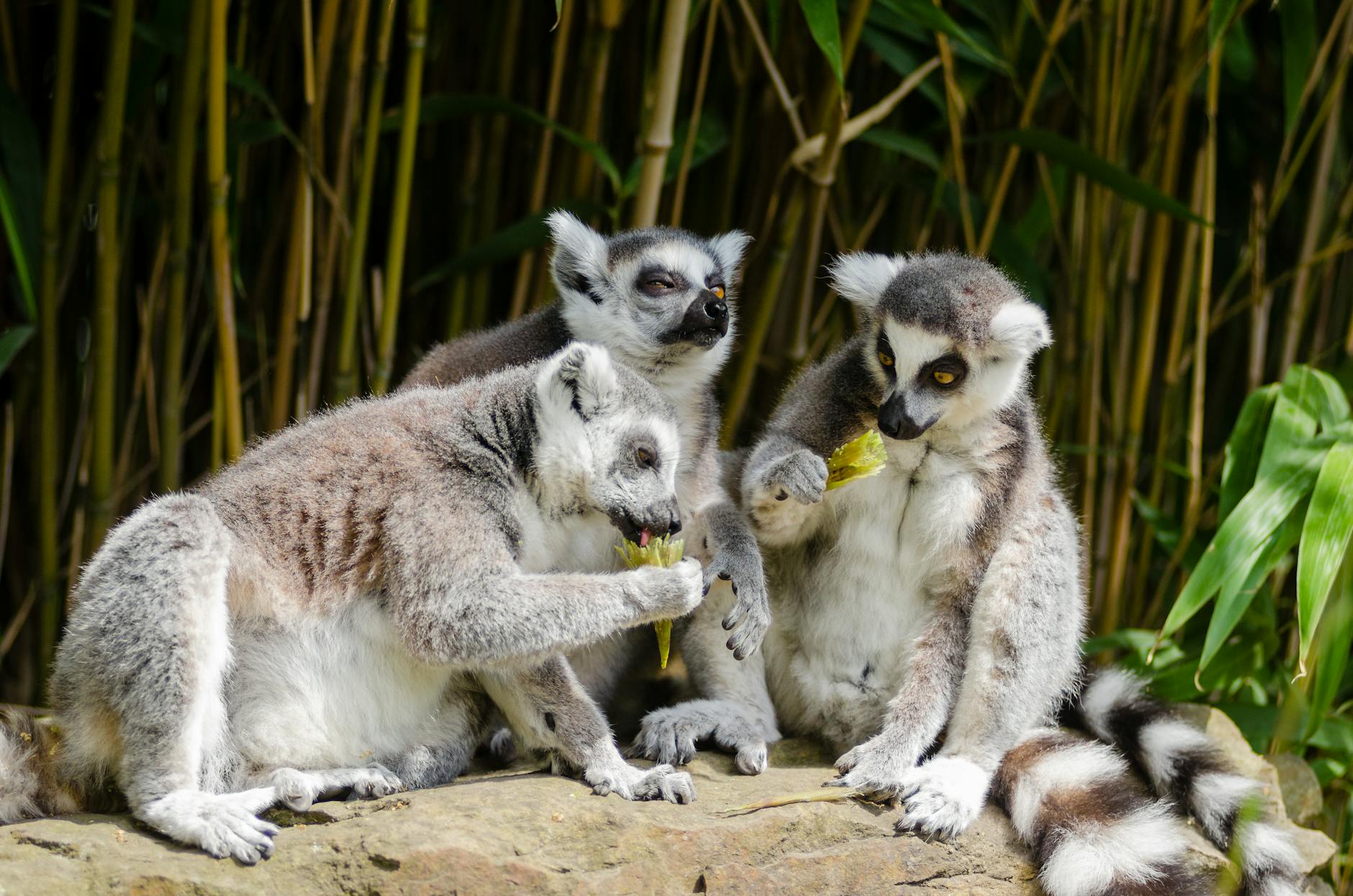
Kirindy is one of the best places in Madagascar to see the fossa — the island’s largest predator, resembling a slender cougar. You will also commonly see Verreaux’s sifaka (the white-and-brown dancing lemur), red-fronted brown lemurs, mouse lemurs on night walks, and the giant jumping rat (Hypogeomys antimena), an endemic species found only in Kirindy. Over 50 bird species include the Madagascar fish eagle and multiple endemic species.
Should I stay at the CFPF camp or day-trip from Morondava?
Staying overnight at the CFPF camp is significantly better for wildlife observation. The night walk and dawn walk are the peak times for nocturnal species including the fossa, mouse lemurs, and giant jumping rat. Day visitors who arrive mid-morning and leave by late afternoon miss these windows. If your budget allows even one night at the camp, it is worth it. Day trips from Morondava are still worthwhile for birding and diurnal lemur species.
Is Kirindy Forest accessible without a 4WD?
No — not reliably. The 60km dirt track from Morondava deteriorates after rain and has sandy sections that trap 2WD vehicles. In dry season (May–October), some travelers make it in a sturdy high-clearance 2WD, but breakdowns are a real risk. In wet season (November–April), a 4WD is mandatory. Hire a 4WD in Morondava or book a driver through your hotel — do not attempt the track in a standard sedan.
Kirindy Forest is one of Madagascar’s most underrated wildlife destinations — accessible enough for independent travelers yet wild enough to feel genuinely remote. Plan your transport before arriving: the camp needs advance booking and the 4WD requirement is non-negotiable. Combine Kirindy with a Baobab Avenue sunrise or sunset for one of Madagascar’s most memorable double-header days. Remote western Madagascar is not a place to be without medical cover — evacuation from Morondava to Antananarivo is straightforward by air, but costs are substantial without insurance. Get SafetyWing before you travel —, covering emergency medical care and evacuation.
Travel Insurance for Madagascar
Medical evacuation from Madagascar costs $30,000–$80,000. Don’t travel without cover.
- SafetyWing — monthly-subscription travel medical cover; you can check their plans.
- World Nomads — single-trip travel insurance with adventure-activity options.
Plan Your Trip to Madagascar
- Read the full Madagascar Travel Guide
- Explore itineraries by style and duration
- Plan a 10-Day Madagascar Itinerary
Where to Stay