Madagascar Family Travel 2026: The Complete Guide to a Trip With Children
Affiliate disclosure: This article contains sponsored links to hotels, tour operators, insurance providers, and other travel services. We earn a small commission if you book through our links, at no extra cost to you.
Madagascar Family Travel 2026 — At a Glance
- Who it suits: adventurous families, ideally with school-age children and up — wildlife-mad kids love it; it is not a one-stop resort destination
- The big draw: lemurs — few experiences thrill children like a wild indri calling or a ring-tailed lemur troop at arm’s length
- Easiest wins: Andasibe (lemurs, 3–4 hours from the capital) and Nosy Be (beaches and gentle island life)
- Best time: the dry season (April–November); July–August suits the northern-hemisphere school holidays
- Getting around: a private vehicle with a driver-guide is essential — there is no reliable public transport
- Health: malaria precautions and up-to-date vaccinations are needed; speak to a travel clinic well ahead
- Flight protection: EU261 €600 per passenger on disrupted European inbound flights
- Travel insurance: SafetyWing Nomad Insurance — essential family cover for a remote destination
- Where to stay: family-friendly stays in Nosy Be on Agoda
🎒 Madagascar Trip Essentials
A few inexpensive items make the biggest difference on the ground in Madagascar:
- Picaridin insect repellent — DEET-free protection against malaria mosquitoes. See on Amazon →
- Permethrin clothing spray — treat clothes; kills mosquitoes on contact for weeks. See on Amazon →
- Pop-up mosquito net — budget lodges rarely provide one; packs down tiny. See on Amazon →
- Water filter bottle — tap water isn’t safe to drink in Madagascar. See on Amazon →
- Universal travel adapter (USB-C) — Madagascar uses European-style plugs. See on Amazon →
- 8×42 binoculars — essential for spotting lemurs and chameleons in the canopy. See on Amazon →
As an Amazon Associate we earn from qualifying purchases.
Is Madagascar a good destination for a family holiday? The honest answer is: yes — for the right family, planned the right way. This is not a fly-and-flop resort island; it is a wild, remote, endlessly fascinating country of lemurs, baobabs, rainforests, and reef-fringed beaches, where the rewards for children are extraordinary but the travel takes more thought than a package to the Mediterranean. For adventurous families — especially those with school-age children and up who love animals and the outdoors — Madagascar offers something few destinations can match: the chance to see creatures that exist nowhere else on Earth, in a place still genuinely off the beaten track. This guide is your complete, honest overview of family travel in Madagascar: who it suits, what children love, where to go, when, how to keep everyone safe and well, and how to plan a trip that works for all ages. For what to actually do with the kids, see our Madagascar with kids guide.
The single greatest argument for bringing children to Madagascar is the wildlife. Few things light up a child’s face like a family of lemurs leaping overhead, a chameleon swivelling its eyes on a guide’s hand, or a giant baobab they can stand beneath. And much of it is surprisingly accessible: the indri of Andasibe are just a few hours from the capital, and the ring-tailed lemurs of the community reserves almost guarantee a close encounter. Paired with warm, safe beaches in the north and a culture that is overwhelmingly welcoming to children, Madagascar can be the trip of a lifetime for a family — provided you plan around its realities. Below, we set out exactly how. For the wildlife itself, see our lemurs of Madagascar guide; for what it costs, our family trip cost guide.
Is Madagascar Good for Families?
Madagascar rewards families enormously, but it is best approached with clear eyes. On the positive side, the wildlife is genuinely magical for children, the people are exceptionally warm and child-friendly, the beaches of the north are safe and beautiful, and a private guided trip can be tailored entirely around young travellers’ energy and attention spans. On the practical side, the country is large and the roads are slow and rough, so distances take time; healthcare is limited outside the capital; malaria is present in many areas; and the infrastructure, while improving, is basic by resort standards. None of this rules out a family trip — far from it — but it shapes how you should plan one.
In practice, Madagascar suits some families far better than others. It is wonderful for families with school-age children and teenagers who are curious about animals and can handle a few longer travel days; it is superb for multi-generational trips where grandparents, parents, and older children share the wonder of the wildlife; and it works beautifully as a private, guided trip built around the family’s pace. It is more demanding with very young children (toddlers and babies), for whom the long drives, the malaria risk, and the remoteness from medical care weigh more heavily — not impossible, but requiring extra caution, a gentler itinerary, and careful medical advice. The key is to be realistic about your own family and to design the trip accordingly, rather than expecting a hands-off beach package.
The families who have the best time in Madagascar are those who come for the experience rather than the ease — who want their children to see real wild lemurs rather than a theme park, to swim off a quiet beach rather than a crowded resort strip, and to come home with stories no one else at school will have. Approached in that spirit, and planned around the country’s realities, Madagascar is one of the most rewarding family destinations on Earth.
What Children Love About Madagascar
Madagascar is, for the right child, a living wildlife documentary they get to step into. The highlights that delight young travellers most include:
Lemurs
The undisputed star — from the wailing indri of Andasibe to the sunbathing ring-tailed lemurs of the south, and the tiny, wide-eyed mouse lemurs on a night walk. Nothing thrills children more than a wild lemur leaping overhead or a troop crossing the path with babies on board. Because many are habituated and active by day, close encounters are the norm in the accessible parks, not a matter of luck.
Chameleons and other reptiles
From the giant Parson’s chameleon to the thumbnail-sized Brookesia, plus leaf-tailed geckos that vanish against bark, Madagascar’s reptiles are endlessly fascinating on a guided forest walk. Children love watching a chameleon swivel its eyes independently or fire out its tongue, and the guides are brilliant at spotting the camouflaged creatures kids would never find alone — turning the walk into a real-life treasure hunt.
Baobabs
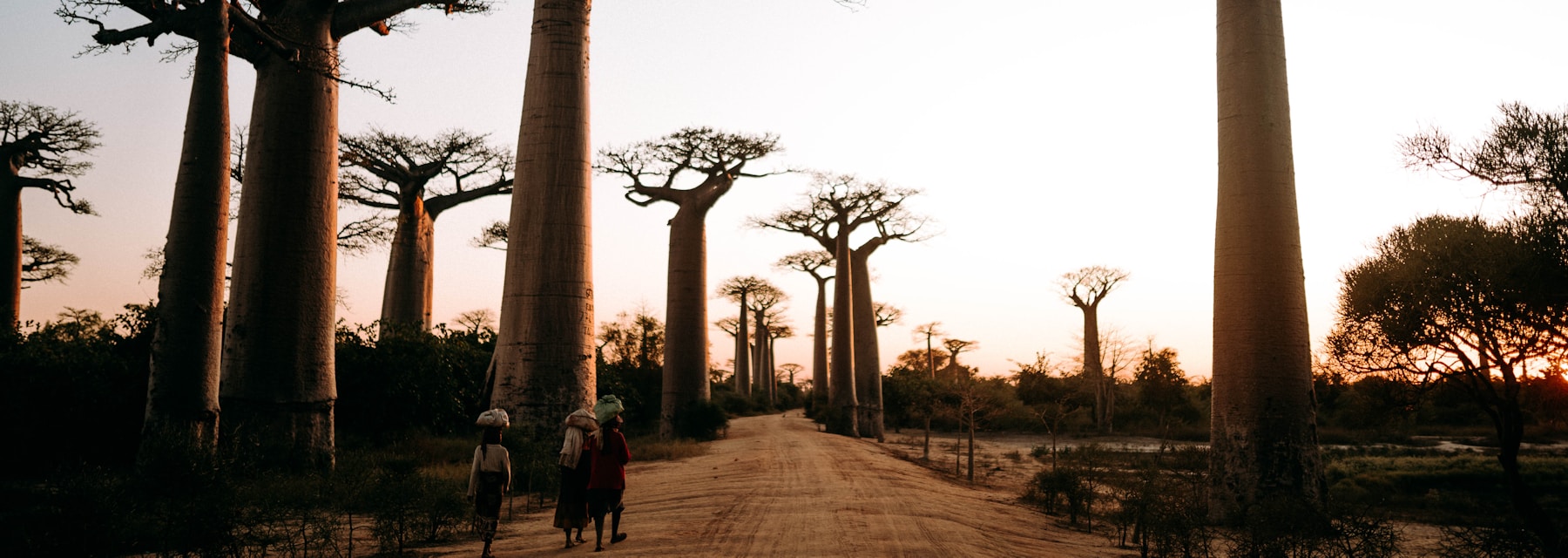
The giant, upside-down-looking trees, especially the famous Avenue at sunset, are a real “wow” for children and a brilliant family photo. Standing beneath a tree that is many centuries old and far too wide to hug makes a vivid, memorable impression, and the legends about how the baobab came to grow “upside down” capture young imaginations.
Beaches and snorkelling
The warm, calm, reef-protected waters of Nosy Be and the islands are perfect for young swimmers and first snorkels among the fish. After the focus of wildlife-watching, a few beach days let children simply play, swim, and recharge, and the gentle lagoons make a safe, easy introduction to snorkelling for even quite young children.
Whales (in season)
The humpback whales off Île Sainte-Marie from July to September make an unforgettable boat trip for older children — the sight of a breaching whale is something they will talk about for years. It is seasonal and weather-dependent, so it suits families travelling in the right months with children old enough for a boat outing.
Night walks
Torch in hand, spotting the glowing eyes of nocturnal creatures — mouse lemurs, chameleons asleep on twigs, frogs and geckos — is pure adventure for children. A short guided night walk near a rainforest lodge is often a highlight of the whole trip, and feels genuinely exciting without ever being frightening.
The beauty of Madagascar for families is the variety: a single trip can mix rainforest wildlife, beach time, and cultural encounters, so there is always something new before anyone gets bored. A good guide is brilliant at pitching the experience to children — turning a forest walk into a treasure hunt for chameleons, or a beach day into a snorkelling expedition — and that, more than anything, is what makes the wildlife come alive for young travellers. For a full menu of family activities, see our Madagascar with kids guide.
Best Places for a Family Trip
Not everywhere in Madagascar is equally family-friendly. The best regions for families combine accessible wildlife, comfortable lodging, and manageable travel. The headline choices:
- Andasibe (east): the easiest wildlife win in the country — the indri and several other lemurs, just 3–4 hours from the capital on a paved road. A perfect, low-effort first stop for families. See our eastern Madagascar guide.
- Nosy Be and the northern islands: warm, safe beaches, gentle island-hopping, snorkelling, and lemur-spotting on Nosy Komba — the relax-and-recharge part of a family trip. See our northern Madagascar guide.
- Île Sainte-Marie (east coast): a laid-back island with beaches and, in season, humpback whales — a lovely, easygoing family base.
- The RN7 south (for older children): the classic overland route with ring-tailed lemurs at Anja, rainforest at Ranomafana, and canyons at Isalo — more travel, but a rich adventure for families with older kids.
For most families, the winning formula is to combine accessible wildlife with beach time — for example, the indri of Andasibe followed by the beaches of Nosy Be — so the trip balances adventure with rest. The national parks are the heart of the wildlife experience, and the most accessible ones are very manageable with children; for the full range, see our national parks guide. A family specialist can match the regions and the pace to your children’s ages and interests, keeping travel days reasonable and building in plenty of variety.
It is worth being selective rather than ambitious. With children, two well-chosen regions beat four rushed ones every time, and the most rewarding family trips tend to follow a simple shape: an accessible wildlife region to deliver the lemurs and the “wow”, then a beach to relax and let everyone recharge, all reached without punishing drives. The harder, more remote corners — the deep west, the far south, the rugged Tsingy — are better saved for a return trip or for families with older teenagers and a taste for adventure. For a first family visit, prioritise the easy wins, keep the wildlife front and centre, and leave room in the days for the spontaneous moments children love most.
When to Visit With Children
The best time for a family trip is the dry season (April–November), when the weather is most reliable, the roads are at their easiest, and wildlife-watching is most comfortable — all of which matter more with children in tow. Within that window, July and August coincide with the northern-hemisphere summer school holidays and are also prime time for the humpback whales off Île Sainte-Marie, making them popular for families (book well ahead, as this is peak season). The shoulder months of April–May and October–November offer lovely weather with fewer crowds, ideal if your children’s school calendar allows. See our best time to visit guide for the full seasonal picture.
The wet season (December–March) is harder with a family: heavy rain, some roads impassable, and a higher mosquito (and malaria) risk, so it is generally best avoided for a children’s trip, though the far parks of the east remain green and lush. Whenever you travel, aligning the trip with the dry season and keeping daily travel times reasonable — rather than racing across the country — makes for a far happier family holiday. Building in rest days, especially after long drives or flights, keeps everyone’s spirits up.
Health, Safety, and Practicalities for Families
Travelling with children in Madagascar calls for sensible preparation, but nothing that should put off a well-organised family. The key points:
Health. Malaria is present in many parts of Madagascar, so antimalarial precautions and good mosquito protection are important — consult a travel clinic well in advance about prophylaxis suitable for your children’s ages, and ensure routine and recommended vaccinations are up to date. Bring a well-stocked family first-aid kit, any regular medications, and rehydration salts. Drink bottled or purified water, and be sensible with food. Healthcare is limited outside the capital, which makes good insurance and evacuation cover essential (see below).
Safety. Madagascar is generally welcoming and safe for families, with the usual sensible precautions for a developing country — watch belongings in busy towns, avoid walking around unfamiliar areas after dark, and follow your guide’s local advice. The wildlife is not dangerous in the way an African safari can be; the main risks are travel-related (long road journeys) and health-related, both manageable with planning.
Getting around. There is no reliable public transport for visitors, so a private vehicle with a driver-guide is effectively essential for a family — it is also far more comfortable and flexible, letting you set the pace, stop when children need to, and keep travel days manageable. Compare car and 4WD rental options on Carla if you are arranging transport independently, though most families travel with a guided vehicle arranged as part of their trip.
Food and comfort. Malagasy food is generally mild and rice-based, and lodges and hotels in tourist areas cater well to children, with familiar options usually available. Pack favourite snacks for long drives, plenty of sun protection, and layers for cool highland mornings.
Lemurs: The Heart of a Family Trip
If there is one thing that turns a Madagascar trip from a good family holiday into an unforgettable one, it is the lemurs. For a child, the moment a family of indri begins to wail through the misty canopy at Andasibe, or a troop of ring-tailed lemurs ambles across a path with babies clinging to their backs, is pure wonder — the kind of memory that lasts a lifetime. Lemurs are found wild only in Madagascar, they are active and visible by day in the accessible parks, and many are remarkably habituated, so close encounters are common rather than rare. For wildlife-loving children weaned on nature documentaries, stepping into the real thing is genuinely magical.
The practical bonus is that lemur-watching is one of the gentlest wildlife activities a family can do: the walks in the accessible parks are short and easy, the guides are expert at finding the animals quickly so children don’t lose patience, and there is no danger from the wildlife itself. Night walks add a thrill — torch in hand, searching for the glowing eyes of mouse lemurs — that older children adore. Building the trip around a couple of accessible lemur parks, rather than chasing rare species deep in the wilderness, gives families the magic without the hardship, and means even younger children can take part fully rather than being dragged on gruelling hikes. For the full picture of the animals themselves, see our lemurs of Madagascar guide.
Family-Friendly Places to Stay
Accommodation in Madagascar ranges from simple guesthouses to comfortable lodges and a handful of genuinely lovely beach resorts, and choosing the right places makes a real difference with children. In the wildlife regions, family-friendly lodges near the parks — with gardens, space to run around, and often resident chameleons or lemurs in the grounds — turn the accommodation itself into part of the adventure. On the coast, the beach hotels of Nosy Be and the islands offer the pools, gentle swimming, and relaxed atmosphere that let everyone recharge between wildlife outings, and many can arrange family rooms or adjoining rooms. Browse family-friendly stays in Nosy Be on Agoda — the better family options book up in peak season, so reserve ahead.
A few things help when choosing where to stay with children. Look for lodges with space and a relaxed setting rather than formal hotels; check whether family or triple/quad rooms are available, as not all properties have them; and favour places with pools or safe swimming for downtime, which children love after a day’s travel. In the capital, comfortable hotels make a useful first and last night around international flights; check Antananarivo stays on Agoda. A specialist who knows the family-friendly properties can match the lodging to your children’s ages and the rhythm of the trip.
Packing and Preparing Your Children
A little preparation makes a Madagascar family trip far smoother. On the health side, the most important step is an early visit to a travel clinic to arrange antimalarials suitable for your children’s ages and to check vaccinations — do this well ahead, as some require several weeks. Pack a thorough family first-aid kit, insect repellent and long, light clothing for dawn and dusk, high-factor sun protection, rehydration salts, and any regular medications in your hand luggage. On the comfort side, bring familiar snacks and entertainment for the long drives and flights, a reusable water bottle each, layers for cool highland mornings and warm coastal days, sturdy shoes for forest walks, and swimwear and snorkel masks for the beaches.
It also pays to prepare children for the experience beforehand. Watching a documentary about lemurs, reading about chameleons and baobabs, or following the route on a map builds excitement and helps young travellers understand and appreciate what they will see. Setting gentle expectations helps too — that some days involve travel, that the wildlife is wild and takes patience, and that the rewards are extraordinary. Children who arrive knowing a little about what makes Madagascar special tend to engage far more deeply with it, and a good guide will build beautifully on that foundation, turning every walk into a story.
Keeping the Trip Fun: Pacing and Day-to-Day
The biggest single factor in a happy family trip to Madagascar is pacing. The country tempts visitors to cram in too much, but with children the secret is the opposite: fewer places, more time at each, and realistic travel days. A trip that pairs an accessible wildlife region with a beach, with rest days built in, will be far more enjoyable than a breathless dash across the island. Aim to break up any long drive, plan wildlife outings for the cool, active mornings when children (and lemurs) are at their best, and leave afternoons for pools, beaches, and downtime.
Day to day, the rhythm that works best for families is an early start for wildlife, a relaxed middle of the day, and gentle evenings. The forests are most alive in the early morning, so an early walk rewards everyone; the heat of midday is for resting, swimming, or travelling; and evenings can bring an easy night walk for the older children or simply a quiet dinner watching the stars. Travelling with a private vehicle and a flexible guide means the day can flex around the children — stopping when they need to, slowing down when they are tired, and seizing the moment when the wildlife appears. That flexibility, more than any fixed itinerary, is what keeps a family trip joyful.
How to Plan a Family Trip to Madagascar
A successful family trip to Madagascar comes down to a few principles. Keep the pace gentle: resist the urge to see everything — choose two or three regions, keep daily travel times reasonable, and build in rest and beach days. Lead with the wildlife: the lemurs and chameleons are the heart of the trip for children, so prioritise the accessible parks. Balance adventure with downtime: follow a rainforest stay with beach time so everyone recharges. Travel privately and guided: a private vehicle and a great driver-guide are the single biggest factor in a smooth family trip, handling the logistics and pitching the experience to your children.
Because the country is demanding to navigate, a tailor-made trip arranged by a specialist who knows family travel is invaluable — sequencing the regions for short, manageable travel days, choosing family-friendly lodges, timing wildlife outings for children’s energy, and handling all the health and logistics so parents can simply enjoy the trip. For ready-made structures, see our family tour packages guide; for a sample route, our family itinerary guide; and for budgeting, our family trip cost guide.
Practical Tips for Family Travel in Madagascar
Choose accessible wildlife first. Andasibe’s indri, just hours from the capital, is the easiest and most reliable lemur encounter — a perfect family opener that needs no rough roads.
Keep travel days short. Madagascar’s roads are slow; plan two or three regions rather than a grand tour, and build in rest and beach days between wildlife stops.
Travel in the dry season. April–November is far easier and more comfortable with children; July–August suits school holidays and the whale season.
Use a private guided vehicle. There is no reliable public transport; a private vehicle with a driver-guide is essential, comfortable, and flexible for a family.
Prepare for health. See a travel clinic well ahead about antimalarials and vaccinations for your children, and pack a family first-aid kit and good mosquito protection.
Make the wildlife a game. A good guide turns a forest walk into a chameleon treasure hunt and a beach day into a snorkelling adventure — ask for one who is great with children.
Beyond the Wildlife: Culture and People
Madagascar’s appeal for families goes well beyond its animals. The Malagasy people are famously warm and welcoming, and children in particular are met with genuine friendliness wherever they go — a smile and a wave from your kids will open doors and spark connections in markets, villages, and along the road. For children, this human warmth is part of the magic: they come home having played with local children, watched a village craftsman at work, or been cheerfully fussed over by a lodge’s staff, and these encounters often stick in the memory as vividly as the lemurs. Travelling respectfully and curiously, and letting children engage with the people they meet, turns a wildlife holiday into a richer cultural education.
There is plenty for families to discover culturally without it ever feeling like a lesson: colourful markets full of spices, fruit, and crafts; artisans carving wood or weaving; the terraced rice paddies and zebu carts of the highlands; and the relaxed island life of the coast. Children are natural cultural ambassadors, and a good guide will weave in gentle, age-appropriate encounters — a stop at a village market, a visit to a craft workshop, a chat with the lodge gardener about the chameleons in the grounds — that help young travellers understand they are in a real, living place, not a theme park. It is this combination of extraordinary wildlife and genuine human warmth that makes Madagascar such a formative destination for children.
Common Worries — and Honest Answers
Parents considering Madagascar naturally have concerns, and they deserve straight answers. “Isn’t it too remote and difficult?” It is remote, and the roads are slow, but a private guided trip handles all of that, and the accessible regions are very manageable — the key is a gentle, well-planned itinerary rather than a grand tour. “What about malaria?” It is a real consideration, addressed with antimalarials and mosquito protection arranged via a travel clinic; many families travel to malaria areas safely every year with the right precautions. “Will the children be bored on the travel days?” Not if you keep them short, break up the drives, and bring snacks and entertainment — and the scenery and roadside life are fascinating in themselves.
“Is the wildlife dangerous?” No — Madagascar has no large dangerous animals, which is part of what makes it so good for children; the lemurs and chameleons are entirely safe to be near. “What if someone gets ill far from a hospital?” This is the most important reason to have comprehensive insurance with evacuation cover, and to choose an itinerary that is never recklessly remote with young children. “Is it worth the effort and cost?” For families who want their children to experience real, wild nature and a genuinely different culture, overwhelmingly yes — few destinations leave children (and parents) with such a powerful sense of having seen something truly special. Honest planning around these concerns is exactly what a family specialist provides.
Getting There and Travelling Well
Madagascar is reached by connecting flights via Europe, the Gulf, or Africa, landing at Antananarivo, from which family destinations are reached by short domestic flight or overland drive. Book international flights early — long-haul flights with children are easier with planning — and protect them on European routes, where EU261 entitles you to up to €600 per passenger for long delays, cancellations, and denied boarding. Register your inbound flight for EU261 coverage with AirAdvisor so any eligible claim is handled for you — especially welcome when travelling with children.
Comprehensive travel insurance is absolutely essential for a family trip, covering all members for medical emergencies, evacuation, trip cancellation, and the activities you plan. Medical evacuation from a remote region of Madagascar can cost tens of thousands of euros, so good cover is non-negotiable with children. SafetyWing Nomad Insurance offers flexible, affordable cover well suited to family travel — confirm it covers your children, your activities, and remote-area evacuation before you travel.
Carla / Voyagiste Madagascar (plan your family trip)
Madagascar-resident specialist who can build a family trip around your children’s ages, interests, and energy — accessible wildlife, safe beaches, family-friendly lodges, short travel days, and all the health and logistics handled. Contact Carla directly to plan a trip that balances lemurs and beaches, adventure and rest, with a great driver-guide who is wonderful with children. Local knowledge is what turns Madagascar from a daunting destination into a smooth, magical family holiday.
Frequently Asked Questions
Is Madagascar good for families with children?
Yes, for adventurous families — especially with school-age children and up — who love wildlife and can handle some longer travel days. The lemurs and chameleons are magical for children. It is less suited to very young children, for whom the long drives and malaria risk weigh more heavily. See our Madagascar with kids guide.
What’s the best age to take children to Madagascar?
School-age children and teenagers do best — old enough to enjoy the wildlife, handle travel days, and take antimalarials. Multi-generational trips work well too. Toddlers and babies are possible but require extra caution and a gentler itinerary.
When is the best time for a family trip?
The dry season (April–November). July–August suits school holidays and the whale season; April–May and October–November offer lovely weather with fewer crowds. See our best time to visit guide.
Do children need malaria precautions?
Malaria is present in many parts of Madagascar, so consult a travel clinic well ahead about antimalarials suitable for your children’s ages, and use good mosquito protection. Ensure vaccinations are up to date.
How much does a family trip to Madagascar cost?
It varies with comfort level, group size, and trip length; the private vehicle and domestic flights are the biggest costs. See our family trip cost guide for a full breakdown.
Do we need travel insurance?
Absolutely — essential for the whole family, covering medical evacuation from remote regions. Comprehensive coverage is non-negotiable; confirm it covers your children and activities.
🧭 Plan Your Madagascar Family Trip With Carla
Lemurs the children will never forget, safe beaches to recharge, and short, manageable travel days. Reach out to Carla, our Madagascar-resident specialist, to build a family trip around your children’s ages and interests, with the wildlife, the beaches, and all the logistics handled.
Plan Your Trip to Madagascar
- Read the full Madagascar Travel Guide
- Explore itineraries by style and duration
- Best Tours and Guided Experiences
Where to Stay