Madagascar Safari 2026: The Complete Guide to a Different Kind of Safari
Affiliate disclosure: This article contains sponsored links to hotels, tour operators, insurance providers, and other travel services. We earn a small commission if you book through our links, at no extra cost to you.
Madagascar Safari 2026 — At a Glance
- What it is: a walking wildlife safari for lemurs, chameleons and endemic birds — not a Big-Five game drive
- Where: rainforest and dry-forest parks — Andasibe, Ranomafana, Isalo, Tsingy and the north
- When: the dry season (roughly April–November), with a wildlife peak in the late dry months
- Book tours & park guides: wildlife tours on GetYourGuide
- Getting between parks: car-and-driver on Carla
- Plan a safari with a local: contact Carla
- Flight protection: EU261 up to €600 per passenger on disrupted European inbound flights
- Travel insurance: SafetyWing Nomad Insurance
- Where to stay: Antananarivo stays on Agoda
🎒 Madagascar Trip Essentials — Order Before You Fly
Madagascar is remote and malarial, and a few inexpensive items make the biggest difference on the ground:
- Picaridin insect repellent — DEET-free, protects against malaria-carrying mosquitoes. See options on Amazon →
- Permethrin clothing spray — treat clothes before you fly; kills mosquitoes on contact. See options on Amazon →
- Pop-up mosquito net — budget lodges rarely provide one. See options on Amazon →
- Water filter bottle — tap water isn't safe to drink. See options on Amazon →
- Universal travel adapter (USB-C) — Madagascar uses European-style plugs. See options on Amazon →
- 8×42 binoculars — essential for spotting lemurs and chameleons in the canopy. See options on Amazon →
As an Amazon Associate we earn from qualifying purchases, at no extra cost to you.
Say the word “safari” and most people picture the same scene: a dusty 4×4 idling on the African savanna, a pride of lions in the long grass, elephants crossing in silhouette at dusk. Madagascar offers a safari too — but if you arrive expecting that, you will spend the first day quietly recalibrating. There are no lions here, no elephants, no herds of wildebeest. What there is, instead, is the strangest concentration of life on the planet: animals that exist nowhere else, in forests that look like nothing else, reached not from the seat of a vehicle but on your own two feet.
This is the kind of safari Madagascar does best — intimate, active, and built around discovery rather than guarantees. Around 90% of the island’s wildlife is endemic, found here and nowhere else on Earth, which means that almost everything you see will be a first. This guide explains what a Madagascar safari really is, what you will see, where and when to go, how it works on the ground, and how to set your expectations so the trip becomes the most unique wildlife journey you will ever take. If you would rather start from the bigger picture, our complete Madagascar itinerary guide shows how a safari slots into a wider trip.
Is Madagascar a Safari Destination?
Yes — emphatically yes — provided you redefine the word “safari.” The term comes from the Swahili for “journey,” and that older meaning fits Madagascar far better than the modern game-drive cliché. A Madagascar safari is a journey into wild, forested country in search of wildlife. It simply happens that the wildlife is small, secretive, and almost entirely unique, and that you find it by walking forest trails rather than scanning open plains from a vehicle.
The island broke away from the African mainland and then from the Indian subcontinent tens of millions of years ago, and its plants and animals evolved in near-total isolation ever since. The result is one of the world’s great biodiversity hotspots: lemurs that exist on no other landmass, chameleons in a dazzling range of sizes, leaf-tailed geckos so well camouflaged you can stare straight at one and not see it, and well over a hundred bird species found only here. For a naturalist, a photographer, or simply a traveller hungry for somewhere genuinely different, that is the richest possible definition of a safari.
So the honest answer is this: Madagascar is absolutely a safari destination, but it rewards a particular kind of traveller — the curious one, the patient one, the one who would rather kneel in the leaf litter to photograph a thumbnail-sized chameleon than tick a lion off a list. If that sounds like you, no destination on earth will surprise you more.
It is worth saying plainly that the word itself sets the trap. Travellers who book a “Madagascar safari” while picturing the Serengeti are setting themselves up for a quiet morning of disappointment; travellers who arrive understanding that they are here for forest, foot and the small endemic wonders of an island that evolved alone come home calling it the best wildlife trip of their lives. Almost everything in this guide is, in one way or another, about closing that expectation gap before you book — because once it is closed, what remains is pure delight.
How a Madagascar Safari Is Different from an African One
The simplest way to understand a Madagascar safari is by everything it is not. On a classic East or Southern African safari you sit in an open vehicle, cover large distances across open country, and look for large mammals — the celebrated Big Five among them — often at a comfortable distance through binoculars. The animals are big, the landscapes are wide, and sightings of charismatic megafauna are, in good reserves, close to guaranteed.
Madagascar inverts almost every one of those assumptions. You walk instead of drive. The country is forest, not savanna — dense, green, layered rainforest in the east, spiny and strange dry forest in the west and south. The animals are small: a mouse lemur can sit in the palm of your hand, a leaf-tailed gecko is the length of a finger, and many of the most thrilling finds are no bigger than a coin. And sightings are about effort and skill rather than certainty — your guide’s trained eye, the time of day, the season, and a measure of luck all play their part. Nothing is on a fixed track. Everything is earned.
This is precisely why a Madagascar safari feels so different — and, for many travellers, so much more rewarding. There is a particular thrill in spotting an animal you would never have seen yourself, in a forest you have walked into on foot, knowing it lives only on this one island. The smaller scale brings you closer; the walking connects you to the landscape; the uncertainty makes every sighting feel like a discovery rather than a delivery. If you want to see the contrast spelled out in detail — including which trip suits which traveller — read our dedicated comparison, Madagascar safari vs an African safari.
One more difference is worth naming early. On an African safari the day is structured around the cool hours — an early-morning and a late-afternoon game drive, with the middle of the day spent resting at camp. In Madagascar the structure is different again, because so much of the wildlife is nocturnal. Some of the most magical hours of a Madagascar safari happen after dark, on guided night walks, head-torches sweeping the forest edge for the eye-shine of mouse lemurs and the slow blink of a chameleon asleep on a twig. More on that below.
What You’ll See on a Madagascar Safari
This is the heart of the trip, so it is worth knowing what is actually out there. No two parks hold exactly the same cast, and no guide can promise any single species, but the categories below are what a well-planned wildlife circuit is built to deliver. Tours and the mandatory park guides who find these animals can be arranged in advance — browse the options for wildlife and nature tours on GetYourGuide, and book the most popular guided forest excursions early, because the best naturalist guides are reserved months ahead in peak season. For a fuller menu of the guided experiences on offer — from short half-day forest walks to multi-day naturalist circuits — see our companion guide to Madagascar wildlife tours, which breaks down what each style includes and who it suits.
Lemurs
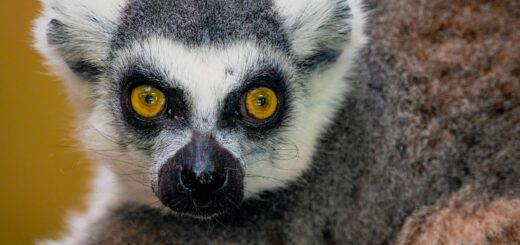
Lemurs are the headline act, and rightly so — they are found in the wild only in Madagascar, in more than a hundred recognised species ranging from the cat-sized indri, whose eerie, whale-like song carries for kilometres through the eastern rainforest, to mouse lemurs that weigh less than a golf ball. Between those extremes sit the famous ring-tailed lemur of the south, the leaping, dancing sifaka, and a long list of others, each adapted to its particular forest. Seeing a family troop move through the canopy above you, or hearing an indri call answered across a valley at dawn, is the moment most travellers remember above all others.
Because lemurs are so central to the trip, it is worth reading up before you go. Our complete guide to the lemurs of Madagascar covers the main species you can realistically hope to see, and our practical companion piece on where to see lemurs in Madagascar matches species to parks so you can prioritise the ones you most want to find.
Chameleons & reptiles
Madagascar is the world capital of chameleons — roughly half of all known species live here, from Brookesia pygmy chameleons barely larger than a fingernail to the spectacular panther chameleon, whose males flush through electric blues, greens and oranges. Spotting them is an art: a good guide reads the foliage for the wrong kind of stillness, then points, and slowly a leaf resolves into a living animal. Alongside them you will meet the leaf-tailed geckos, masters of camouflage that press flat against bark and all but vanish, plus a parade of day geckos, snakes, and the occasional Nile crocodile in the right wetland.
The reptiles deserve their own deep dive, and our complete guide to the chameleons of Madagascar goes much further into the species and where to look for them. For many travellers the reptiles, not the lemurs, end up being the surprise highlight of the safari.
Birds (endemics)
Madagascar is a serious birding destination in its own right, with well over a hundred endemic species and several whole families found nowhere else — the vangas, the ground-rollers, the mesites, the asities, the couas. Even travellers who arrive indifferent to birds tend to leave converted, because so many of these are visually extraordinary: the velvet asity in breeding colour, a long-tailed ground-roller picking through the spiny forest, the improbable bill of a sickle-billed vanga. Bring binoculars, walk slowly, and a dedicated birding guide will open up a layer of the forest most visitors never notice.
Frogs & the small stuff
The longer you walk, the more you realise that the headline animals are only the surface. Madagascar’s forests teem with smaller wonders: brilliantly coloured mantella frogs the size of a coin, tomato frogs flushed scarlet, giant comet moths, hissing cockroaches, stick insects, and orchids and pitcher plants tucked into the understorey. The best guides take genuine delight in this small stuff, and a good night walk in particular can turn into a slow, mesmerising treasure hunt through the leaf litter. Embracing the small scale is the single biggest mindset shift that turns a Madagascar safari from a let-down into a revelation.
Baobabs & landscapes
The wildlife is set against some of the most distinctive scenery on the planet. The baobabs of the west — vast, ancient, swollen-trunked trees — line the famous Avenue near Morondava and stand sentinel across the dry country. In Isalo, sandstone canyons and natural pools cut through ochre massifs. In the Tsingy de Bemaraha, forests of needle-sharp limestone pinnacles rise in grey cathedrals. The landscape is not a backdrop to the safari; it is half the reason to come. For travellers whose main motivation is imagery, our guide to photography in Madagascar covers where and when to shoot both the wildlife and the scenery.
Night walks
If you do one thing differently on a Madagascar safari, make it the night walks. A huge share of the island’s wildlife is nocturnal, and after dark the forest transforms. Head-torch beams catch the orange eye-shine of mouse lemurs and dwarf lemurs moving through the branches, chameleons sleep in pale, ghostly poses on the tips of twigs where they are easiest to find, and frogs and geckos emerge to hunt. Many parks and reserves run guided night walks along their boundaries or on private parcels nearby. It is, for a great many travellers, the most unforgettable part of the whole trip — and an experience that simply has no equivalent on an African game drive.
Where to Go on Safari
Madagascar is a big island with poor roads, so a safari is built around a handful of standout parks rather than an attempt to see everything. The classic circuit strings together a few of these, chosen for the wildlife you most want and the time you have. Our guide to Madagascar’s national parks and reserves covers the full set in detail; below are the safari headliners.
Andasibe-Mantadia (east)
The single most popular wildlife destination on the island, and for good reason. Only a few hours’ drive east of the capital, Andasibe-Mantadia protects superb eastern rainforest and is the best place in the country to hear and see the indri, the largest living lemur. It also delivers chameleons, frogs, and excellent night walks just outside the park boundary, all within easy reach of a first stop. For many travellers it is the perfect introduction to a Madagascar safari. Our dedicated guide to eastern Madagascar and Andasibe goes deeper into what to expect and where to stay.
Ranomafana (south-east)
A montane rainforest of misty ridges and rushing rivers, Ranomafana is one of the richest parks for lemur diversity — golden bamboo lemurs, red-bellied lemurs and several others share the forest with a long list of reptiles, frogs and endemic birds. It is hillier and wetter than Andasibe, the walking is more demanding, and the rewards are proportionally greater. It usually features on the classic southern route between the highlands and Isalo.
Isalo (south)
Isalo is the great change of scene. Here the rainforest gives way to a dramatic sandstone massif of canyons, eroded pinnacles and palm-fringed natural pools, with ring-tailed lemurs and sifaka along the trails and some of the best hiking in the country. It is as much a landscape park as a wildlife one, and the contrast it provides after the rainforests is part of what makes the southern circuit so satisfying.
Tsingy de Bemaraha and the west
The west is harder to reach and all the more rewarding for it. The Tsingy de Bemaraha — a UNESCO World Heritage site of razor-edged limestone pinnacles threaded with via-ferrata walkways and forest pockets — is one of the most extraordinary landscapes on earth, home to its own specialised lemurs and reptiles. The same region holds the baobab country around Morondava and the wild, fossa-famous forest of Kirindy. Roads here are rough and the journey is part of the adventure.
The north
The far north combines wildlife and coast. Amber Mountain (Montagne d’Ambre) is a lush, accessible rainforest of waterfalls, chameleons and lemurs near Diego Suarez, while the dry forests and limestone of Ankarana hold caves, bat colonies and crowned lemurs. The north pairs naturally with the beaches and snorkelling of Nosy Be, making it the obvious base for a combined wildlife-and-beach trip — Nosy Be stays on Agoda fill up fast in the July–September high season, so book ahead.
In the far south, two small private reserves deserve a mention: Berenty and Anja, both famous for habituated, easy-to-see ring-tailed lemurs and both excellent if your time or mobility is limited.
When to Go on Safari
The single most important timing rule is simple: come in the dry season. Roughly April to November is dry-season territory, when forest trails are passable, the roads between parks are at their best, and wildlife-watching is most comfortable. The wet season from December to March brings heavy rain, leeches on the eastern trails, and roads that can become impassable — though it is also when many reptiles and amphibians are most active, so committed herpers sometimes choose it deliberately.
Within the dry season there is a wildlife rhythm worth planning around. The late dry months are often considered the peak for general wildlife viewing and for lemur activity, with many species at their most visible and, in places, with infants appearing. Birding peaks earlier in the season when many species are displaying. The shoulder months trade slightly higher chances of a shower for thinner crowds and lower prices. Because the ideal window depends on exactly what you want to see, it is worth reading our full guide to the best time to visit Madagascar before locking in dates — and booking guided tours early, as the prime weeks sell out first.
How a Madagascar Safari Works
The practical mechanics of a Madagascar safari are unlike most other wildlife destinations, so it helps to know what to expect on the ground.
Parks and local guides. Almost all wildlife-watching happens inside national parks and reserves, and in nearly every one a local guide is mandatory — not a bureaucratic formality but the single biggest factor in what you actually see. These guides know individual trees where chameleons roost and the calls that betray a hidden lemur; a half-day with a good one is the difference between a quiet walk and a dozen sightings. You typically engage them at the park entrance or, more reliably, pre-arrange them through a tour. You can book guided wildlife excursions on GetYourGuide in advance, which secures the strongest naturalist guides before they are taken.
Walking. A Madagascar safari is an on-foot experience. Trails range from gentle, near-level boardwalks at Andasibe to steep, slippery rainforest climbs at Ranomafana and the ladders and walkways of the Tsingy. None of it requires technical skill, but a reasonable level of fitness, sure-footedness and good walking shoes make every park more enjoyable.
Lodges. Accommodation near the parks ranges from simple, characterful eco-lodges to a handful of genuinely comfortable wildlife lodges, many of them running their own night walks on adjacent land. In the towns that anchor a circuit — the capital especially — you will find a fuller range of hotels. Antananarivo hotels on Agoda are the usual first and last night of any trip, and the better-value options book out in high season, so reserve early.
Getting between parks. This is where Madagascar humbles the unprepared. Distances look short on a map and take far longer in reality; roads vary from decent tarmac to deeply rutted tracks, and public transport is not a realistic option for a wildlife circuit. The standard solution — and the one we strongly recommend — is a private car with a driver, which gives you the flexibility to stop for a roadside baobab or an impromptu chameleon. Compare car-and-driver options on Carla and arrange your transport well ahead of the dry-season rush. For the full picture, see our guide on how to get around Madagascar.
Types of Safari
“Safari” covers several quite different trips in Madagascar, and choosing the right shape matters as much as choosing the parks. The main styles are below; for ready-made options, our overview of Madagascar safari tour packages lays out what a typical trip includes.
The classic wildlife circuit
The standard safari links two or three flagship parks — most often Andasibe in the east plus Ranomafana and Isalo on the southern route — with a private car and driver, local park guides, and night walks built in. It is the best all-round introduction, balancing rainforest, dry forest, lemurs, reptiles and landscape over roughly a week to ten days.
The photographic safari
A photography-focused safari slows everything down: fewer parks, more time in each, dawn and dusk sessions, and patience for the perfect light and behaviour. It pairs naturally with a specialist guide and a longer stay in the most productive forests. If imagery is your priority, our Madagascar photography guide covers gear, timing and the best subjects in depth.
The family safari
Madagascar works surprisingly well for families with school-age children, precisely because the wildlife is up-close and active rather than distant. Andasibe’s gentle trails, habituated lemurs at private reserves like Anja and Berenty, and short night walks all suit younger legs and attention spans. A private vehicle keeps the long transfers manageable.
The combined wildlife-and-beach safari
Many travellers pair a wildlife circuit with a few days on the coast, and the north makes this especially easy: the rainforest of Amber Mountain and the limestone of Ankarana, followed by the beaches and snorkelling of Nosy Be. It is the ideal structure for a honeymoon or a trip that wants both adventure and rest. Browse the range of beachfront stays on Nosy Be via Agoda for the relaxation half of the trip.
What It Costs
A Madagascar safari is not a budget free-for-all, but nor is it the rarefied luxury of some African safaris. Costs sit in the middle, and they are driven less by accommodation than by logistics: the private car and driver, fuel over long distances, park entry and the mandatory guides at each one, and domestic flights if you want to reach the harder regions like the Tsingy without days on the road. Accommodation itself spans a wide range, from simple eco-lodges to a few comfortable wildlife lodges, so your nightly spend is flexible.
As a relative guide rather than a quote: independent travellers who self-assemble a trip and share the cost of the vehicle generally pay least; mid-range circuits with a private car, guides and comfortable lodges sit in the middle; and tailor-made, lodge-led or fly-in itineraries reach into premium territory. The biggest single lever is the vehicle, because its cost is broadly fixed regardless of how many people share it — so travelling as a pair or small group meaningfully lowers the per-person price.
For real numbers and a full breakdown, see our dedicated Madagascar safari cost guide, and if you are watching every euro, our Madagascar budget travel guide shows how to keep a wildlife trip affordable without missing the headline parks.
What to Pack & How to Prepare
The right kit transforms a Madagascar safari, and most of it is unglamorous. Binoculars are the single most valuable item you can carry — much of the wildlife is high in the canopy or small in the undergrowth, and a decent pair turns a distant rustle into a clear sighting. Pack light, breathable layers for warm, humid rainforest days and surprisingly cool highland and early-morning conditions, plus a light waterproof even in the dry season. Sturdy, broken-in walking shoes with good grip matter on slippery forest trails and the Tsingy walkways.
Round it out with a head-torch for night walks (hands free for cameras and balance), strong insect repellent, sun protection, a refillable water bottle, and any personal medication you rely on, since pharmacies near the parks are limited. A small dry bag protects cameras and phones in the humidity. None of this needs to be expensive or branded; it simply needs to work. Pack for walking, for changeable weather, and for being out after dark, and you will be ready for almost anything the forest offers.
Health, Safety & Insurance
Madagascar is a remote-feeling destination, and a wildlife safari takes you to parks that are genuinely far from major hospitals. That is not a reason to stay away — it is a reason to prepare properly. Take sensible precautions against malaria (seek current advice from a travel clinic before you go), be scrupulous about safe food and water, and accept that the nearest serious medical facility may be many hours away from a forest lodge.
This is exactly why comprehensive travel insurance is non-negotiable for a Madagascar safari. The risk that matters most is not a minor illness but the small chance of needing medical evacuation from a remote park — a cost that can run to tens of thousands of euros and which no traveller should carry uninsured. SafetyWing Nomad Insurance is a straightforward, affordable option that covers medical care and evacuation, and it is well suited to the multi-week trips a full safari circuit often becomes.
Make sure any policy you choose explicitly covers medical evacuation and the kind of active, on-foot, sometimes remote travel a safari involves — light trekking, night walks, and long road transfers all count. Check the small print on adventure activities before you travel. If you would rather sort it once and forget it, securing SafetyWing cover at the time you book your flights means you are protected from the moment your plans are firm.
Getting There and Getting Around
Most international visitors fly into Antananarivo, usually via a hub such as Paris, Addis Ababa, Nairobi or a nearby Indian Ocean island, and that long-haul connection is the part of the trip most exposed to delays. If your inbound flight is routed through Europe and is disrupted, you may have rights worth real money.
Flight delayed or cancelled? Flights to Madagascar often connect through Paris or another European hub. If your European-departing flight was delayed or cancelled, EU regulation EC 261 may entitle you to up to €600 per passenger.
Check your claim free on AirAdvisor.
Once you land, the safari itself is overland. As noted above, public transport is not a workable option for a wildlife circuit: distances are long, roads are variable, and you will want the freedom to stop wherever the wildlife appears. A private car with an experienced driver is the standard and by far the most flexible solution, and a good driver doubles as a fixer who smooths every transfer and roadside stop. Compare car-and-driver options on Carla early in your planning, especially for the busy dry-season months, and read our full guide to getting around Madagascar for the detail on roads, domestic flights and timings.
Common Misconceptions About a Madagascar Safari
“It’s just like an African safari.” It is not, and that is the point. Expect forest walks, small animals and night walks rather than vehicle game drives and big mammals. Travellers who arrive with African expectations are briefly disappointed; those who arrive ready for something different are amazed.
“I’ll see everything in a couple of days.” Madagascar’s wildlife is spread across parks that are far apart on poor roads. A meaningful safari needs at least a week, ideally ten days or more, to link two or three contrasting parks without spending the whole trip in the car.
“Sightings are guaranteed.” Nothing here is on rails. Skilled guides, the right season and patience stack the odds heavily in your favour, but a Madagascar safari trades certainty for the genuine thrill of discovery.
“It’s a beach holiday with some animals.” The beaches are wonderful and pair beautifully with a wildlife trip, but the safari itself is active, forested and on foot. Come for the wildlife first; treat the coast as the reward.
“I need to be super-fit.” You do not need to be an athlete, but you should be comfortable walking for a few hours on uneven forest trails, sometimes uphill and after dark. A reasonable level of fitness opens up far more of the island than a sedentary one.
🦅 Let Carla Build Your Madagascar Safari
A Madagascar safari has a lot of moving parts — the right parks for the species you care about, the best season, the guides, the lodges and the long transfers between them. The simplest way to get it right is to have someone who lives on the island put it together for you. Carla is a Madagascar-resident travel specialist who builds wildlife safaris around exactly what you most want to see, matching parks, timing and pace to your interests. Reach out to Carla to start planning, and let a local handle the logistics while you concentrate on the lemurs.
Frequently Asked Questions
Is Madagascar really a safari destination?
Yes, in the truest sense of the word — a journey into wild country in search of wildlife. It is simply a walking, forest-based wildlife safari for small endemic animals such as lemurs, chameleons and birds, rather than a vehicle-based game drive for big mammals. If you redefine “safari” around discovery rather than the Big Five, Madagascar is one of the most rewarding wildlife destinations on earth.
What animals will I actually see?
The headline animals are lemurs — including the singing indri, leaping sifaka and ring-tailed lemur — alongside chameleons, leaf-tailed geckos, brilliantly coloured frogs and well over a hundred endemic bird species. No single species is guaranteed, but a well-planned circuit with good guides reliably delivers a wide range across rainforest and dry-forest parks. Around 90% of what you see exists nowhere else on Earth.
When is the best time for a Madagascar safari?
The dry season, roughly April to November, is the prime window: trails are passable, roads are at their best, and wildlife-watching is most comfortable. The late dry months are often considered the peak for general wildlife and lemur activity. Avoid the December–March wet season for a wildlife circuit unless you are specifically after reptiles and amphibians, which are most active then.
How long should a Madagascar safari be?
Plan for at least a week, and ideally ten days or more, to link two or three contrasting parks without spending all your time on the road. Distances are long and roads are slow, so a short trip means either one park or far too much driving. Adding a few coastal days at the end is a popular way to balance the active wildlife portion with rest.
Do I need travel insurance for a Madagascar safari?
Absolutely. The parks are remote, serious medical facilities can be many hours away, and medical evacuation can cost tens of thousands of euros. A comprehensive policy that explicitly covers evacuation and active, on-foot travel is essential. SafetyWing Nomad Insurance is an affordable, flexible option well suited to the multi-week trips a full safari often becomes.
🦅 Plan Your Madagascar Safari — Ask Carla
Get a wildlife safari built around the species you most want to see, by a Madagascar-resident specialist. Reach out to Carla to plan your route, parks, and timing.
Plan Your Trip to Madagascar
- Read the full Madagascar Travel Guide
- Explore itineraries by style and duration
- Explore the full destination guide
Where to Stay