Montagne d’Ambre (Amber Mountain) National Park 2026: The Complete Guide
Affiliate disclosure: This article contains sponsored links to hotels, tour operators, insurance providers, and other travel services. We earn a small commission if you book through our links, at no extra cost to you.
Montagne d’Ambre National Park 2026 — At a Glance
- What & where: A misty montane rainforest “sky island” on a volcanic massif in Madagascar’s far north, about 30 km south of Diego Suarez (Antsiranana), reached via the village of Joffreville (Ambohitra).
- Why go: Waterfalls, a volcanic crater lake, crowned lemurs and one of the world’s smallest chameleons — all on easy-to-moderate forest trails that suit families and first-time rainforest visitors.
- Best time: Drier months of roughly April/May to November/December give clearer walking; it is lush, cool and can be misty or rainy any time of year.
- Star sights: The Cascade Sacrée (Sacred Waterfall), the Grande Cascade and Petite Cascade, plus Lac de la Coupe Verte (Green Lake), a volcanic crater lake.
- Tours: Amber Mountain & northern tours on GetYourGuide.
- Plan with a local: contact Carla to build a far-north itinerary.
- Getting around: car & driver via Carla for the easy day trip from Diego.
- Flight delays: If a connection to Diego goes wrong, AirAdvisor can help you claim compensation.
- Insurance: SafetyWing Nomad Insurance covers remote-region travel.
- Where to stay: Diego Suarez & Joffreville stays on Agoda.
🐿 Wildlife-Watching Gear for Madagascar
The right kit turns a good wildlife trip into a great one:
- 8×42 binoculars — essential for spotting lemurs and chameleons in the canopy. See on Amazon →
- Rechargeable headlamp — essential for night walks; red mode won’t disturb wildlife. See on Amazon →
- Trekking poles — ultralight support for long park hikes. See on Amazon →
- Hiking daypack — comfortable pack for water, camera and layers. See on Amazon →
- Picaridin insect repellent — DEET-free protection against malaria mosquitoes. See on Amazon →
As an Amazon Associate we earn from qualifying purchases.
If you have travelled all the way to the top of Madagascar — to the wide blue bay of Diego Suarez, the wind-whipped peninsulas and the turquoise Emerald Sea — there is one green secret hiding just inland that too many visitors skip. Climb the dusty road south from the city, watch the parched lowlands fall away behind you, and within an hour the air turns cool and damp and the world goes emerald. This is Montagne d’Ambre National Park, a rainforest-cloaked volcanic massif that rises like an island out of the dry north, complete with waterfalls, crater lakes, lemurs and chameleons no bigger than your thumbnail.
Montagne d’Ambre (Amber Mountain) is one of Madagascar’s oldest and most accessible national parks, and it makes a brilliant introduction to the island’s famous rainforests without the long, bone-rattling drives that other parks demand. You can visit on a comfortable day trip from Diego Suarez, walk gentle forest trails to thundering cascades, and be back at your hotel by dinner. This complete 2026 guide covers what the park is, what you will see, how to plan your visit, where to stay, what it costs, and how Montagne d’Ambre fits into a wider tour of Madagascar’s spectacular far north.
What & where is Montagne d’Ambre National Park?
Montagne d’Ambre National Park sits in the far north of Madagascar, roughly 30 km south of the regional capital, Diego Suarez (also called Antsiranana). The usual gateway is the small highland village of Joffreville — known in Malagasy as Ambohitra — which perches on the edge of the forest and serves as the springboard for most visits. From Joffreville it is a short hop to the main park entrance and trailheads.
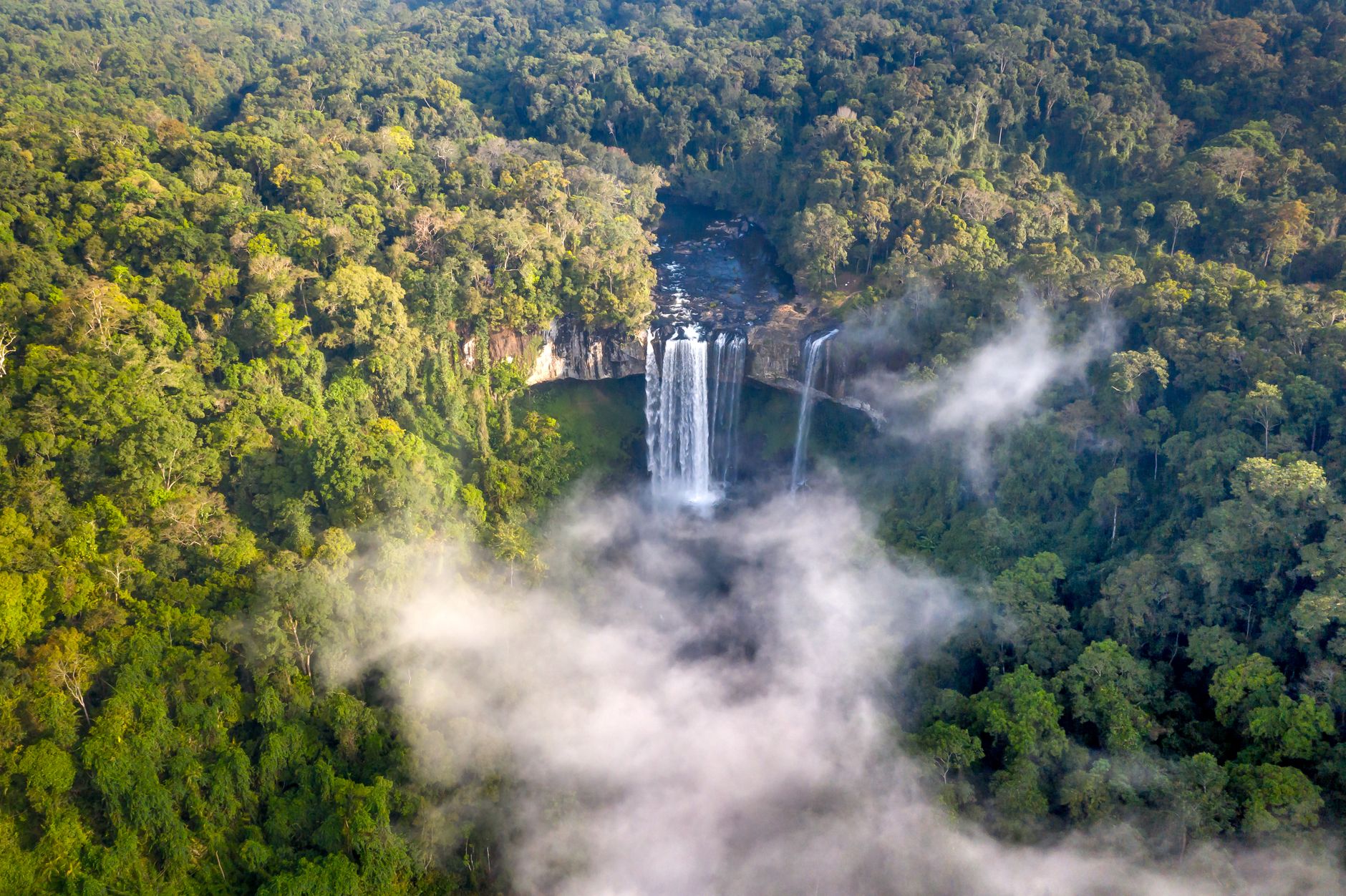
The park protects a montane rainforest draped over a long-extinct volcanic massif. While the surrounding lowlands are hot, dusty and seasonally dry, the mountain catches the moisture-laden winds and wrings them out as cloud, drizzle and mist. The result is a cool, wet, perpetually green “sky island” — a fragment of humid forest stranded high above the arid plains, rising from roughly 1,000 m to around 1,475 m at its summit. The contrast between the baking lowlands and this dripping highland forest is one of the things that makes the visit so memorable.
One of Madagascar’s oldest national parks
Montagne d’Ambre holds a special place in Madagascar’s conservation history. Established in 1958, it is one of the very first national parks created on the island, and that long stewardship shows: the trail network is well established, the forest is mature, and the wildlife is relatively used to quiet, respectful visitors. Today it is managed by Madagascar National Parks (MNP), like the country’s other protected areas, with compulsory local guides and a network of marked paths. For travellers this means a park that is both genuinely wild and refreshingly easy to explore.
The waterfalls of Montagne d’Ambre
Water is the headline act here. Because the massif squeezes so much rain out of the clouds, streams tumble off its flanks in a series of beautiful falls, and reaching them is the spine of most walking itineraries.
The most celebrated is the Cascade Sacrée — the Sacred Waterfall — a slender, feathery curtain of water that locals hold in deep reverence; it is a place of offerings and quiet respect as much as a scenic stop. Deeper into the forest, the Grande Cascade (the Great Waterfall) plunges in a powerful single drop framed by ferns and dripping greenery, especially impressive after rain. The gentler Petite Cascade (the Little Waterfall) is an easier, family-friendly target, often paired with the Sacred Waterfall on a shorter half-day loop. Together these cascades give you a natural circuit: easy strolls to the smaller falls, or a longer forest walk to reach the thundering Grande Cascade.
The crater lakes
The mountain’s volcanic past has left more than waterfalls. Hidden in the forest are old crater lakes, the most famous of which is the Lac de la Coupe Verte — the Green Lake — a perfectly circular volcanic crater filled with still, dark, jade-coloured water and ringed by towering forest. Reaching it is part of the magic: a quiet walk through deep woodland opens suddenly onto the rim of the crater, where the lake sits like a mirror far below. It is one of the most atmospheric spots in the whole park and a favourite for photographers.
Wildlife: lemurs, tiny chameleons and more
For all its waterfalls, Montagne d’Ambre is first and foremost a wildlife destination — and a superbly accessible one. The forest is home to two of the north’s signature lemurs: the crowned lemur (Eulemur coronatus), with its distinctive orange “crown” marking, and Sanford’s brown lemur (Eulemur sanfordi). Both are often seen in small troops moving through the canopy, sometimes close to the main trails. By night, with a guide and a torch, you have a good chance of spotting nocturnal species such as fork-marked lemurs and tiny mouse lemurs, their eyes glowing in the beam.
The park is also famous among naturalists for its chameleons — including a tiny Brookesia leaf chameleon endemic to the massif and counted among the smallest chameleons (and smallest reptiles) on Earth, small enough to perch on a fingertip. Alongside them you will find brilliant green day geckos, an array of frogs, butterflies drifting through sunlit clearings, the long-tailed ring-tailed mongoose patrolling the forest floor, and around 75 or more bird species. For a deeper look at what lives here and how to find it, see our Montagne d’Ambre wildlife & lemur guide, and for the bigger picture of lemur-watching across the island read our guide on where to see lemurs in Madagascar.
Trails and the walking experience
One of the great joys of Montagne d’Ambre is how welcoming its trails are. The park has a good network of well-maintained paths, with day walks of varying lengths from short, mostly flat loops to longer forest circuits. Crucially, the terrain is gentle compared with the steep, demanding parks of the south and east — there are no brutal climbs, the footing is generally good, and shorter routes are genuinely family-friendly. You can tailor your day to your fitness and interests: a relaxed morning around the Sacred and Little Waterfalls, or a fuller day taking in the Grande Cascade and the crater lake.
As in all MNP parks, a local guide is compulsory, and this is a real bonus rather than a chore. Guides know exactly where the lemur troops are feeding, can pick a thumbnail-sized chameleon out of a tangle of leaves you would never have noticed, and bring the forest’s history and ecology to life. Booking a guide is arranged at the park entrance and the fee is modest.
When to visit Montagne d’Ambre
Because Amber Mountain creates its own wet microclimate, it can rain at almost any time of year, and a degree of mist and drizzle is part of the experience. That said, the drier months — roughly April or May through to November or December — generally offer the most reliable walking conditions, clearer trails and better photography. The forest is always lush and noticeably cooler than the coast, so bring a light layer even when Diego is sweltering. If you are timing a broader Madagascar trip, our guide to the best time to visit Madagascar helps you fit the far north into the wider seasonal picture. Whenever you come, pack a light rain jacket and good shoes — the trails can be slick after rain.
How to get to Montagne d’Ambre
Getting here is reassuringly simple, which is a big part of the park’s appeal. The base for any visit is Diego Suarez (Antsiranana), the far north’s main city, reachable by domestic flight or by road. From Diego it is only about 30 km south to Joffreville and the park gate — close enough to visit comfortably as a day trip, or to stay overnight near the forest for an early start and night walk.
The easiest, most flexible way to do it is with a car and driver, leaving early to beat the heat and arrive in cool forest air. We can arrange a car & driver via Carla so you are not wrestling with rough roads or unreliable transfers. To understand the gateway city itself — where to base yourself, what else to do — read our complete guide to Diego Suarez and the far north.
Where to stay near the park
You have two sensible options. Many travellers base themselves in Diego Suarez, where the choice of hotels, restaurants and bay-side views is widest, and simply drive out to the park for the day. Others prefer to overnight in or near Joffreville, on the edge of the forest, which puts you minutes from the gate and makes an early-morning or night walk effortless. Both work well; the right call depends on whether you want city comforts or forest immersion. Browse Diego Suarez & Joffreville stays on Agoda, and for a full rundown of the best bases see our dedicated where to stay for Montagne d’Ambre guide.
Fees and practicalities
Montagne d’Ambre is managed by Madagascar National Parks, so a visit involves an MNP park entry fee plus the cost of the compulsory local guide. Fees are modest by international standards and are typically paid at the entrance; rates change periodically, so always check current MNP fees before you travel rather than relying on figures you read online. Bring cash, water, sun protection and a rain layer, and remember that an early start gives you the best wildlife and the coolest walking. For a full breakdown of what a visit and a wider far-north trip can cost, see our Montagne d’Ambre trip cost guide.
How Montagne d’Ambre fits a far-north trip
The beauty of Amber Mountain is that it is one star in a constellation of far-north wonders, all within reach of Diego Suarez. Most travellers pair it with the dramatic limestone tsingy of Ankarana, the burnt-orange spires of the Tsingy Rouge (red tsingy), the snorkelling paradise of the Emerald Sea, and the laid-back beaches of Ramena on the bay of Diego Suarez itself. A few days lets you string together rainforest, tsingy, and sea into one of the most varied short trips in Madagascar. To plan the whole region, lean on our northern Madagascar pillar guide, and to slot the park into the country’s broader protected-area scene see our guide to the best national parks and reserves. If you enjoy rainforest wildlife, you may also love a southern sibling like Ranomafana National Park.
Getting There & Travelling Well
Reaching the far north usually means a domestic flight into Diego Suarez, and Madagascar’s regional flights are notorious for delays and cancellations. If a flight to or from Diego is delayed, cancelled or overbooked, you may be entitled to compensation — AirAdvisor can check your claim and handle the paperwork for you, which is well worth doing on a multi-leg Madagascar itinerary.
Just as importantly, travel covered. Montagne d’Ambre is remote forest country, and the wider far north takes you well off the beaten path, where good medical care can be hours away. A solid travel-health policy means you can hike, snorkel and explore with peace of mind. SafetyWing Nomad Insurance is built for exactly this kind of trip — flexible, affordable and easy to buy online even after you have left home. For independent travellers and longer adventures across northern Madagascar, taking out SafetyWing cover before you set off is one of the smartest, cheapest decisions you can make.
Suggested Montagne d’Ambre Visit Plan
Here is a practical template for a rewarding day from Diego Suarez (easily stretched to an overnight in Joffreville):
- Early start (around 7 am): Leave Diego Suarez by car and driver and reach Joffreville and the park gate in cool morning air — the best time for both lemurs and comfortable walking.
- Mid-morning: Meet your compulsory MNP guide, then walk to the Cascade Sacrée (Sacred Waterfall) and the gentle Petite Cascade, keeping an eye out for crowned and Sanford’s brown lemurs along the way.
- Late morning to midday: Continue to the Grande Cascade, the park’s most powerful fall, and pause for photos in the dripping rainforest.
- Afternoon: Walk out to the Lac de la Coupe Verte (Green Lake) crater rim, then slow down to hunt for the tiny Brookesia chameleon and day geckos with your guide.
- Optional overnight: Stay near Joffreville and add a night walk for nocturnal mouse and fork-marked lemurs before driving back to Diego the next day.
Is Montagne d’Ambre Worth Visiting?
Honestly, yes — and especially if your far-north trip is short on time or includes families. Montagne d’Ambre delivers a true Madagascan rainforest experience — lemurs, chameleons, waterfalls and a crater lake — without the long, punishing journeys that other parks demand. The trails are gentle, the wildlife is genuinely accessible, the cool green forest is a delicious contrast to the hot coast, and it slots effortlessly into a wider northern adventure alongside the tsingy and the sea. For first-time rainforest visitors and families it is arguably the easiest, most rewarding park in the country. If you want raw, gruelling wilderness you might choose elsewhere, but as a scenic, friendly, day-trippable rainforest, Amber Mountain is hard to beat.
Plan Your Montagne d’Ambre Trip with Carla
Want the far north done right — the park, the tsingy, the Emerald Sea and the bay, stitched into one smooth itinerary? Carla, our local Madagascar travel expert, can build a custom trip around your dates, pace and budget, and sort the logistics so you simply turn up and enjoy. Contact Carla to start planning, and book a comfortable car & driver via Carla for the easy run from Diego Suarez to Joffreville and beyond.
Frequently Asked Questions
How far is Montagne d’Ambre from Diego Suarez?
It is roughly 30 km south of Diego Suarez (Antsiranana), reached via the village of Joffreville (Ambohitra). The drive is short and easy, making the park a comfortable day trip — or an overnight if you want a night walk.
What wildlife will I see at Montagne d’Ambre?
Highlights include the crowned lemur and Sanford’s brown lemur by day, nocturnal mouse and fork-marked lemurs by night, one of the world’s smallest chameleons (a tiny Brookesia), day geckos, frogs, butterflies, the ring-tailed mongoose and around 75 or more bird species.
When is the best time to visit?
The drier months from roughly April or May to November or December usually give the clearest walking and best photography, though the forest can be misty or rainy at any time. It is always cooler than the coast, so bring a light layer.
Do I need a guide?
Yes. As in all Madagascar National Parks, a local MNP guide is compulsory. It is well worth it — guides find the lemurs and the tiny chameleons and explain the forest’s ecology. The guide fee is paid at the entrance along with the park fee; check current MNP fees before you travel.
Is Montagne d’Ambre good for families and first-timers?
Very much so. Its gentle, well-marked trails and easy access from Diego Suarez make it one of the most family-friendly and beginner-friendly rainforest parks in Madagascar, with waterfalls and lemurs that reward even short walks.
Ready to explore Madagascar’s far north?
Let Carla, our local travel expert, plan your Montagne d’Ambre adventure and the rest of the far north — tsingy, Emerald Sea and all. Contact Carla to start, and arrange your car & driver via Carla for a stress-free trip from Diego Suarez.
Plan Your Trip to Madagascar
- Read the full Madagascar Travel Guide
- Explore itineraries by style and duration
- Best Tours and Guided Experiences
Where to Stay