Fianarantsoa Wine: Madagascar’s Unexpected Wine Country — Complete Guide 2026
Affiliate disclosure: This article contains sponsored links to hotels, tour operators, insurance providers, and other travel services. We earn a small commission if you book through our links, at no extra cost to you.
At a Glance — Madagascar Wine Country
Madagascar grows wine. Not as a marketing gimmick, but as a genuine, century-old agricultural tradition in the cool southern central highlands around Fianarantsoa. The wines are mostly pale vin gris rosés and semi-sweet reds and whites made from disease-resistant French-American hybrid vines — a fascinating curiosity rather than a fine-wine rival, and best enjoyed as one chapter of an RN7 highlands journey.
- Where: the Betsileo highlands of the Haute Matsiatra region — Fianarantsoa, the Isandra valley, Maromby and toward Ambalavao, broadly 1,100–1,400 m above sea level.
- What you’ll drink: vin gris (pale rosé), semi-sweet whites and light reds from interspecific hybrid cultivars; modest body, often gentle residual sugar.
- Stay nearby: compare Fianarantsoa stays on Agoda for highland guesthouses and colonial-era hotels.
- Do a tasting: book a highlands day tour or driver-guide via GetYourGuide Madagascar.
- Insure the trip: rural highland travel needs cover — SafetyWing Nomad Insurance is built for long, flexible itineraries.
- Read next: our guide to the Betsileo highlands wineries and wine-tasting tours.
🎒 Madagascar Trip Essentials
A few inexpensive items make the biggest difference on the ground in Madagascar:
- Picaridin insect repellent — DEET-free protection against malaria mosquitoes. See on Amazon →
- Permethrin clothing spray — treat clothes; kills mosquitoes on contact for weeks. See on Amazon →
- Pop-up mosquito net — budget lodges rarely provide one; packs down tiny. See on Amazon →
- Water filter bottle — tap water isn’t safe to drink in Madagascar. See on Amazon →
- Universal travel adapter (USB-C) — Madagascar uses European-style plugs. See on Amazon →
- 8×42 binoculars — essential for spotting lemurs and chameleons in the canopy. See on Amazon →
As an Amazon Associate we earn from qualifying purchases.
Why Madagascar Makes Wine at All
For most travellers, the phrase “Madagascar wine” lands somewhere between disbelief and amusement. The island is famous for lemurs, baobabs, rainforest and reef — not for the vine. Yet in the cool, elevated heart of the southern central highlands, viticulture is a real and rooted activity, and has been for well over a century.
The story begins, as it often does in the highlands, with European missionary and settler influence in the nineteenth century. Cuttings and know-how arrived alongside churches, schools and printing presses, and the temperate-feeling uplands around Fianarantsoa proved hospitable enough to keep the vine alive where the hot, humid lowlands could not. What grew from that was never a grand grand cru ambition — it was a practical, local industry producing drinkable table wine for a domestic market, much of it organised through cooperatives.
That history matters because it frames honest expectations. Madagascar is not a hidden world-class wine region waiting to be discovered. It is something more interesting in a different way: a genuine tropical-highland viticulture that survives against considerable agronomic odds, with its own distinctive grapes, methods and flavours. Approached on those terms, a tasting in the Betsileo hills becomes one of the more memorable and unexpected things you can do on an RN7 trip.
A century-old, cooperative-driven craft
The defining structural feature of Malagasy wine is that it has largely been a cooperative enterprise rather than a collection of competing private châteaux. Smallholders in the Betsileo hills have historically pooled fruit, equipment and cellar capacity, with the cooperative handling pressing, fermentation, bottling and distribution. This model fits a landscape of fragmented, terraced plots and modest household means far better than the capital-intensive single-estate model of the European wine world. It also explains why a handful of well-known labels can represent the output of many growers.
The result is wine made primarily for Malagasy tables — accessible, affordable, and woven into everyday highland life rather than aimed at export shelves or international competitions. Understanding this is the key to enjoying it: you are tasting a regional folk craft with a long lineage, not a boutique fine-wine project. That authenticity is precisely the appeal.
Where the Wine Country Actually Is
The Malagasy wine region is firmly a highlands phenomenon. It sits in and around Fianarantsoa, capital of the Haute Matsiatra region and the historic heart of Betsileo country, in the southern stretch of the central highlands (the Hautes Terres). Vineyards and cooperatives are scattered through the surrounding hills — notably the Isandra valley west of the city, the Maromby area, and southward along the RN7 corridor toward Ambalavao.
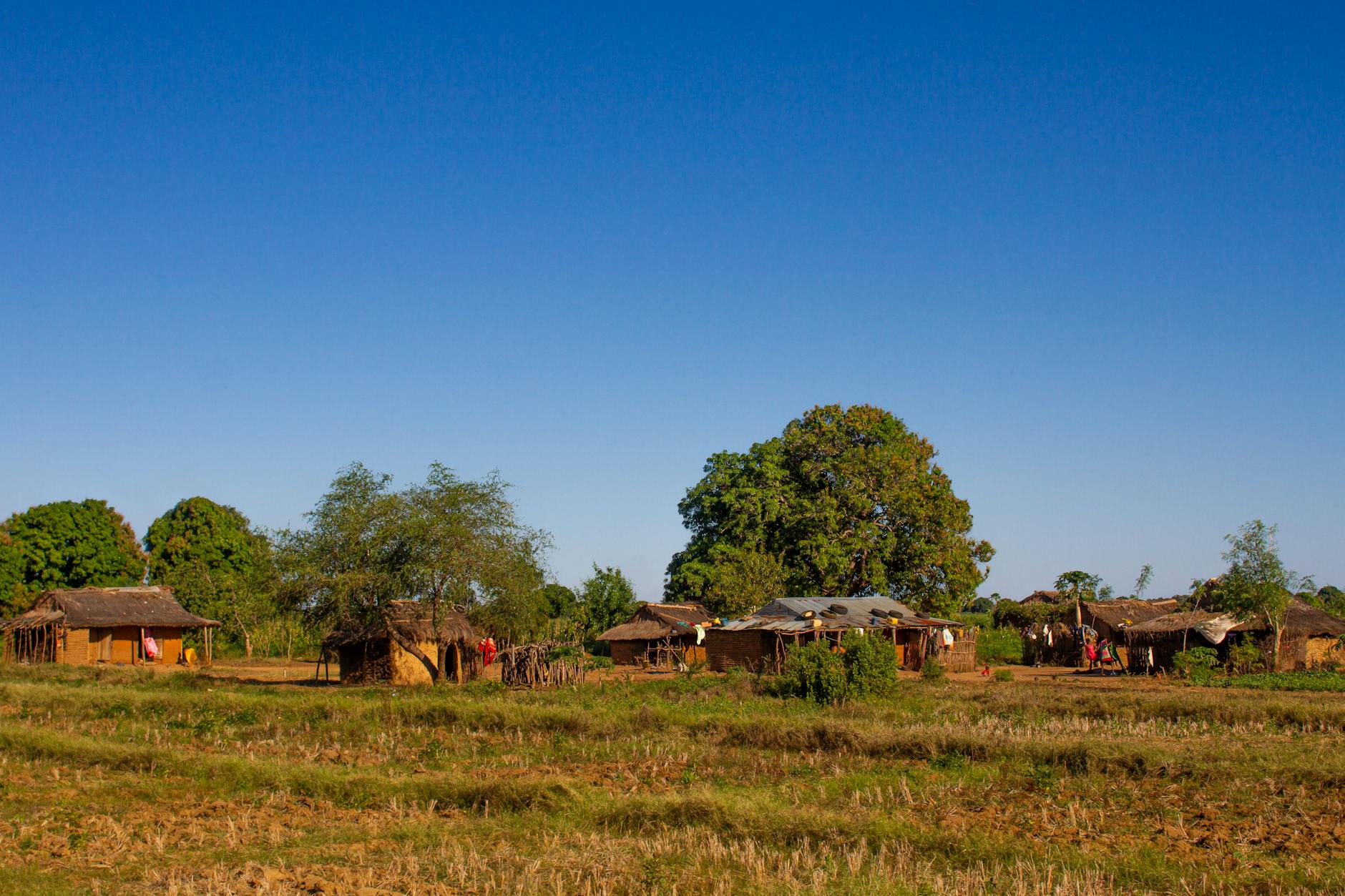
This is terraced rice-paddy and red-earth country: steep hills, eucalyptus stands, Betsileo villages and a cool, often misty climate that feels surprisingly un-tropical. The vines occupy modest plots, frequently interplanted with other crops, rather than the sweeping monoculture estates you would picture in Bordeaux or Stellenbosch.
The Betsileo are renowned across Madagascar as master rice cultivators, and the same patience and terracing skill that built their celebrated paddy landscapes carries over to the vine. Vineyard parcels tend to sit on well-drained mid-slope positions, above the valley-floor rice and below the eucalyptus ridgelines, catching sun while shedding excess water. The overall impression is of agriculture in miniature — a mosaic of small, carefully tended plots rather than industrial rows to the horizon.
The wider Haute Matsiatra setting
Haute Matsiatra is one of Madagascar’s most scenic and culturally dense regions. Beyond the vineyards, the same hills hold the historic upper town of Fianarantsoa (a candidate for its layered colonial and Merina-Betsileo heritage), the celebrated Fianarantsoa–Côte Est (FCE) railway descending toward the east, and a string of craft and market towns south along the RN7. Wine here is one thread in a thick cultural weave, which is exactly why it works best as part of a broader regional visit rather than a standalone pilgrimage.
How it fits the map
Fianarantsoa sits roughly midway down the famous RN7 highway between Antananarivo and the south, which makes the wine country exceptionally easy to fold into a wider highlands itinerary. For broader context, see our central highlands guide and the full southern Madagascar RN7 route.
The Terroir: Altitude, Latitude and a Climatic Paradox
To understand Malagasy wine you have to start with a basic problem of geography. Viticulture is overwhelmingly a temperate-zone pursuit, traditionally clustered between roughly 30° and 50° of latitude in both hemispheres. Fianarantsoa lies near 21° South — well inside the tropics. On paper, this is the wrong place to grow Vitis vinifera.
Altitude does the heavy lifting
What rescues the situation is elevation. At roughly 1,100–1,400 metres, the highlands enjoy a markedly cooler, more temperate microclimate than the latitude alone would suggest. Mean temperatures fall with altitude, and — crucially for the vine — the diurnal temperature range widens: warm days drive photosynthesis and sugar accumulation while cool highland nights slow respiration and help the berries retain organic acids (principally malic and tartaric). That day-night swing is one of the few classic quality levers available to growers here.
The humid-tropics penalty
The trade-off is moisture and disease. Tropical highland weather brings substantial rainfall and high humidity through the growing season, and warm, wet, leafy conditions are an open invitation to fungal pathogens. Growers contend with downy mildew (Plasmopara viticola), powdery mildew (Erysiphe necator), anthracnose and bunch rots — a disease pressure far higher than in the dry-summer Mediterranean climates that classic wine grapes evolved to suit. This single agronomic fact, more than any other, shapes what grows in Madagascar and how.
Why is humidity so punishing? The major grapevine fungal pathogens thrive on leaf and berry wetness and warm temperatures; free moisture on the canopy is what allows spores of Plasmopara and the various rot organisms to germinate and infect. In a Mediterranean climate the dry, hot summer naturally suppresses these cycles during ripening. In a humid tropical highland, by contrast, rain and dew can persist deep into the growing season, keeping infection windows open precisely when the fruit is most vulnerable. Managing this with pure Vitis vinifera would demand an aggressive and costly spray programme; the practical alternative, as we will see, is to plant vines that are genetically equipped to resist.
Canopy and trellis as climate tools
Growers also lean on viticultural technique to fight the damp. Open, well-ventilated canopies that dry quickly after rain reduce fungal pressure; trellising and pruning aim to keep fruit off the wet ground and expose it to airflow. These are not glamorous interventions, but in a climate this challenging they are as decisive for the final wine as any choice made later in the cellar.
Soils
The highlands are dominated by deeply weathered tropical soils — ferralsols and lateritic red earths, rich in iron and aluminium oxides (hence the vivid rust-red colour) but typically acidic and low in some nutrients. These are not the limestone or gravel terroirs celebrated in European wine writing; they are old, leached tropical profiles. Drainage on the slopes is generally good, which the vine appreciates, but the chemistry demands management. Terroir here is a story of working with a difficult canvas rather than inheriting a famous one.
Grape Varieties and Ampelography: Why Hybrids Dominate
Walk a Betsileo vineyard and you will mostly not find the famous noble cultivars. The relentless fungal disease pressure described above makes pure Vitis vinifera — Cabernet, Chardonnay and their peers — extremely difficult and chemical-intensive to grow here. The pragmatic answer, adopted across humid and challenging viticultural zones worldwide, is the French-American interspecific hybrid.
What a hybrid actually is
These cultivars are crosses between European Vitis vinifera and disease-resistant American Vitis species (such as Vitis labrusca, Vitis riparia and others). The American parentage confers genetic resistance to mildews and, historically, to phylloxera, allowing the vines to survive and crop in conditions that would devastate vinifera. The trade-off is in the glass: hybrids can carry distinctive aromatic and structural signatures — sometimes a “foxy” or candied note from labrusca lineage — and are generally regarded as producing simpler wines than the noble grapes. For a tropical highland with high disease pressure, however, they are the rational and often the only viable choice.
The Madagascar palette
Malagasy plantings broadly reflect this logic, leaning on robust, productive, disease-tolerant hybrid material suited to the climate, alongside table-grape and dual-purpose varieties in some plots. Specific cultivar names are not always reliably documented for the casual visitor, so it is best to treat the vineyard as a living ampelographic mixture rather than a tidy varietal map. The honest summary: expect hybrid-dominated plantings chosen for survival and yield first, fine-wine pedigree second.
What hybrids mean for flavour and aroma
Ampelographically, the interspecific hybrids occupy a middle ground. From their American parentage some carry the much-discussed “foxy” character — a musky, sometimes grapey or candied aromatic associated with Vitis labrusca lineages — though the intensity varies widely by cultivar and is far from universal. Hybrids also tend to differ from vinifera in their acid and sugar dynamics and in skin and pulp composition, which feeds directly into the pale-coloured, gently sweet styles common here. None of this makes hybrid wine inferior in any absolute sense; it makes it different, and that difference is part of what gives Malagasy wine its distinct identity rather than a faint imitation of European templates.
Rootstocks, phylloxera and old plantings
It is worth noting the global backdrop. The phylloxera louse devastated vinifera vineyards worldwide in the nineteenth century, and the lasting solution was grafting European scions onto resistant American rootstocks — a different use of the same American Vitis genetics that underpin direct-producer hybrids. In challenging or remote viticultural regions, own-rooted hybrids that need no grafting and resist disease are simply easier to maintain. Madagascar’s plantings should be read in that pragmatic tradition: vines chosen because they endure, propagate readily and crop reliably under local conditions.
More than one cycle a year?
One genuinely tropical wrinkle is phenology. In strongly seasonal temperate regions the vine has a single, clean annual cycle with a dormant winter. In milder tropical and subtropical settings, vines can be coaxed — through pruning and canopy management — toward more than one growth cycle, and in some tropical viticulture more than one harvest per year is possible. The highlands’ cooler regime moderates this, but the underlying tropical latitude means the vine’s rhythm here is not the textbook temperate one, and management practices reflect that.
Wine Styles and Oenology: What Ends Up in the Glass
The defining Malagasy style is vin gris. Literally “grey wine,” vin gris is a very pale rosé made by pressing red or dark-skinned grapes with only brief skin contact, so the juice picks up just a faint blush of colour before fermentation proceeds essentially as a white wine. In a hot-leaning climate working with hybrid fruit, this is a sensible style: it sidesteps the need for deeply ripe, tannic reds and produces something light, fresh and immediately drinkable.
The semi-sweet tendency
Many Malagasy wines — across rosé, white and red — carry a degree of residual sugar, landing in off-dry to semi-sweet territory. This is partly stylistic preference for the domestic market and partly a practical response to acidity and to fruit that may not reach full phenolic ripeness. The reds tend to be light-bodied and modestly structured rather than dense and age-worthy. Whites and rosés are best understood as fresh, easy, sometimes faintly sweet wines for present drinking, not for the cellar.
Vinification realities
Production is generally cooperative-based and modestly equipped by international standards. Expect straightforward winemaking: ambient or basic temperature-controlled fermentation, limited oak influence, and an emphasis on getting clean, drinkable wine to a local market rather than chasing competition trophies. None of this is a criticism — it is the appropriate scale and ambition for the place. It does, however, set the right expectation for the visiting palate.
The vin gris method in a little more detail
Mechanically, vin gris sits between a white and a rosé. Dark-skinned grapes are pressed quickly, with the juice spending only minutes to a couple of hours in contact with the skins — long enough to leach a whisper of anthocyanin pigment but not enough to build the colour, tannin and structure of a true rosé or red. Fermentation then proceeds on the lightly tinted juice much as it would for a white wine, often cool and reductive to preserve freshness and primary fruit. The technique is forgiving of fruit that is not perfectly ripe, which suits a climate where full phenolic maturity is not guaranteed, and it yields a wine that is pale, light and refreshing — well matched to the warm Malagasy table.
Sugar, acid and balance
The frequent off-dry to semi-sweet finish is best read as a deliberate balancing act. Where acidity runs high — a likely outcome of cool nights and hybrid fruit — a little residual sugar softens the palate and broadens appeal. The interplay of perceptible sweetness against fresh acidity is the signature sensory shape of much Malagasy wine: not a flaw, but a stylistic identity worth meeting on its own terms rather than judging against bone-dry European benchmarks.
The Producers and Labels You May Encounter
A handful of names recur around Fianarantsoa, mostly associated with cooperatives and small estates. Treat the following as labels you may encounter rather than a ranked guide, and verify current availability locally, as production and distribution shift:
- Lazan’i Betsileo — one of the best-known cooperative names of the region, broadly synonymous with Betsileo highland wine.
- Clos Malaza — a recurring label in the Malagasy wine conversation.
- Côtes de Fianar — a name evoking the Fianarantsoa slopes.
- Soavita, associated with the Maromby estate area.
- Domaine Manamisoa — another estate name travellers report encountering.
For a deeper look at the cellars themselves, see our dedicated Betsileo highlands wineries guide.
Tasting and Visiting the Wineries
Wine tourism here is informal and low-key, not a polished tasting-room circuit. Some cooperatives and estates can receive visitors for a look at the cellars and a tasting, but opening hours are loose, signage is minimal, and a phone call ahead (or a local guide who can arrange it) makes all the difference.
How to organise a visit
The smoothest approach is to go with a driver-guide who knows the producers and can translate, negotiate access and keep the day flowing. You can arrange a highlands day tour or tasting experience through GetYourGuide Madagascar, or have a trusted private car-and-driver set up for you — see our dedicated wine-tasting tours guide for itinerary ideas.
What to expect at the table
Go in curious, not critical. Taste the vin gris first while your palate is fresh; note the pale colour and light frame. Expect gentle residual sugar in many wines. The pleasure is contextual — the cool air, the red hills, the cooperative cellar, the sheer improbability of a Malagasy vineyard — as much as the liquid itself. Buy a bottle or two to enjoy over a highland dinner rather than to carry home as a trophy.
When to Visit
The practical window for the highlands is the cooler, drier season, broadly April/May to October/November, when RN7 travel is most comfortable and roads are at their best. The austral winter months (roughly June–August) are cool and clear in the uplands — pack a warm layer, as highland evenings can be genuinely cold.
The vine’s own calendar runs on the southern-hemisphere cycle, with the principal harvest generally falling around the early part of the year (broadly the southern summer-into-autumn window). Travellers rarely time a trip to coincide with picking, and there is no fixed festival to plan around, so choose your dates by the comfort of highland touring rather than by the vintage.
How Wine Country Fits an RN7 / Highlands Trip
This is the key practical point: nobody should fly to Madagascar for the wine. But almost everybody travelling the RN7 passes straight through the wine country, and a tasting slots in beautifully alongside the region’s headline attractions.
Fianarantsoa itself rewards a day or two — see things to do in Fianarantsoa and our Fianarantsoa city guide. From here you are well placed for the famous FCE railway, the old town, nearby Ambalavao (Antemoro paper, the zebu market and the gateway to Anja Reserve and Andringitra), and the long, scenic RN7 run south. A morning of cellars and a couple of bottles is a natural, characterful addition to any of that.
Practical Tips
- Manage expectations. Frame the wine as cultural curiosity, not connoisseurship. You will enjoy it far more.
- Call ahead or use a guide. Drop-in tastings are unreliable; arranged visits are smooth.
- Pack warm layers. Highland evenings, especially in winter, are cold.
- Mind the roads. Visit in the drier season and use a capable vehicle with a local driver.
- Buy local, drink local. Malagasy wine travels poorly and rarely justifies the suitcase space; enjoy it on the spot.
- Stay central. Base yourself in Fianarantsoa — compare Fianarantsoa stays on Agoda.
Insurance and Getting There
The highlands mean long road days, rural clinics and a long flight to reach Madagascar in the first place. Independent travel medical and trip cover is sensible: SafetyWing Nomad Insurance is designed for exactly this kind of flexible, multi-week, off-the-beaten-track itinerary, covering medical emergencies and trip disruptions on the road.
If you are flying in via Antananarivo and your flight is delayed, cancelled or overbooked, you may be owed compensation. AirAdvisor can check and claim flight compensation on your behalf so a disrupted arrival does not derail the rest of the trip.
How Madagascar Wine Compares
Curious how it stacks up against the heavyweights? We have two sibling deep-dives: Madagascar wine vs South Africa — the obvious regional benchmark — and a wider Madagascar wine vs the world comparison. The short version: Malagasy wine cannot and does not compete on technical quality, but it offers something the giants cannot — genuine novelty and a story you will tell for years.
Frequently Asked Questions
Does Madagascar really produce its own wine?
Yes. The highlands around Fianarantsoa have a real, century-old viticultural tradition, producing mostly pale vin gris rosés and semi-sweet wines from disease-resistant hybrid vines, much of it through cooperatives.
Is Malagasy wine any good?
It is best understood as a fascinating curiosity rather than a fine-wine rival. The wines are light, often gently sweet and of modest international standing, but they have real cultural interest and are very enjoyable in context.
Why hybrid grapes instead of Cabernet or Chardonnay?
The humid tropical-highland climate brings intense fungal disease pressure (downy and powdery mildew, anthracnose) that makes pure Vitis vinifera very hard to grow. French-American interspecific hybrids carry genetic disease resistance and are the practical choice.
How can wine grow at 21° South, inside the tropics?
Altitude. At roughly 1,100–1,400 m the highlands are far cooler than the latitude implies, and the wide day-night temperature swing helps the grapes retain acidity. Altitude effectively substitutes for higher latitude.
Can I visit a winery near Fianarantsoa?
Yes, though visits are informal. Arrange ahead through a driver-guide or a tour operator rather than relying on drop-in tastings — see our wine-tasting tours guide and book a highlands day tour via GetYourGuide.
Plan a Madagascar Wine-Country Trip with Carla
Want the cellars, the cooperatives and the RN7 highlands woven into one smooth itinerary? Carla can arrange a private car and driver who knows the Betsileo wine producers, sort your Fianarantsoa stays on Agoda, and slot a tasting alongside a GetYourGuide highlands tour. Protect the whole trip with SafetyWing Nomad Insurance, then get in touch with Carla to start planning.
Plan Your Trip to Madagascar
- Read the full Madagascar Travel Guide
- Explore itineraries by style and duration
- Explore the full destination guide
Where to Stay