Best Madagascar Eco & Sustainable Travel 2026: The Complete Guide
Affiliate disclosure: This article contains sponsored links to hotels, tour operators, insurance providers, and other travel services. We earn a small commission if you book through our links, at no extra cost to you.
Best Madagascar Eco & Sustainable Travel 2026 — At a Glance
- Why it matters: Madagascar’s extraordinary biodiversity faces real threats — responsible travel directly funds conservation and supports the communities protecting it
- What it looks like: Eco-lodges, community-run reserves, local guides, conservation fees, low-impact itineraries, and supporting Malagasy livelihoods
- Top eco-experiences: Community reserves (Anja), conservation-focused lodges, reforestation projects, national park visits that fund protection
- Best season: Dry season (April–November); September–November for peak wildlife with the lightest footprint
- Flight protection: EU261 €600 per passenger for European inbound flight disruptions
- Travel insurance: SafetyWing Nomad Insurance — essential for remote eco-travel
- Eco-lodge stays: Madagascar lodges on Agoda
🎒 Madagascar Trip Essentials
A few inexpensive items make the biggest difference on the ground in Madagascar:
- Picaridin insect repellent — DEET-free protection against malaria mosquitoes. See on Amazon →
- Permethrin clothing spray — treat clothes; kills mosquitoes on contact for weeks. See on Amazon →
- Pop-up mosquito net — budget lodges rarely provide one; packs down tiny. See on Amazon →
- Water filter bottle — tap water isn’t safe to drink in Madagascar. See on Amazon →
- Universal travel adapter (USB-C) — Madagascar uses European-style plugs. See on Amazon →
- 8×42 binoculars — essential for spotting lemurs and chameleons in the canopy. See on Amazon →
As an Amazon Associate we earn from qualifying purchases.
Madagascar is one of the planet’s most important and most threatened natural treasures — and that makes it one of the world’s most meaningful destinations for sustainable travel. With over 90% of its wildlife found nowhere else, and with deforestation and habitat loss putting that biodiversity under genuine pressure, how you travel here matters more than in almost any other destination. Responsible, eco-conscious travel in Madagascar isn’t just a feel-good choice; it directly funds conservation, supports the communities that protect wildlife, and helps ensure that the lemurs, baobabs, and rainforests survive for future generations.
This pillar guide maps the full landscape of eco and sustainable travel in Madagascar: what responsible travel actually means here, the eco-lodges and community reserves leading the way, how tourism funds conservation, how to minimize your footprint, and how to plan a trip that is both extraordinary and genuinely good for the island. Whether you want a fully eco-focused journey or simply to travel more responsibly, this guide shows you how Madagascar rewards conscious travelers — and how your trip can be part of the solution. The good news is that traveling sustainably here requires no sacrifice of experience: the most responsible choices are very often the most rewarding ones, delivering deeper, more authentic encounters with the island’s wildlife, landscapes, and people than conventional tourism ever could. In Madagascar, doing good and traveling well are not competing goals — they reinforce one another, and the conscious traveler ends up with both a richer journey and a clear conscience, knowing that their visit helped rather than harmed one of the planet’s most precious and most fragile natural worlds.
Why Sustainable Travel Matters More in Madagascar
Few destinations make the case for responsible travel as starkly as Madagascar. The island’s biodiversity is globally irreplaceable — lemurs, chameleons, baobabs, and entire endemic families exist nowhere else — yet it faces severe pressure from deforestation driven by poverty, slash-and-burn agriculture, and habitat loss. The natural wonders that draw travelers are, in many places, disappearing.
This creates both a responsibility and an opportunity. Tourism, done well, is one of the most powerful forces for conservation in Madagascar. Park fees fund protection; eco-lodges create economic incentives to preserve forest rather than clear it; local guides earn livelihoods that depend on wildlife thriving; and community reserves demonstrate that protecting nature can directly benefit the people who live alongside it. When you travel responsibly here, your money becomes part of the conservation economy — giving communities a tangible reason to protect the wildlife and forests rather than exploit them. Few places offer travelers such a direct connection between how they travel and whether a unique natural world survives.
The flip side is equally true: irresponsible tourism — operators who disturb wildlife, lodges that don’t benefit communities, itineraries that leave nothing behind — can do harm. This is why understanding sustainable travel in Madagascar matters, and why conscious choices have outsized impact here.
What Sustainable Travel Looks Like in Madagascar
Responsible travel in Madagascar takes several concrete forms, and a genuinely sustainable trip combines them.
Staying at eco-lodges
Eco-lodges — properties built and run with environmental and community responsibility at their core — are the foundation of sustainable travel here. The best use local materials and labor, minimize their environmental footprint, support conservation, and channel income to surrounding communities. Choosing an eco-lodge over a conventional hotel directly strengthens the conservation economy. The leading options are covered in our eco-tourism lodges guide.
Visiting community reserves
Community-run reserves like Anja, near Ambalavao, are models of conservation that benefits local people. The village manages the reserve, tourism revenue funds the community and protects the wildlife (ring-tailed lemurs, in Anja’s case), and visitors get exceptional, close-up encounters. Choosing community reserves over purely commercial operations channels your money to the people doing the protecting.
Hiring local guides
The mandatory local guides in Madagascar’s parks are not a formality — they are a livelihood that depends on wildlife thriving, and a direct link between tourism and conservation. Hiring knowledgeable local guides, and tipping well, supports the people whose income gives them a stake in protecting the forest.
Paying park and conservation fees
Park entry fees fund the protection of Madagascar’s national parks and reserves. Paying them — and visiting the parks — directly supports conservation. The national parks are the strongholds of the island’s biodiversity, detailed in our national parks and reserves guide.
Minimizing your footprint
Low-impact travel means respecting wildlife (never touching or feeding animals), staying on trails, avoiding single-use plastics, choosing operators committed to sustainability, and offsetting the carbon of your flights. Small choices compound into a meaningfully lighter footprint.
How Tourism Funds Conservation in Madagascar
Understanding the mechanics helps you travel more effectively. In Madagascar, the conservation economy works through several channels. Protected-area fees fund park management and ranger salaries. Eco-lodge revenue creates economic value from intact forest, incentivizing preservation over clearing. Community tourism gives villages direct income from protecting wildlife. Guide and porter employment ties local livelihoods to thriving nature. And conservation NGOs, many of which travelers can support directly, fund research, reforestation, and protection — the organizations worth knowing are covered in our conservation NGOs guide.
The result is that a well-chosen Madagascar trip is not extractive but regenerative — your spending strengthens the very systems protecting the wildlife you came to see. This is the heart of sustainable travel here: choosing operators, lodges, and experiences that route value to conservation and communities.
Getting to Madagascar Sustainably
Sustainable travel begins before you arrive. The biggest environmental cost of a Madagascar trip is usually the long-haul flight to reach the island, routing through Paris, Addis Ababa, Nairobi, or Mauritius. While there’s no avoiding the flight, conscious travelers can offset its carbon footprint — and the practical guidance on doing so is covered in our carbon offset guide. Choosing a longer, deeper trip rather than a short visit also improves the sustainability calculus: more days on the ground per long-haul flight means a lower per-day carbon cost and more economic benefit to local communities.
If your inbound international flight is delayed, cancelled, or overbooked on an eligible European route, EU261 protection can return up to €600 per passenger. Once on the island, sustainable transport means minimizing unnecessary domestic flights where road travel is viable, and choosing operators who run efficient, well-maintained vehicles. Coordinating a low-impact, conservation-focused itinerary — the right eco-lodges, community reserves, and efficient routing — is exactly where local expertise adds value. Contact Carla to structure a genuinely sustainable Madagascar journey.
The Threats Madagascar Faces
Understanding what’s at stake deepens the case for responsible travel. Madagascar has lost a significant proportion of its original forest cover, and deforestation continues, driven largely by poverty: slash-and-burn agriculture (tavy) to clear land for crops, charcoal production for cooking fuel, and logging. As forests shrink, the endemic species that depend on them — many already endangered — lose their habitat. Several lemur species are among the world’s most threatened primates.
These pressures are not driven by malice but by economic necessity — rural communities clearing forest are often meeting immediate survival needs. This is precisely why the conservation economy matters: when protecting forest and wildlife generates more sustainable income than clearing it, communities gain a powerful incentive to conserve. Tourism is one of the few industries that can make standing forest more valuable than cleared land. Every responsible traveler who pays park fees, stays at genuine eco-lodges, and supports community reserves is helping shift that economic balance toward conservation. Understanding this context transforms a Madagascar trip from sightseeing into participation in one of the world’s most important conservation efforts.
The Best Eco-Experiences
Community reserves: Anja and similar village-run reserves offer close wildlife encounters that directly fund local conservation.
Conservation-focused lodges: Eco-lodges adjacent to parks and reserves, often involved in reforestation or research, combine comfort with genuine impact.
National park visits: Every park visit, with fees and local guides, supports the protection of Madagascar’s biodiversity strongholds.
Reforestation and conservation projects: Some lodges and operators offer the chance to participate in tree-planting or visit conservation projects, connecting travelers directly to restoration efforts.
Responsible wildlife encounters: Choosing operators who follow responsible-distance protocols for lemurs, whales, and marine life ensures your wildlife experiences don’t harm the animals.
Eco-Travel by Region
Madagascar’s regions each offer distinct sustainable-travel opportunities, and an eco-conscious trip can be built around any of them.
Eastern rainforests (Andasibe, Ranomafana): The most accessible eco-region, with conservation-focused lodges adjacent to the parks, reforestation projects, and the chance to support the protection of indri and other rainforest lemurs. Many lodges here are leaders in sustainable practice.
Southern highlands and spiny forest: The Anja community reserve is the standout, a model of village-led conservation, while the unique spiny forest ecosystem of the deep south offers eco-travel in one of the planet’s strangest landscapes.
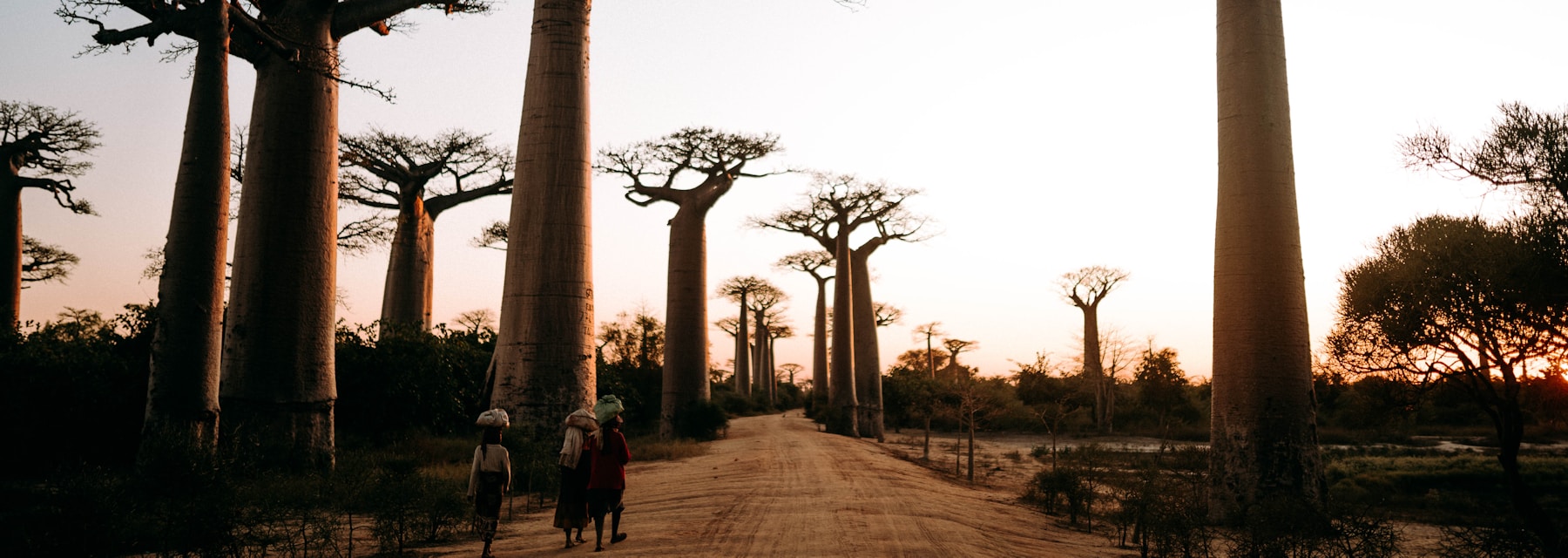
Western dry forests (Kirindy, the baobabs): Conservation areas protecting dry-forest lemurs and the iconic baobabs, where eco-lodges and reserves work to preserve a threatened ecosystem.
Marine and coastal (Nosy Be, the reefs): Marine reserves like Nosy Tanikely, responsible whale watching, and reef-conscious operators allow coastal eco-travel that protects fragile marine ecosystems. Even a beach holiday can be sustainable with the right choices.
Masoala and the remote northeast: Madagascar’s largest national park, where rainforest meets sea, offers deep eco-travel for committed conservation-minded visitors, supporting the protection of one of the island’s last great wildernesses.
Community-Based Tourism in Depth
Community-based tourism is the gold standard of sustainable travel in Madagascar, and understanding it helps you choose experiences with real impact. In this model, local communities own and manage tourism enterprises — reserves, lodges, guiding cooperatives — and the revenue flows directly to them rather than to distant operators. Anja Community Reserve is the celebrated example: the village of Anja manages the reserve, employs local guides, and uses tourism income to fund community projects (schools, water, healthcare) and to protect the ring-tailed lemurs and their granite-cliff habitat.
The genius of this model is alignment: the community’s economic interest and the wildlife’s survival become one and the same. When the lemurs and forest are the source of village income, protecting them becomes the rational choice. Choosing community-based experiences — reserves, village stays, locally-owned lodges, community guides — channels your spending to this powerful conservation model and delivers some of the most authentic and rewarding encounters available. These experiences also offer genuine cultural connection, as you meet and support the Malagasy people directly rather than through intermediaries. For the conscious traveler, seeking out community-based tourism is one of the highest-impact choices available.
Sample Sustainable Itineraries
Eco-wildlife circuit (10 days): Conservation-focused lodges at Andasibe and Ranomafana, the Anja community reserve, and Isalo, with local guides throughout and park fees funding protection — the classic RN7 route done sustainably.
Conservation deep-dive (12–14 days): Eastern rainforest eco-lodges plus a visit to a reforestation or research project, community reserves, and time to engage with conservation efforts — for travelers who want their trip centered on impact.
Eco-and-coast (12 days): A sustainable park circuit combined with responsible marine experiences (Nosy Tanikely reserve, responsible whale watching) and a reef-conscious beach finale — wildlife and coast, both done responsibly.
Community immersion (10 days): A trip built around community reserves, village stays, and locally-owned lodges, maximizing the direct benefit to Malagasy communities while delivering authentic encounters.
Eco-Travel for Different Travelers
Sustainable travel suits every kind of traveler. Wildlife lovers find that eco-travel and great wildlife viewing are the same thing — conservation-focused lodges and reserves offer superb encounters. Families can teach children powerful lessons about conservation through community reserves and responsible wildlife experiences. Luxury travelers will find that many of Madagascar’s finest lodges are also its most conservation-committed, proving sustainability and comfort are not opposites. Budget travelers can travel sustainably affordably, since community reserves and local guides are often the best-value options. And conservation-minded travelers can build an entire trip around impact, engaging directly with the projects and communities protecting Madagascar’s nature. Whatever your style, traveling responsibly enhances rather than limits the experience.
Choosing Responsible Operators and Lodges
The single most important sustainable-travel decision is who you travel with and where you stay. Look for operators and lodges that demonstrate genuine commitment: employing and training local staff, supporting community projects, minimizing environmental impact, following responsible wildlife protocols, and being transparent about their conservation contributions. Beware “greenwashing” — properties that market themselves as eco without substance. Genuine eco-lodges can explain specifically how they benefit conservation and communities. A knowledgeable specialist who knows which operators and lodges are genuinely responsible is invaluable for planning a trip with real impact. Comprehensive travel insurance is essential given the remote nature of many eco-destinations.
Eco-Lodges: What to Look For
Since accommodation is one of the most impactful sustainable-travel choices, knowing how to identify a genuine eco-lodge is essential. The best properties demonstrate their commitments concretely rather than through marketing alone.
Local employment and training: Genuine eco-lodges employ predominantly local staff, train them, and offer real career paths — keeping economic benefit in the community. Ask about the proportion of local employees and whether the lodge invests in training.
Environmental design and operation: Look for lodges built with local materials, using solar power, managing water and waste responsibly, sourcing food locally, and minimizing their footprint. The best are designed to tread lightly on the land they occupy.
Conservation contribution: The strongest eco-lodges actively support conservation — funding reforestation, protecting adjacent forest, supporting research, or contributing to community reserves. They can tell you specifically what they do and what it achieves.
Community benefit: Beyond employment, leading lodges support community projects — schools, healthcare, water — and source from local producers, spreading benefit beyond their own walls.
Transparency: Genuine eco-lodges are transparent about their practices and impact; vague green claims without specifics are a red flag for greenwashing. A property that can’t explain its conservation contribution probably doesn’t have much of one.
Madagascar has a growing number of properties that meet these standards, from rustic community-run lodges to genuine luxury eco-retreats. Comparing options and understanding which are genuinely responsible takes some research — browse Madagascar lodge options on Agoda to survey what’s available, and consult a specialist to identify the genuinely sustainable choices. Choosing well here is the single highest-impact sustainable-travel decision you make.
Voluntourism and Deeper Engagement
For travelers who want to engage even more deeply, Madagascar offers opportunities beyond responsible tourism. Some conservation organizations and lodges welcome travelers to participate in reforestation, wildlife monitoring, or community projects — a hands-on way to contribute. These experiences require careful selection: genuine, well-run programs deliver real value to conservation and communities, while poorly-designed “voluntourism” can do more harm than good, displacing local labor or serving the volunteer’s experience more than the cause.
The best deeper-engagement opportunities are those run by established conservation organizations with clear, lasting impact — tree-planting programs that genuinely restore habitat, research projects that need volunteer support, or community initiatives with real local buy-in. Even short participation — planting trees at a reforestation project, visiting and supporting a community initiative — can connect travelers meaningfully to Madagascar’s conservation story. For those who simply want to give back financially, supporting reputable conservation NGOs directly is often the most effective contribution, and our conservation NGO guide identifies organizations worth supporting. Whether through hands-on participation or financial support, deeper engagement turns a Madagascar trip into a lasting connection to the island’s future.
When to Travel Sustainably
The dry season (April–November) offers the best park access and wildlife viewing, and September–November brings peak wildlife activity. Traveling in the dry season also means lighter environmental impact on trails and easier access to community reserves. Beyond season, sustainable timing means avoiding contributing to over-tourism at the most popular sites when possible, and considering shoulder-season travel that spreads tourism’s economic benefit more evenly through the year — helping communities that depend on tourism income beyond the peak months.
Practical Sustainable Travel Tips
Beyond the big choices of lodges and operators, everyday decisions add up to a meaningfully lighter footprint.
Respect wildlife absolutely: Never touch, feed, or bait animals; keep your distance; don’t use flash photography on sensitive species; and follow your guide’s lead. Disturbing wildlife for a better photo causes real harm.
Stay on trails: Madagascar’s ecosystems are fragile; off-trail walking damages vegetation and disturbs habitat. Follow marked routes and your guide’s instructions.
Minimize plastic: Bring a reusable water bottle and water purification, refuse single-use plastics, and pack out what you bring in. Plastic waste is a growing problem in Madagascar.
Buy local and direct: Purchase crafts directly from artisans, eat at local restaurants, and choose locally-owned businesses to keep your spending in the community.
Tip generously and fairly: Guides, porters, and local staff depend on tips; fair tipping directly supports the people whose livelihoods are tied to conservation.
Offset your flights: The long-haul flight is your trip’s biggest carbon cost; offsetting it through a reputable scheme reduces your net impact.
Choose depth over breadth: A slower, deeper trip with fewer internal flights and more time per place is both more rewarding and more sustainable than a rushed, flight-heavy itinerary.
The Future of Conservation Tourism in Madagascar
Madagascar’s conservation story is at a pivotal moment. The pressures on its forests and wildlife are real and ongoing, but so is the growing recognition that sustainable tourism offers one of the most viable paths to protecting them. Community reserves are expanding, eco-lodges are multiplying, and the model of tourism-funded conservation is proving its worth. Travelers are an essential part of this story — not passive observers, but active participants whose choices help determine whether Madagascar’s natural heritage survives.
The trajectory depends on conscious travel becoming the norm rather than the exception. Every traveler who chooses a genuine eco-lodge over a conventional hotel, a community reserve over a purely commercial operation, and a responsible operator over a careless one strengthens the conservation economy and sends a market signal that sustainability matters. As more travelers make these choices, the incentives for communities and businesses to protect rather than exploit grow stronger. In this sense, sustainable travel in Madagascar is not just about minimizing harm — it is about actively building a future where the island’s extraordinary biodiversity is worth more standing than cleared. For the conscious traveler, that’s a powerful reason to visit, and to visit well.
Common Sustainable-Travel Mistakes to Avoid
Falling for greenwashing: Many properties market themselves as “eco” without substance. Look for specific, verifiable conservation and community commitments, not just green branding.
Disturbing wildlife for photos: Pressuring guides to get closer, using flash, or baiting animals harms the wildlife. Responsible viewing means accepting the animals’ terms.
Over-flying domestically: Taking domestic flights where road travel is viable adds unnecessary carbon. Balance convenience against impact.
Choosing the cheapest operator regardless: The cheapest option may cut corners on community benefit and environmental responsibility. Value genuine sustainability.
Treating conservation as someone else’s job: Sustainable travel requires active choices, not just good intentions. Paying fees, choosing well, and behaving responsibly are the traveler’s contribution.
Combining Eco-Travel with the Madagascar Experience
Sustainable travel isn’t a separate category — it’s a way of doing the Madagascar trip you already want. A wildlife-focused park circuit becomes an eco-trip when you choose conservation-focused lodges and community reserves. A beach holiday becomes sustainable when you choose responsible operators and protect the reefs. A cultural journey supports communities when you buy directly from artisans and stay in locally owned lodges. The national parks, the beaches, and the cultural heartland can all be experienced sustainably — it’s about how you travel, not just where. Our national parks guide and coastal escapes guide can both be approached through a sustainable lens, and the safari-lodge options in our safari lodges guide include genuinely eco-conscious properties.
Why Madagascar Is the Ultimate Conscious-Travel Destination
Among the world’s destinations, few make conscious travel as meaningful as Madagascar. The reason is the unique convergence of three factors: irreplaceable biodiversity, genuine threat, and a direct link between tourism and conservation. In many destinations, sustainable travel is a worthy but somewhat abstract goal — your choices matter at the margin. In Madagascar, the stakes are vivid and the impact immediate: the forests are disappearing, the species are found nowhere else, and your spending can directly tip the balance toward protection.
This gives a Madagascar trip a moral clarity and a sense of purpose that few destinations offer. You are not just observing a natural wonder — you are participating in its survival. The lemur you watch leaping through the canopy exists because the forest still stands; the forest still stands, in part, because tourism gives the community a reason to protect it; and your visit is part of that economic logic. Few travel experiences offer such a direct connection between the joy of the experience and the good it does.
For the growing number of travelers who want their journeys to mean something — to leave a place better, or at least not worse, for their having been there — Madagascar is close to ideal. It combines a once-in-a-lifetime natural experience with the genuine opportunity to contribute to one of the planet’s most important conservation challenges. The wildlife is extraordinary, the landscapes are unique, and the knowledge that your trip is part of the solution rather than the problem adds a dimension of meaning that transforms a holiday into something more. This is conscious travel at its most powerful: extraordinary, and genuinely good.
What Conscious Travel Gives Back to You
Sustainable travel in Madagascar is often framed in terms of what you give — to conservation, to communities. But it gives a great deal back to the traveler, too. The most responsible experiences are frequently the most rewarding: a community reserve where local guides share their genuine knowledge and pride; an eco-lodge where the staff’s commitment to the place is palpable; a village encounter that connects you to Malagasy life in a way no resort can. Traveling consciously tends to mean traveling more deeply, more slowly, and more authentically — and that depth is its own reward.
There is also the satisfaction of meaning. In an age of overtourism and throwaway travel, a Madagascar eco-journey offers something increasingly rare: the sense that your trip mattered, that it left a positive mark, that the money you spent did good. Travelers consistently report that their most responsible trips are also their most memorable — the ones that stay with them, that they talk about for years, that change how they see travel itself. Madagascar, with its extraordinary nature and its clear conservation stakes, delivers this in abundance. To travel here consciously is to discover that doing good and having an extraordinary experience are not in tension — they are, at their best, the same thing.
Carla / Voyagiste Madagascar (bespoke eco-travel coordination)
Madagascar-resident specialist for sustainable and eco-focused trip coordination. Contact Carla directly to design a journey that delivers the extraordinary Madagascar experience while genuinely benefiting conservation and communities — the right eco-lodges, community reserves, responsible operators, and low-impact itinerary.
Balancing the Flight: The Honest Carbon Question
Conscious travelers rightly wrestle with the carbon cost of long-haul flights to reach Madagascar. It’s an honest tension: the flight that lets you experience and support Madagascar’s conservation is also the trip’s biggest environmental cost. There’s no perfect answer, but there is a reasoned way to think about it.
First, the flight is largely unavoidable — Madagascar cannot be reached overland for most travelers, and the conservation benefit of your visit depends on you getting there. Second, the carbon can be offset through reputable schemes, reducing (though not eliminating) the net impact, as our carbon offset guide explains. Third, and most importantly, the conservation value of responsible tourism in Madagascar is substantial: your park fees, eco-lodge spending, and community support help protect forests that themselves store carbon and shelter irreplaceable biodiversity. A well-structured Madagascar eco-trip can, in conservation terms, do considerable good.
The honest conclusion is one of balance and intention. If you’re going to fly long-haul, do it for a destination where your presence does genuine good, stay longer to maximize the value per flight, offset what you can, and travel as responsibly as possible once there. A short, careless, flight-heavy trip is hard to justify; a longer, deeper, conservation-focused journey that supports the protection of a globally important ecosystem is a defensible and meaningful choice. Madagascar, more than most destinations, offers the chance to make that trade-off worthwhile — to ensure that the carbon you spend buys not just a holiday, but a genuine contribution to protecting one of the planet’s natural treasures. For the thoughtful traveler, that’s the difference between travel that merely consumes and travel that gives back.
Frequently Asked Questions
Why does sustainable travel matter so much in Madagascar?
Madagascar’s irreplaceable biodiversity faces severe threats from deforestation. Tourism, done responsibly, directly funds conservation and gives communities economic reasons to protect wildlife rather than exploit it.
What makes a lodge genuinely eco-friendly?
Genuine eco-lodges employ and train local staff, support community projects, minimize environmental impact, follow responsible wildlife protocols, and can explain specifically how they benefit conservation — beware vague “greenwashing.”
How does my trip help conservation?
Through park fees, eco-lodge revenue, community reserve income, local guide employment, and support for conservation NGOs — your spending strengthens the systems protecting Madagascar’s wildlife.
Can I travel sustainably and still have a great trip?
Absolutely — sustainable travel is a way of doing the Madagascar trip you want, choosing responsible lodges, guides, and operators. The experience is often richer for it.
What’s the best way to plan a sustainable Madagascar trip?
Work with a specialist who knows which lodges and operators are genuinely responsible. Reach out to Carla for a trip with real conservation impact.
Is travel insurance necessary?
Yes. Remote eco-destinations and limited rural medical care make comprehensive coverage essential.
🌴 Plan a Sustainable Madagascar Journey With Carla
Madagascar rewards conscious travelers — and your trip can directly help protect a unique natural world. Reach out to Carla, our Madagascar-resident specialist, to design an eco-focused journey with the right lodges, community reserves, and responsible operators, delivering an extraordinary experience that genuinely benefits conservation and communities.
Plan Your Trip to Madagascar
- Read the full Madagascar Travel Guide
- Explore itineraries by style and duration
- Explore the full destination guide
Where to Stay