Mahajanga (Majunga) Travel Guide 2026: Madagascar’s Northwest Beach Capital
Affiliate disclosure: This article contains sponsored links to hotels, tour operators, insurance providers, and other travel services. We earn a small commission if you book through our links, at no extra cost to you.
Mahajanga (Majunga) 2026 — At a Glance
- What it is: Madagascar’s northwest beach capital — beaches, a famous corniche, red-rock canyons and easy wildlife access
- Best for: authentic, affordable coast and wildlife without Nosy Be’s prices or crowds
- Getting there: a long RN4 drive or a short flight from Antananarivo — arrange a car & driver on Carla
- Book tours & day trips: on GetYourGuide
- Plan it with a local: contact Carla
- Flight protection: EU261 up to €600 per passenger on disrupted European inbound flights
- Travel insurance: SafetyWing Nomad Insurance
- Where to stay: Mahajanga stays on Agoda
🎒 Madagascar Trip Essentials
A few inexpensive items make the biggest difference on the ground in Madagascar:
- Picaridin insect repellent — DEET-free protection against malaria mosquitoes. See on Amazon →
- Permethrin clothing spray — treat clothes; kills mosquitoes on contact for weeks. See on Amazon →
- Pop-up mosquito net — budget lodges rarely provide one; packs down tiny. See on Amazon →
- Water filter bottle — tap water isn’t safe to drink in Madagascar. See on Amazon →
- Universal travel adapter (USB-C) — Madagascar uses European-style plugs. See on Amazon →
- 8×42 binoculars — essential for spotting lemurs and chameleons in the canopy. See on Amazon →
As an Amazon Associate we earn from qualifying purchases.
There is a particular kind of Madagascar town that international travellers rarely think to seek out, yet that Malagasy families plan their whole year around. Mahajanga — written Majunga on older maps and still pronounced that way by half the people who live there — is the brightest example of it: a low, sun-bleached port city strung along the warm Mozambique Channel, where the great event of every evening is simply the sunset, and where the holiday crowds you meet on the beach are far more likely to be from Antananarivo than from Paris or Milan. It is Madagascar’s northwest beach capital, the place the island goes to relax, and it wears its role with an unhurried, faintly tropical-Creole charm that has almost nothing to do with the polished resort islands further north.
This guide is the anchor of our Mahajanga coverage: what the town is, how you actually reach it, what is worth your days once you arrive, when to come, where to sleep, what it costs and how it stacks up against the obvious alternative of Nosy Be. Read it as the orientation chapter, then follow the links out to the deeper pieces. If you are still shaping the bigger picture of your trip, start with our best Madagascar itinerary for 2026, which shows where a few days on the northwest coast slot neatly into a longer route.
Why Visit Mahajanga?
Mahajanga’s appeal is easy to describe and surprisingly hard to find elsewhere in Madagascar: it is a real, working coastal city that also happens to have proper beaches, an easy climate and genuine wildlife within reach — and it has all of this without the price tag or the package-tour gloss of the island resorts. This is where Mahajanga quietly wins. You are not paying island-transfer premiums or eating set-menu hotel dinners; you are eating grilled fish and brochettes at a beachfront stall, watching the same sunset the locals came for, for a fraction of what the equivalent evening costs on Nosy Be.
The town itself is the second draw. Mahajanga is the capital of the Boeny region and one of Madagascar’s larger ports, so it has weight and history — a sweep of Indian, Comorian, Swahili and Malagasy influence visible in the trade, the food, the mosques and the old waterfront. The famous seafront promenade, the corniche known as the Grand Pavois, is the social heart of the city: in the late afternoon it fills with families, vendors, joggers and couples, and the whole place tilts toward the water as the light goes gold. Few Madagascar towns have such an obvious, walkable centre of gravity.
And then there is the under-the-radar factor. Because Mahajanga is overwhelmingly a domestic destination, it has not been smoothed and priced for the international market the way Nosy Be has. That means it is less polished — expect rough edges, a working-port feel, infrastructure that is functional rather than luxurious — but it also means it is authentic in a way that is increasingly rare. You will see ordinary Malagasy holiday life rather than a curated version of it. For travellers who want coast plus wildlife plus a sense of a place that hasn’t been arranged for them, that trade is exactly the point.
Who Mahajanga suits — and who it doesn’t
Be honest with yourself before you commit. Mahajanga is a wonderful fit if you want long warm-water beaches, a lively town to walk in the evenings, red-rock scenery, and the chance to add a serious wildlife day or two at a national park — all on a sensible budget. It is a poor fit if your idea of a beach holiday involves an infinity pool, a swim-up bar, manicured grounds and a butler. Those things exist in Madagascar, but mostly on the northern islands, and Mahajanga is not trying to be them. Match your expectations to the place and you will love it; arrive expecting Mauritius and you will be disappointed.
It is also worth saying who, specifically, gets the most out of the town. Families travelling with children tend to love it: the beaches are calm and shallow, the town is easy to walk, the food is unfussy, and the budget stretches further than on an island. Wildlife travellers who don’t want to give up comfort entirely use Mahajanga as a soft base — a city to sleep in and eat well in between forest days. And independent, curious travellers who enjoy a place that hasn’t been arranged for them, who like markets and ports and the texture of a real city, find Mahajanga far more interesting than a resort strip. The common thread is a willingness to take Madagascar on its own terms rather than on the brochure’s.
Where Is Mahajanga & How to Get There
Mahajanga sits on Madagascar’s northwest coast, at the mouth of the Betsiboka River where it meets the Mozambique Channel. It is the principal city of the Boeny region and the natural gateway to a stretch of coast and savanna that most international itineraries skip entirely. On the map it looks deceptively close to the capital; in practice the journey is the part travellers most need to plan.
The RN4 drive from Antananarivo
The classic overland route is the RN4, the national road that links Antananarivo to Mahajanga. It is a long day — a genuine full day behind the wheel, often more — descending from the cool central highlands down through changing country to the hot, flat coastal lowlands. The road is one of the better-maintained national routes in Madagascar, which is faint praise but real: it makes the drive feasible in a way that many Madagascar road trips are not. The descent is genuinely scenic, with the landscape opening up and the air growing steadily warmer and heavier as you near the coast, and the famous red-earth gullies of the Betsiboka catchment glowing along the way.
The sensible way to do the RN4 is with a private car and a driver who knows the road, the rest stops and the rhythm of the journey. This is not a route to attempt with a self-drive rental and a phone map; distances are long, services are sparse and local knowledge matters. Arrange a car and driver on Carla and you can break the trip sensibly, stop for the views and arrive relaxed rather than frazzled. For the full picture of moving around the island, our guide to how to get around Madagascar covers vehicles, roads and timings in detail.
The flight from Antananarivo
If a full day of driving doesn’t appeal, the alternative is a short domestic flight from Antananarivo to Mahajanga — roughly an hour in the air versus a day on the road. Flying is the obvious choice for travellers short on time or unenthusiastic about long Malagasy drives, and it frees your days for the coast rather than the highway. The trade-off is the usual one: domestic flights in Madagascar can be expensive relative to driving, schedules are limited, and changes happen, so build in buffer time and don’t connect a domestic flight tightly to an international departure.
A note on flight protection, because it matters and is widely misunderstood: the consumer compensation scheme known as EU261, which can pay up to €600 per passenger for serious delays and cancellations, applies to your European-routed international flight into Madagascar — not to the domestic Antananarivo–Mahajanga hop. We come back to this near the end, but keep the distinction clear from the start.
Top Things to See and Do
For a town that flies so far under the international radar, Mahajanga offers a genuinely varied few days. The pleasures cluster into three groups: the coast and the town itself; the red-rock and baobab scenery just outside it; and the wildlife sites a little further afield. Here are the highlights, with the deeper detail saved for our dedicated things to do in Mahajanga guide.
The beaches & the corniche
Start where everyone starts: the seafront. The Grand Pavois corniche is Mahajanga’s spine and its theatre, a long waterfront promenade that comes alive in the cooler hours of late afternoon and evening. Walk it as the locals do — slowly, with an ice cream or a fresh juice — and you’ll understand the town’s whole personality in an hour. The corniche faces roughly west, so it is one of the best free sunset seats in Madagascar; the sky over the Mozambique Channel goes through every shade of orange while the city exhales after the heat of the day.
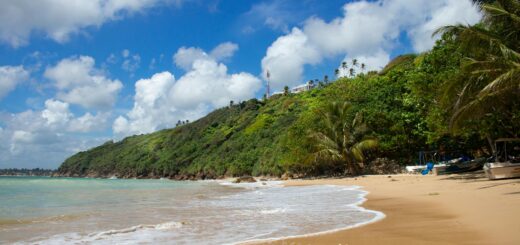
For actual swimming and sand, the main beach scene is at Amborovy, a little out of the centre, where the calmer water and broader strand draw the weekend crowds. These are working, lived-in beaches rather than postcard-empty ones, and that is part of the appeal — you are sharing them with Malagasy families, not staring at an empty manicured resort frontage. The water is warm year-round, the swimming gentle, and the atmosphere relaxed. Bring shade and sun protection: the northwest sun is fierce, and the beaches are open rather than tree-fringed, so a hat and a high-factor sunscreen matter more here than you might expect.
The rhythm of a good Mahajanga day tends to follow the heat. Mornings are for activity — the market, an excursion, a beach swim before the sun climbs. The hottest hours, early to mid-afternoon, are for shade, a long lunch and a slower pace, the way the town itself slows down. And the late afternoon and evening belong to the corniche, when the temperature finally eases and the whole city drifts toward the water. Settle into that rhythm rather than fighting it and the climate becomes part of the pleasure rather than an obstacle.
Cirque Rouge (the red-rock canyons)
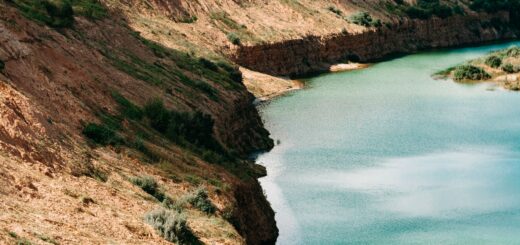
A short trip out of town brings you to the Cirque Rouge, an amphitheatre of eroded rock in extraordinary shades of red, ochre, pink and white — a small, accessible canyon system carved by water and weather into ridges and pinnacles. It is at its most photogenic in the low light of early morning or late afternoon, when the colours deepen and the shadows give the formations their drama. It pairs naturally with a half-day excursion and is one of the easiest “big” sights to reach from Mahajanga. Bring water, a hat and sensible shoes; there is real heat and very little shade.
The giant sacred baobab
Mahajanga is also home to one of Madagascar’s most famous individual trees: a vast, ancient sacred baobab on the edge of town, revered locally and genuinely enormous — the kind of tree that takes a small crowd to ring with linked arms. It is a quick, easy stop and a good introduction to the cultural significance baobabs hold across Madagascar. If the species fascinates you, the northwest is baobab country more broadly; our guide to western Madagascar’s baobabs and tsingy sets this single tree in its much larger context.
Ankarafantsika National Park (a day or overnight wildlife trip)
This is Mahajanga’s secret weapon, and the reason the town deserves a place on a wildlife traveller’s map. Ankarafantsika National Park lies along the RN4 between Antananarivo and Mahajanga — close enough to visit as a long day trip, better still as an overnight — and it is one of the finest dry-deciduous-forest reserves in the country. Because it sits squarely on the road you’d drive anyway, it slots into a Mahajanga trip with almost no detour: you can break the RN4 journey there on the way in or out, turning a long transfer day into a wildlife day. It is excellent for lemurs, with several species readily seen, and it is a genuine birding destination, home to a number of dry-forest specialities that serious birders travel a long way for. Walking its trails with a guide, with the chance of lemurs in the canopy and a sacred lake nearby, is a world away from the beach — and that contrast, coast in the morning and forest in the afternoon, is exactly what makes Mahajanga special. See our guide to Madagascar’s national parks and reserves for how Ankarafantsika fits the wider network.
The Anjohibe caves
Further out and harder to reach, the Anjohibe caves are an extensive limestone cave system north-east of Mahajanga, with chambers, formations and seasonal pools. The track in is rough and largely impassable in the rains, so this is a dry-season excursion that needs a proper vehicle and an early start — but for travellers who like their sightseeing with a sense of expedition, it is a rewarding full-day adventure well off the standard tourist circuit.
Markets & the port town
Finally, don’t overlook the town itself. Mahajanga is a trading port with deep Indian Ocean connections, and that history is alive in its markets, its waterfront, its mix of mosques and churches, and its food. Wander the central market for spices, fabrics and produce, watch the fishing and trading boats work the harbour, and eat well and cheaply along the way. A morning spent simply walking the town is one of the most rewarding things you can do here, and it costs nothing. To book any of the guided excursions above — Cirque Rouge, the caves, the parks — it is easiest to browse and reserve tours on GetYourGuide before you arrive, as the best local guides and the dry-season slots fill up.
Best Time to Visit Mahajanga
Mahajanga is hot. This is the single most important thing to internalise about its climate: where the central highlands around Antananarivo can be genuinely cool, the northwest coast is warm to sweltering for most of the year, with strong sun and high humidity in the wet months. The year divides cleanly into two seasons, and they matter for very different reasons.
The dry season, roughly April to November, is the prime time to visit. The weather is reliably sunny, the heat is intense but the air is drier and more bearable, the sea is inviting, and — crucially — the roads and tracks to Cirque Rouge, Ankarafantsika and especially the Anjohibe caves are passable. This is when nearly everything is at its best, and it is also when Malagasy holidaymakers descend, so the town is at its liveliest. The rainy season, roughly December to March, brings heavy downpours, oppressive humidity and the risk of washed-out tracks; some excursions become difficult or impossible, and the northwest sits in a region that can be affected by cyclones. The coast is still warm and the town still functions, but it is not the season to plan a Cirque Rouge or caves trip around.
For a full month-by-month breakdown across the whole island — which regions to favour in which season — see our guide to the best time to visit Madagascar. The short version for Mahajanga: aim for the dry season, and within it the shoulder months for a balance of good weather and fewer domestic crowds.
Where to Stay
Accommodation in Mahajanga splits into two natural choices: the town and the beach. Staying in town, near or along the corniche, puts you at the heart of the evening life, within walking distance of the markets, restaurants and the sunset promenade — the right call if you came for the city’s atmosphere and want to be in the middle of it. Staying out toward the beach at Amborovy trades some of that buzz for easier access to sand and swimming and a quieter, more resort-like feel, which suits travellers whose priority is the coast itself.
Across the board, expect Madagascar coastal standards rather than international five-star: clean, friendly, often charmingly idiosyncratic guesthouses and small hotels, with a handful of more comfortable options but nothing that pretends to be a Nosy Be private-island resort. Rooms in the dry season — and especially over Malagasy holiday periods — fill up, so booking ahead genuinely pays off. Compare and reserve Mahajanga stays on Agoda now to lock in the better-located places before the dry-season rush takes them. For a closer look at specific properties and which area suits which kind of trip, our dedicated best Mahajanga hotels guide goes deeper. If your route runs through the capital first, you can also book an Antananarivo stay on Agoda for the night before your flight or drive.
Mahajanga vs Nosy Be
This is the comparison nearly everyone weighing a Madagascar beach trip ends up making, so let’s be direct about it. Nosy Be is the island, the resort, the international beach destination — turquoise water, dive sites, polished hotels, organised excursions, and the prices and crowds that come with all of that. Mahajanga is the mainland city — beaches and sunsets, yes, but also a real town, red-rock canyons, a sacred baobab and direct access to one of the country’s best wildlife parks, all at domestic prices and with a fraction of the foreign visitors.
Put crudely: choose Nosy Be if you want a classic warm-water island holiday with resort comforts and don’t mind paying for it; choose Mahajanga if you want authentic, affordable coast paired with mainland wildlife and culture, and you value character over polish. Many travellers, given time, do both — Nosy Be and the far north for the islands, Mahajanga and the northwest for the rest. For the full head-to-head, including who should pick which and how to combine them, read our Mahajanga vs Nosy Be comparison. And if the northern islands win you over, our guide to northern Madagascar — Nosy Be and Diego picks up that thread.
One more practical difference is worth flagging: access. Nosy Be is reached by flight or by a road-and-ferry combination to a separate island, which adds a logistical layer and, often, cost. Mahajanga is on the mainland, on a single national road from the capital, with its own airport — there is no island transfer to coordinate, no boat to miss, and no extra hop between you and the wildlife parks. For travellers building a road-based itinerary through the highlands and the west, Mahajanga connects far more naturally than an offshore island ever can. That ease of integration, as much as the price, is why the northwest coast rewards anyone planning a broader Madagascar route rather than a single-destination beach week.
What a Trip Costs
The honest headline is that Mahajanga is one of the better-value coastal destinations in Madagascar, precisely because it is built for the domestic market rather than the international one. Food, local transport and town accommodation are inexpensive by any international standard; a beachfront meal of grilled fish costs a fraction of an equivalent dinner on a resort island, and a comfortable in-town guesthouse is gentle on the budget.
Where costs rise are the two things worth paying for: getting there and the wildlife days. The domestic flight from Antananarivo is the single largest discretionary expense if you choose to fly; the RN4 drive is cheaper but costs you a full day each way and the price of car and driver. Excursions to Ankarafantsika or the Anjohibe caves carry park fees, guide fees and vehicle costs that add up, especially as overnight trips. None of these are extravagant by international standards, but they are where your money goes. We keep all figures relative here on purpose — for a structured breakdown see our Mahajanga trip cost guide, and for squeezing the most from a tight budget, our Madagascar budget travel guide applies directly to a northwest-coast trip.
Wildlife Around Mahajanga
It bears repeating, because it is what lifts Mahajanga above a simple beach town: this is a genuine wildlife base. Ankarafantsika National Park is the centrepiece, a large protected area of dry deciduous forest, lakes and savanna along the RN4. For lemur watching it is excellent — several species are readily seen on guided walks, and the dry, relatively open forest makes spotting easier than in some of the denser eastern rainforests. For birdwatchers it is something close to essential, holding a roster of dry-west specialities that make the trip worthwhile on their own. The park’s mix of forest trails, lakeside walks and the chance of a night excursion for nocturnal species gives you a full, varied wildlife experience within a day’s reach of the coast.
If lemurs are a priority of your whole trip — and for many Madagascar travellers they are the priority — our complete guide to the lemurs of Madagascar will help you know what you’re looking at and where else to see them. And if you want to build a serious wildlife-led journey that uses Mahajanga and Ankarafantsika as part of a bigger loop, our Madagascar safari guide shows how the northwest connects to the island’s other great wildlife regions.
Getting Around & Day Trips
Within Mahajanga itself, distances are walkable in the centre and short by taxi elsewhere; the corniche, markets and town beaches are easily covered on foot and by local cab. The day trips are where you need wheels: Cirque Rouge, the sacred baobab, Ankarafantsika and the Anjohibe caves all sit outside town, some on rough tracks, and the caves in particular demand a capable vehicle and a knowledgeable driver. Public transport reaches some of these in theory; in practice, a private car and driver is the way to actually see them comfortably and on your own schedule.
This is exactly the use case for arranging a car and driver through Carla: someone who knows the northwest, can read the state of the tracks in any given season, and can string the scattered sights into sensible days. It turns a logistically fiddly region into an easy one, and it is the single biggest quality-of-trip decision you’ll make here.
Is Mahajanga Worth It?
Yes — with a clear-eyed condition attached. Mahajanga is absolutely worth it if you want authentic, affordable Madagascar coast life, lively evenings on a real seafront, striking red-rock and baobab scenery, and the rare bonus of first-rate wildlife within day-trip reach. For travellers who value character, value and a sense of the real country over manufactured luxury, it is one of the most rewarding and under-appreciated destinations on the island.
It is not worth it if what you actually want is a polished beach resort with pristine sand, calm turquoise lagoons and full hotel infrastructure — that holiday exists in Madagascar, but it is on the northern islands, not here. Mahajanga is a working coastal city that happens to have wonderful coast and wildlife around it, not a manicured beach product. Go in wanting what it actually offers, and it will exceed your expectations; go in wanting Nosy Be, and you’ll have come to the wrong place. For most travellers chasing genuine Madagascar, that’s a feature, not a flaw.
If we had to sum it up in a sentence: Mahajanga is the rare Madagascar destination that gives you sea, town and forest in one easy package, at prices the rest of the island’s coast can’t match, in exchange for letting go of the idea of a flawless resort. Make that trade willingly — most travellers who reach the northwest do — and you’ll come away with a more complete picture of the country than any single island can give you. Plan three to four days here as part of a longer route and it earns its place comfortably; squeeze it into one rushed night and you’ll miss the very thing that makes it worth the journey.
Getting There and Travelling Well
Two practical safeguards make a northwest-coast trip smoother, and both are worth setting up before you go. The first is flight protection. Your international flight into Madagascar — typically routed through Europe — is long, multi-leg and prone to the delays and cancellations that come with long-haul travel. If that flight departs from or is operated within the EU and is seriously disrupted, the EU261 regulation can entitle you to compensation of up to €600 per passenger. To be completely clear: this applies to that European-routed international flight, not to your domestic Antananarivo–Mahajanga hop, which is a Madagascar internal flight and outside the scheme. Claims are fiddly to pursue alone, which is why a service that handles them for you is worth knowing about before disruption strikes.
The second safeguard is travel insurance, and on a trip that mixes domestic flights, long road journeys and forest excursions it is not optional. Medical facilities in the northwest are basic, evacuation to better-equipped centres can be necessary, and the combination of remote tracks and wildlife outings raises the stakes. SafetyWing Nomad Insurance is built for exactly this kind of flexible, multi-stop, longer trip, with cover that travels with you across regions. We genuinely would not do a Madagascar trip — coast, road or forest — without it; the cost of a policy is trivial against the cost of an evacuation, and a SafetyWing plan is the simplest way to cover the whole journey in one go.
Plan Your Mahajanga Trip with Carla
The northwest coast rewards travellers who plan it properly, and that is hard to do well from the outside. Carla is a Madagascar-resident travel specialist who can build your Mahajanga days around exactly what you came for — the beaches and corniche, a morning at Cirque Rouge, the sacred baobab, and a serious wildlife day or overnight at Ankarafantsika — and handle the car, driver and timing that make the region easy. Rather than stitching it together blind, reach out to Carla for a route shaped to your dates, pace and budget; for the wheels themselves, you can arrange a car and driver through Carla directly.
Frequently Asked Questions
Is Mahajanga the same place as Majunga?
Yes. Mahajanga is the modern Malagasy spelling; Majunga is the older, French-era spelling and remains in common spoken use. They are the same northwest-coast city — you will see both on maps, signs and tickets.
How do I get from Antananarivo to Mahajanga?
Two ways: a long full-day drive on the RN4 with a private car and driver, or a short domestic flight of around an hour. Flying saves you a day each way but costs more and runs on limited schedules; driving is cheaper and scenic but takes a full day. Many travellers fly one way and drive the other to see the RN4 once without losing two whole days.
Is Mahajanga good for seeing wildlife?
Yes, unusually so for a beach destination. Ankarafantsika National Park, on the RN4 near the city, is excellent for lemurs and a strong birding site, reachable as a long day trip or, better, an overnight. That combination of coast plus serious wildlife is Mahajanga’s biggest advantage over a pure resort island.
When is the best time to visit Mahajanga?
The dry season, roughly April to November, when the weather is reliably sunny and the tracks to Cirque Rouge, Ankarafantsika and the Anjohibe caves are passable. The rainy season (December to March) brings heat, humidity, downpours and washed-out tracks, and the region can be affected by cyclones.
Should I choose Mahajanga or Nosy Be?
Choose Mahajanga for authentic, affordable mainland coast paired with wildlife and town life; choose Nosy Be for a classic resort-island beach holiday with polished hotels and dive sites, at higher prices. They suit different travellers, and with enough time you can do both.
🏖️ Plan Your Mahajanga Trip — Ask Carla
Get a northwest-coast trip built around the beaches, Cirque Rouge and Ankarafantsika wildlife by a Madagascar-resident specialist. Reach out to Carla.
Plan Your Trip to Madagascar
- Read the full Madagascar Travel Guide
- Explore itineraries by style and duration
- Best Tours and Guided Experiences
Where to Stay