Diego Suarez & the Far North Complete Guide 2026: Amber Mountain, Tsingy Rouge & More
Affiliate disclosure: This article contains sponsored links to hotels, tour operators, insurance providers, and other travel services. We earn a small commission if you book through our links, at no extra cost to you.
Diego Suarez & the Far North Complete Guide 2026 — At a Glance
- Where: Madagascar’s northern tip — Diego Suarez (Antsiranana), on one of the world’s great bays
- The highlights: Amber Mountain rainforest, Tsingy Rouge, the Emerald Sea, the Three Bays, Ankarana
- Best for: Dramatic, varied scenery, rainforest wildlife, and a wilder, quieter alternative to Nosy Be
- Gateway: Diego Suarez (Arrachart) airport, by domestic flight from Antananarivo
- Best time: The dry season (April–November) for the best access and conditions
- How long: 3–5 days for the far north’s highlights; longer to combine with Nosy Be
- Flight protection: EU261 €600 per passenger on disrupted European inbound flights
- Travel insurance: SafetyWing Nomad Insurance — essential for the remote far north
- Where to stay: Madagascar stays on Agoda
Book your Madagascar tours
Madagascar’s best small-group wildlife, lemur and park tours book out months ahead in peak season (July–October). Browse Madagascar tours & check live availability on GetYourGuide →
🎒 Madagascar Trip Essentials
A few inexpensive items make the biggest difference on the ground in Madagascar:
- Picaridin insect repellent — DEET-free protection against malaria mosquitoes. See on Amazon →
- Permethrin clothing spray — treat clothes; kills mosquitoes on contact for weeks. See on Amazon →
- Pop-up mosquito net — budget lodges rarely provide one; packs down tiny. See on Amazon →
- Water filter bottle — tap water isn’t safe to drink in Madagascar. See on Amazon →
- Universal travel adapter (USB-C) — Madagascar uses European-style plugs. See on Amazon →
- 8×42 binoculars — essential for spotting lemurs and chameleons in the canopy. See on Amazon →
As an Amazon Associate we earn from qualifying purchases.
Diego Suarez and the far north are Madagascar’s most dramatically varied corner — a region of rainforest, red rock, turquoise sea, and one of the world’s most beautiful bays, all within reach of a single base. Less developed and less visited than nearby Nosy Be, the far north rewards travellers who want wilder scenery and real adventure alongside their beaches. It’s the part of northern Madagascar where you trade a little comfort for a great deal of variety and a genuine sense of exploration — and where the landscapes shift so dramatically from one day to the next that the region feels like several destinations in one. This complete guide covers Diego Suarez and its surroundings — the Amber Mountain, the Tsingy Rouge, the Emerald Sea, Ankarana, and more — with everything you need to plan a visit: what to see, how to get there, when to go, suggested itineraries, and how to combine the far north with Nosy Be. Whether you’re tacking the far north onto a beach holiday or making it the focus of an adventurous trip, this guide will help you make the most of Madagascar’s most varied corner. For the wider region, see our best of Northern Madagascar guide.
The essential thing to know about the far north: it packs an astonishing variety of landscapes into a compact area. From Diego Suarez you can explore lush rainforest, surreal red sandstone pinnacles, shallow turquoise lagoons, and dramatic coastal bays — a range that elsewhere in Madagascar would require crossing the island and many days of travel — here, it’s all within reach of Diego. It’s drier and quieter than Nosy Be, with a more adventurous feel, and it makes a superb complement to a beach stay or a rewarding destination in its own right, and travellers who include it often rate it among the highlights of their whole Madagascar trip. Time it to the dry season and the far north delivers some of Madagascar’s most striking and least-crowded scenery.
Part of the far north’s appeal is precisely that it sees fewer visitors than Nosy Be just to the south. Where Nosy Be is a developed beach destination, the far north retains a frontier feel — the sites are quieter, the tourism lighter-touch, and the sense of discovery stronger. For travellers who find busy resort islands a little tame, or who simply want to pair their beaches with real adventure and dramatic landscapes, the far north is the answer. It’s also the natural complement to Nosy Be: spend a few days exploring Diego’s varied surroundings, then unwind on the island’s beaches, and you’ve seen the full range of what northern Madagascar offers.
Diego Suarez (Antsiranana)
Diego Suarez, officially Antsiranana, is the far north’s hub — a characterful port town wrapped around the vast Bay of Diego Suarez, often called one of the world’s most beautiful natural harbours, second only to Rio in scale. The town has a faded colonial charm, with wide streets, weathered architecture, lively markets, and a relaxed, end-of-the-island pace. It’s the base from which all the far north’s highlights are reached, and a pleasant place to spend a day or two soaking up the atmosphere, sampling the seafood, and enjoying the bay views. While not a destination in itself, Diego is the welcoming gateway that holds a far-north trip together.
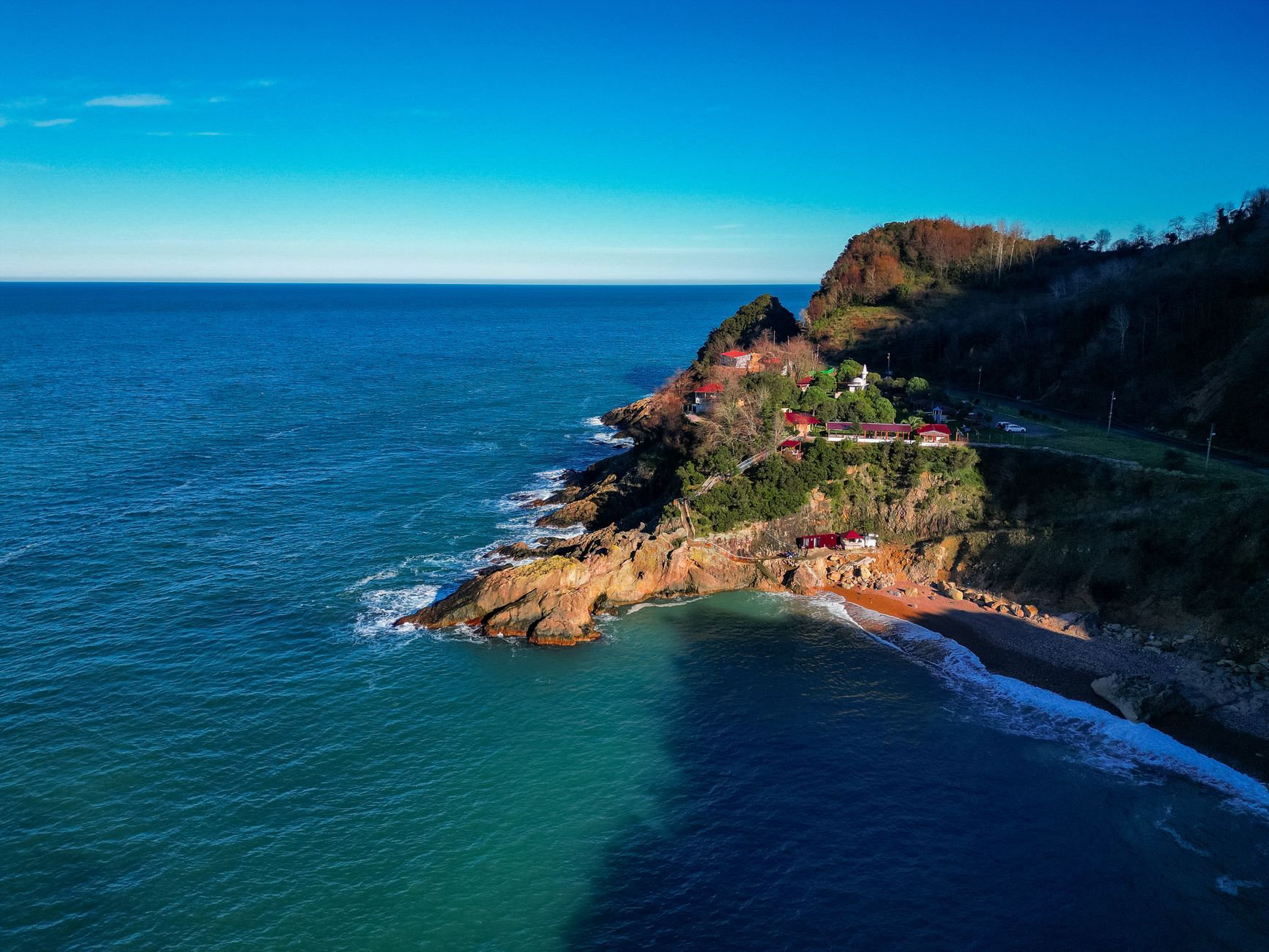
The bay itself is the town’s defining feature — a huge, sheltered expanse dotted with islands and rock formations, including the iconic Pain de Sucre (Sugarloaf) islet. The bay’s scale and beauty set the tone for the whole region, and boat trips out onto its waters are a highlight in their own right. From the water you can appreciate the sheer size of the harbour, visit its islands, and take in the Sugarloaf from below — a classic Diego excursion. The bay is also steeped in history, having served as a strategic naval port for over a century, which lends Diego its layered, faintly nostalgic character. Diego’s position at Madagascar’s northern tip also gives it a distinctive, cosmopolitan feel, shaped by centuries of maritime history. The town makes a comfortable base, with a decent range of hotels and guesthouses, restaurants serving fresh seafood and French-Malagasy cuisine, and easy access to outfitters who run the trips to the Amber Mountain, Tsingy Rouge, and Emerald Sea. Spend an evening on the waterfront watching the light change over the bay and you’ll understand why travellers who make it this far north tend to fall for Diego’s faded, easygoing charm — it’s a fitting hub for a region that feels genuinely off the beaten track.
Amber Mountain National Park
The Amber Mountain (Montagne d’Ambre) is the far north’s premier wildlife destination — a lush, high-altitude rainforest national park that contrasts dramatically with the dry lowlands around it. Cooler and greener than its surroundings, the park is laced with waterfalls, crater lakes, and forest trails, and is home to lemurs (including the crowned lemur and Sanford’s brown lemur), the tiny Brookesia chameleons (among the smallest reptiles on earth, some barely larger than a fingernail), colourful birds, and abundant reptiles and amphibians. It was one of Madagascar’s first protected areas, and its accessibility and biodiversity have made it a favourite of naturalists for over a century. It’s an easy day trip or overnight from Diego, and one of the most accessible and rewarding rainforest experiences in northern Madagascar. The cool mountain air is a welcome relief from the lowland heat, and even a half-day’s gentle walking turns up enough lemurs, chameleons, and birdlife to satisfy most visitors — making it a rare wildlife destination that asks little of your fitness or time. For wildlife-minded travellers, the Amber Mountain is the far north’s standout, proving the region offers far more than beaches. See our Northern Madagascar guide for how it fits a wider trip.
What makes the Amber Mountain special is the contrast it offers. Driving up from the hot, dry lowlands, you climb into a cool, misty, green world of moss-draped trees, ferns, and tumbling waterfalls — the Cascade Sacrée and the Grande Cascade among them — a refreshing change of scene as much as a wildlife destination. The trails range from short, easy walks to longer hikes, so it suits a range of fitness levels, and a guide (compulsory in the park) greatly improves your wildlife spotting, picking out the camouflaged chameleons and the lemurs in the canopy. A half-day captures the highlights; a full day or overnight lets you go deeper. It’s an easy, rewarding addition to any Diego-based itinerary, and the region’s best chance to see Madagascar’s famous forest wildlife.
The Tsingy Rouge
The Tsingy Rouge (Red Tsingy) is one of the far north’s most surreal sights — a landscape of jagged red sandstone pinnacles and spires, formed by erosion of the iron-rich soil. Unlike the grey limestone Tsingy de Bemaraha in the west, these formations glow in vivid reds, oranges, and pinks, especially in the low light of morning and late afternoon, making them a photographer’s dream and a genuinely unusual sight even by Madagascar’s high standards for strange landscapes. The Tsingy Rouge is reached by a drive from Diego and is a relatively quick visit, but an unforgettable one — an alien, otherworldly landscape unlike anywhere else in the north. The formations are constantly, if slowly, changing as erosion sculpts new spires and washes others away, so the Tsingy Rouge you see is a fleeting moment in a living geological process — a reminder that Madagascar’s landscapes are as strange and dynamic as its wildlife, and worth the short detour to see. It pairs naturally with the Amber Mountain or the Ankarana on a far-north itinerary.
The Tsingy Rouge is more about the spectacle than a long visit — the formations are compact and viewed from boardwalks and viewpoints rather than hiked through like the western Tsingy. But what it lacks in scale it makes up for in colour and strangeness: the eroded red spires, banded in ochre and crimson, look almost like a miniature alien city, and they change hue dramatically with the light. Photographers should aim for early morning or late afternoon, when the low sun sets the red rock ablaze. Combined with the green of the Amber Mountain and the turquoise of the Emerald Sea, the Tsingy Rouge completes a far-north palette of colour that few regions anywhere can match.
The Emerald Sea and the Coast
The Emerald Sea (Mer d’Émeraude) is a shallow, brilliantly turquoise lagoon near Diego, protected by a reef and dotted with sandbanks and small islands — ideal for sailing, snorkelling, and beach picnics. A day trip out by boat (often by traditional dhow) to its calm, clear waters is one of the far north’s great pleasures, combining swimming, snorkelling over the reef, and lazing on deserted sandbars. The shallow, sheltered water is warm and exceptionally clear, ideal even for nervous swimmers and children, and the reef teems with colourful fish. A typical trip sails out in the morning, anchors at a sandbank for snorkelling and a fresh seafood lunch on the beach, and returns in the afternoon — an idyllic, unhurried day, and one of the gentlest, most purely relaxing experiences in the far north. The wider far-north coast also includes the dramatic Three Bays (Baie des Sakalava, Baie des Pigeons, Baie des Dunes) — a stretch of beautiful, wind-swept beaches popular with kitesurfers and walkers. Together, the far north’s coast offers a quieter, wilder beach experience than Nosy Be’s resort strands — windswept, dramatic, and often nearly deserted.
The Three Bays in particular are a hub for watersports thanks to their reliable winds — the Baie de Sakalava is one of Madagascar’s premier kitesurfing spots, drawing enthusiasts through the windy season; see our Sakalava Bay kitesurfing guide for more. Even non-kitesurfers love the bays for their wild beauty, the walking between them, and the sense of having a slice of dramatic coast largely to themselves. The Emerald Sea, by contrast, is all calm and turquoise — the two together show the far north’s coastal range, from breezy adventure to serene lagoon. A day on each is a perfect counterpoint to the region’s inland rainforest and tsingy, rounding out the far north’s full spread of experiences.
Ankarana and Beyond
South of Diego lies the Ankarana Reserve, a remarkable limestone massif riddled with caves, canyons, and its own grey tsingy pinnacles, home to crowned lemurs, bats, and crocodiles in the underground rivers. The reserve’s signature sights are its dramatic grey tsingy pinnacles, crossed by suspension bridges, and its vast caves — some of the largest in Madagascar, with cathedral-like chambers and rivers running through the dark. It’s a more adventurous excursion that takes a full day or an overnight — often visited en route between Diego and Nosy Be — and adds another distinct landscape to the far north’s already remarkable repertoire of contrasting scenery. Further afield, the remote beaches and headlands of the northern coast reward intrepid travellers with genuine wilderness and solitude, far from any tour-bus circuit. The far north rewards those who venture beyond the obvious, with each site offering something completely different from the last.
Ankarana deserves special mention for travellers moving between Diego and Nosy Be, as it sits conveniently on the route and breaks up the journey with a genuinely world-class sight. Its tsingy pinnacles, deep canyons, and vast cave systems — some with underground rivers and resident crocodiles — make it one of northern Madagascar’s most dramatic protected areas, and a complete contrast to the beaches and the rainforest alike. Guided walks range from short circuits to demanding full-day hikes across the limestone. For travellers combining the far north with Nosy Be, building in a night at Ankarana turns a transfer into a highlight, and adds yet another distinct landscape to an already varied northern trip.
Practical Tips for the Far North
Base in Diego and day-trip out. Most of the far north’s highlights are day trips or overnights from Diego Suarez, so a single base keeps things simple and minimises packing and repacking.
Hire a vehicle and driver. The roads to the Amber Mountain, Tsingy Rouge, and Ankarana vary in quality, and a 4×4 with a driver who knows them makes the region far easier to explore than going it alone.
Allow a full day for the Emerald Sea. The boat trip out, the snorkelling, and the time on the sandbars are best enjoyed unhurried — don’t try to squeeze it into a half-day.
Pack for variety. You’ll want walking shoes and a layer for the cool, damp Amber Mountain, and swimwear and sun protection for the Emerald Sea and coast — the far north spans several climates in a few days.
Carry cash. Diego has banks and ATMs, but the outlying sites, guides, and boat operators often need cash (Malagasy ariary), so stock up in town.
Insure for the activities. Confirm your travel insurance covers snorkelling, boat trips, and any kitesurfing or diving, given the far north’s remoteness from major facilities.
How to Get to the Far North
The far north’s gateway is Diego Suarez (Arrachart) airport, reached by domestic flight from Antananarivo. From Diego, the region’s highlights are reached by road — the Amber Mountain and Tsingy Rouge are day trips, the Emerald Sea a boat trip, and Ankarana a longer excursion south. There are no direct international flights to Diego, so all visitors route through Antananarivo (or, less commonly, connect via Nosy Be), making the domestic flight an essential part of any far-north trip and a cost to factor in. Distances are manageable but the roads vary in quality, so a vehicle and driver, or a guided arrangement, makes far-north travel much easier. Many travellers combine the far north with Nosy Be, travelling overland (via Ankarana) or by a short flight between the two. For getting around and seasonal flight tips, see our best time to visit Madagascar guide.
Booking the Diego flight early is wise, as the route is served less frequently than Nosy Be’s and seats can be limited. Once there, the compact layout — most sites within a day trip of town — means you don’t need to keep relocating, which keeps a far-north trip relaxed despite the variety of landscapes. The overland connection to Nosy Be via Ankarana is a long but scenic drive that doubles as a sightseeing leg; the alternative short flight saves time if your schedule is tight. As with the whole region, a vehicle-and-driver or guided arrangement removes the logistical friction and lets you focus on the remarkable scenery rather than the roads.
When to Visit the Far North
The far north is a dry-season destination (April–November), when the roads are at their best, the rainforest trails are walkable, and the seas are calm for the Emerald Sea and coastal trips. The Amber Mountain, being rainforest, sees rain year-round but is most accessible in the dry months. The wet season (roughly December–March) brings rain and some cyclone risk, making travel less reliable. The windy Three Bays are best for kitesurfing in the windy season (around April–November). For most travellers, the dry season delivers the best all-round far-north experience. For the full regional climate picture, see our Madagascar weather by region guide.
Within the dry season, the far north has its own quirks worth knowing. The strong trade winds that make the Three Bays a kitesurfing paradise (roughly April to November) can be less welcome for calm-water activities, so wind-sensitive travellers might prefer the shoulder months at either end. The Amber Mountain’s rainforest is lush and rewarding year-round but most comfortable and accessible in the dry months, while the Emerald Sea is at its calmest and clearest then too. As with all of Madagascar, the deep wet season (January–February) is best avoided for the rains and the small but real cyclone risk. A specialist can help pinpoint the ideal weeks for your particular mix of interests.
Suggested Far-North Itineraries
The far-north highlights (3–4 days): Base in Diego, with a day at the Amber Mountain for rainforest and lemurs, a half-day at the Tsingy Rouge, and a boat day on the Emerald Sea — capturing the region’s three signature landscapes plus the bay. This compact loop suits travellers short on time or adding the far north to a wider trip, and it delivers a remarkable variety of scenery in just a few days, all from a single Diego base with no need to relocate.
The full far north (5–6 days): Add Ankarana’s caves and canyons and time on the Three Bays coast for a deeper exploration, taking in the region’s full variety of rainforest, tsingy, sea, and bays. With a few extra days you can slow the pace, add walks and watersports, and reach the quieter corners — the far north rewards the time, and a less rushed itinerary lets you appreciate just how much the region packs in.
Combined with Nosy Be (8–10 days): Pair the far north’s dramatic scenery with Nosy Be’s beaches and islands — the complete northern experience, linking the two via Ankarana overland or a short flight. See our Northern Madagascar guide for the full picture.
This combination is the way to experience the full breadth of northern Madagascar, balancing the far north’s wild, varied scenery with Nosy Be’s beaches and island comfort. The overland route between them via Ankarana is itself rewarding, breaking the journey with the reserve’s caves and tsingy, though the road takes the best part of a day; the short flight is the faster, easier option. Most travellers start in the more active far north and finish on Nosy Be’s beaches — adventure first, relaxation last — which makes for a satisfying arc and a restful end to the trip. Either way, ten days lets you do both regions justice without rushing.
Getting There and Travelling Well
Madagascar is reached by connecting flights via Europe, the Gulf, or Africa, then a domestic flight to Diego. Book international flights early and protect them on European routes — EU261 entitles you to up to €600 per passenger for long delays, cancellations, and denied boarding. Register your inbound flight for EU261 coverage with AirAdvisor so any eligible claim is handled for you.
The far north’s remoteness makes comprehensive travel insurance essential — it’s farther from major facilities than Nosy Be, and the rainforest, boat, and coastal activities carry their own risks. Coverage should include medical emergencies, evacuation, and your activities (including any diving, snorkelling, or kitesurfing). SafetyWing Nomad Insurance offers flexible, affordable cover well suited to far-north travel. In a region this remote, insurance is never optional.
Carla / Voyagiste Madagascar (plan your far-north trip)
Madagascar-resident specialist who can build a far-north trip around the Amber Mountain, the Tsingy Rouge, and the Emerald Sea. Contact Carla directly to plan a dry-season trip with the right transport and guides for the region’s varied sites, the boat trips arranged, and the option to combine the far north with Nosy Be — all handled end to end. Local knowledge ensures you see the far north’s best in the right conditions, with the right guides, and in the most logical order — turning a logistically scattered region into a smooth, rewarding trip.
Frequently Asked Questions
What is Diego Suarez known for?
Its vast, beautiful bay — one of the world’s great natural harbours, often compared to Rio’s — and as the gateway to the far north’s varied landscapes: the Amber Mountain rainforest, the Tsingy Rouge, the Emerald Sea, the Three Bays, and Ankarana. It’s a characterful colonial-era port town with a relaxed pace and a faded charm all its own.
How do I get to the far north?
By domestic flight from Antananarivo to Diego Suarez (Arrachart). From Diego, the highlights are reached by road, boat, or excursion, ideally with a vehicle and driver. Many travellers combine it with Nosy Be, either overland via Ankarana or by a short flight.
What’s the difference between the Tsingy Rouge and the Tsingy de Bemaraha?
The Tsingy Rouge near Diego is red sandstone formations (a quick, striking visit, easily added to a far-north trip); the Tsingy de Bemaraha in the west is vast grey limestone pinnacles you hike through on via ferrata (a major, multi-day adventure reached by a long drive). They’re very different sights in different regions — the red is about colour and spectacle, the grey about scale and exploration. Seeing both, in the north and the west, is a treat for travellers doing a wider Madagascar trip.
Is the far north better than Nosy Be?
Different, not better — the far north has more dramatic, varied scenery and fewer crowds; Nosy Be has better beaches and resort comfort. Choose the far north for adventure and landscapes, Nosy Be for relaxation, or combine the two for the best of both. See our Northern Madagascar guide.
When is the best time to visit?
The dry season (April–November) for the best road access, walkable rainforest, and calm seas. The strong winds that suit kitesurfing at the Three Bays run roughly April to November too. The wet season brings rain and some cyclone risk, best avoided especially in January–February. See our best time to visit guide.
Do I need travel insurance for the far north?
Yes — essential, given the remoteness. The far north is farther from major medical facilities than Nosy Be, and the snorkelling, boat trips, kitesurfing, and rainforest hikes all carry their own risks. Comprehensive coverage with medical evacuation and activity cover is strongly recommended, and worth confirming covers your specific activities before you travel.
🧭 Plan Your Far-North Madagascar Trip With Carla
The Amber Mountain, the Tsingy Rouge, the Emerald Sea — Madagascar’s most varied corner. Reach out to Carla, our Madagascar-resident specialist, to build a dry-season far-north trip with transport, guides, and boat trips handled, and Nosy Be as an option.
Plan Your Trip to Madagascar
- Read the full Madagascar Travel Guide
- Explore itineraries by style and duration
- Explore the full destination guide
Where to Stay