Malagasy Food & Drink: What to Eat in Madagascar 2026
Affiliate disclosure: This article contains sponsored links to hotels, tour operators, insurance providers, and other travel services. We earn a small commission if you book through our links, at no extra cost to you.
Malagasy Food & Drink 2026 — At a Glance
- The staple: rice (vary) at almost every meal, with an accompaniment (laoka) — a stew, meat, fish or vegetables
- Must-try dishes: romazava (the national dish), ravitoto, grilled zebu, coastal seafood
- Drinks: Three Horses Beer (THB), local rum, great coffee and vanilla — but drink bottled/treated water, never the tap
- Go deeper: food & market tours on GetYourGuide
- Plan a foodie trip with a local: contact Carla
- Getting around: car & driver on Carla
- Flight protection: EU261 up to €600 per passenger on disrupted European inbound flights
- Travel insurance: SafetyWing Nomad Insurance
- Where to stay: Antananarivo stays on Agoda
🍳 Cook Madagascar at Home
Recreate these flavours at home — the island’s signature ingredients and tools:
- Madagascar Bourbon vanilla beans — the real thing, far cheaper by the pack. See on Amazon →
- Whole cloves & spices — Madagascar’s signature spices for the recipe. See on Amazon →
- African/island cookbook — authentic recipes to recreate the dishes at home. See on Amazon →
- Granite mortar & pestle — for grinding fresh spice pastes the Malagasy way. See on Amazon →
- Rice cooker — rice is the base of every Malagasy meal. See on Amazon →
As an Amazon Associate we earn from qualifying purchases.
Madagascar surprises almost everyone at the table. Travellers arrive expecting the wildlife — the lemurs, the baobabs, the chameleons — and leave talking about the food: the steam rising off a mountain of white rice, a bowl of slow-cooked beef and bitter greens, a baguette as good as anything in a Paris boulangerie, and a cold bottle of Three Horses Beer at the end of a long, dusty day on the road. Malagasy cuisine is honest, comforting and deeply tied to the land. It is rarely fiery, often gentle, and built around a single ingredient that anchors nearly every plate: rice.
This guide walks you through what Malagasy people actually eat — the staples, the signature dishes, the regional specialities, the street-food snacks and the drinks — along with the practical realities every traveller needs to know about water, food safety and dietary needs. Whether you are planning your first trip or refining a longer itinerary, eating well here is easy once you know what to look for. If you are still in the early planning stages, start with our first-timer’s Madagascar travel tips, then come back hungry.
Rice Is Everything: The Heart of Malagasy Cuisine
To understand Malagasy food, you have to understand rice — or vary, as it is known in Malagasy. Rice is not a side dish here; it is the meal. Madagascar has one of the highest per-capita rice consumption rates in the world, and most people eat it at every meal of the day, breakfast included. A typical lunch or dinner is a generous mound of plain white rice surrounded the moment it is served by an accompaniment called laoka.
The word laoka covers almost anything that goes with the rice: a stew of beef or pork, a piece of fried or grilled fish, a pile of sautéed leafy greens, a simple tomato-and-onion relish, or a bean dish. The rice is the constant; the laoka is the variable, and it changes with the region, the season, the household budget and the cook. A modest family meal might be rice with a handful of greens; a celebratory one might pile on several laoka at once.
Two rice preparations are worth knowing by name. The everyday version is plain steamed white rice. The other, vary amin’anana, is a soupy rice cooked together with leafy greens and sometimes a little meat — almost a porridge, often eaten in the cooler highland mornings. Both are filling, both are inexpensive, and both will become very familiar very quickly. The cultural weight of rice is hard to overstate: a Malagasy host serving you a heaped plate is offering hospitality in its purest, most generous form.
For travellers, this rice-centric rhythm shapes the whole eating experience. Portions are generous and prices are low, so even a budget trip rarely means going hungry. The flip side is repetition: after a week of rice at lunch and dinner you may find yourself craving variety, which is exactly why it pays to learn the different laoka and to seek out the regional specialities and street snacks covered later in this guide. Think of the rice as the canvas and the laoka as the painting — once you start ordering with that in mind, every meal becomes a small, satisfying choice rather than a default.
A Melting-Pot Cuisine
Madagascar sits in the Indian Ocean off the coast of East Africa, but its people and its food trace influences from much further afield. The island was settled by seafarers from Southeast Asia — the deep cultural roots of rice cultivation and certain cooking techniques come from there — and later shaped by African, Arab, Indian and, in the colonial era, French influences. The result is a cuisine that feels familiar and foreign at the same time.
From Southeast Asia comes the centrality of rice and the love of coconut on the coast. From the African mainland and the Indian Ocean trade routes come hearty stews, root vegetables like cassava, and a fondness for grilled meat. From India and the Arab world come samosas and other fried snacks, plus a gentle use of spices such as ginger, garlic and curry. And from France — Madagascar was a French colony until 1960 — comes a lasting legacy of fresh baguettes, croissants, pâtés, pastries and good coffee. You can eat a flaky pain au chocolat for breakfast and a bowl of African-style stew for lunch in the same town, and neither will feel out of place.
Importantly, Malagasy food is generally not spicy-hot by default. Heat comes on the side, in the form of a fiery chilli-and-ginger condiment called sakay, which you add to taste. If you like it mild, simply leave the sakay alone; if you like a kick, a small spoonful transforms a plate of rice and stew.
Signature Dishes to Try
If you eat your way around Madagascar with even a little curiosity, a handful of dishes will keep reappearing. These are the ones to seek out — the plates that define the national table.
Romazava — the national dish
Romazava is the dish most often called Madagascar’s national dish, and for good reason. It is a brothy beef stew simmered with a mix of leafy greens, traditionally including the slightly bitter, peppery brèdes mafana — leaves that famously leave a faint tingling, numbing sensation on the tongue. The result is warming, savoury and a little herbaceous, somewhere between a soup and a stew, and always served over rice. Order romazava once and you will understand the whole logic of Malagasy cooking: a comforting protein-and-greens laoka built to be eaten with vary. It is the dish to try on your first day.
Ravitoto
If romazava is the elegant national ambassador, ravitoto is the beloved comfort food. It is made from cassava leaves that are pounded to a coarse, rich green paste and slow-cooked, usually with pork (ravitoto sy henakisoa) or zebu beef. Deeply savoury, a touch smoky and very satisfying, it is often paired with a little coconut and served — naturally — with rice. Ravitoto is the kind of dish you find in family homes and humble local eateries, and many travellers come to crave it. It is filling, affordable and unmistakably Malagasy.
Grilled zebu
The zebu — the humped cattle you will see being herded along roadsides and across the highlands — is central to Malagasy life, both as food and as a symbol of wealth and status. Zebu beef appears in stews, but the simplest and most delicious form is grilled: skewers or steaks of zebu cooked over charcoal, often served with rice and a sharp tomato relish. The meat is leaner and more flavourful than commodity beef, and a plate of grilled zebu (sometimes called brochettes when skewered) is one of the great simple pleasures of eating here. You will find it everywhere from roadside grills to proper restaurants. The zebu also turns up in slow-cooked dishes and in kitoza, strips of dried, smoked beef that are a highland speciality, often eaten at breakfast with rice — a hearty, smoky way to start a cold morning in the central highlands.
Coastal seafood & coconut
Madagascar has an enormous coastline, and on the coast the food turns toward the sea. In Nosy Be, along the southwest reef coast, around Sainte-Marie and elsewhere, you will find some of the freshest seafood imaginable: grilled fish, prawns, calamari, lobster and crab, often cooked simply with garlic and lime, or simmered in a coconut sauce. Coconut milk is the signature coastal ingredient, lending a mild sweetness to fish and rice dishes alike. A grilled catch of the day with coconut rice, eaten within sight of the Indian Ocean, is one of the trip’s reliable highlights. If a coast-and-cuisine trip appeals, our Madagascar itinerary guide can help you fit it in.
Koba & sweet treats
For something sweet, look for koba, a dense traditional treat made from ground peanuts, rice flour and sugar (sometimes banana), wrapped in banana leaves and steamed or baked for hours into a sliceable, cake-like log. It is rich, nutty and very moreish, sold by the slice in markets and along the highland roads. You will also encounter ripe tropical fruit at almost every turn — mangoes, lychees in season, bananas, pineapple, papaya and more — which double as the simplest, freshest dessert on the island.
French-legacy bread & patisserie
One of the happiest surprises in Madagascar is the bread. The French colonial legacy lives on in genuinely excellent baguettes, sold fresh and cheap from bakeries and street stalls, plus croissants, pains au chocolat and other patisserie in the bigger towns. A warm baguette with a little local honey or vanilla-laced spread makes a perfect breakfast on a travel day, and a well-stocked patisserie in Antananarivo can rival a small-town French boulangerie. For anyone facing a long drive, a fresh baguette tucked in your bag is the smartest snack you can carry.
Street Food & Snacks
Madagascar’s streets and markets are full of quick, cheap, delicious things to eat — and street food is a real pleasure here, provided you choose stalls sensibly. The golden rule is simple: eat what is cooked hot and fresh in front of you, at a busy stall with good turnover, and you will rarely have any trouble.
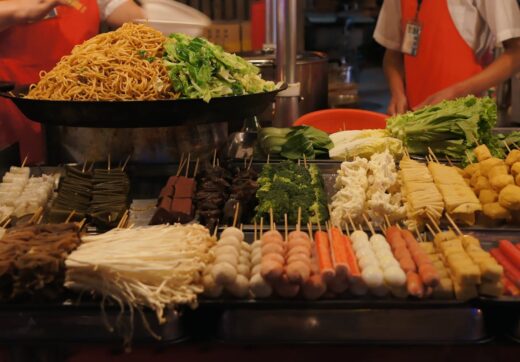
The classics to look for: sambos, the local samosas — crisp fried triangles filled with spiced meat or vegetables, a direct legacy of Indian Ocean trade and one of the most popular snacks in the country. Mofo gasy (literally “Malagasy bread”) are small, slightly sweet rice-flour cakes cooked in moulds over charcoal, eaten warm at breakfast, often alongside coffee. You will also find grilled skewers of zebu or chicken, fried doughnuts and fritters, roasted peanuts, and seasonal fruit sold by the piece. In coastal towns, look for grilled fish and seafood snacks; in the highlands, hearty fried doughs and warm mofo gasy carry you through cool mornings.
Street food is also where you taste the country’s daily rhythm — the morning rush around the mofo gasy griddle, the after-work crowd at the brochette grill, the market stalls steaming with sambos. It is inexpensive, sociable and one of the best ways to eat like a local, as long as you stick to hot, freshly cooked items and skip anything that has been sitting out at room temperature.
Regional Specialities
Madagascar is a big island, and what lands on your plate changes noticeably as you travel. Knowing the broad regional patterns helps you eat the best of wherever you are.
The highlands — around Antananarivo, Antsirabe and Fianarantsoa — lean toward heartier, warming fare suited to the cooler climate: rich stews like romazava and ravitoto, plenty of zebu, vary amin’anana for breakfast, and the full force of the French bakery tradition. This is the heart of rice country, where the terraced paddies define the landscape and the cooking.
The coasts — Nosy Be and the northwest, the southwest reef coast around Toliara and Ifaty, Sainte-Marie and the east — turn toward the sea and the tropics: fresh fish and shellfish, coconut-based sauces, tropical fruit in abundance, and lighter, brighter flavours. Coconut rice replaces plain rice on many tables, and seafood that would cost a fortune elsewhere is everyday eating. The deep south, drier and more remote, has its own simpler traditions built around what the arid land provides.
The practical upshot for travellers: order seafood on the coast and stews in the highlands, and you will almost always eat what is freshest and most representative. As you plan your route, our guide on how to get around Madagascar will help you string these food regions together sensibly.
Drinks in Madagascar
Eating well is only half the table; Madagascar has plenty to drink, too — some of it excellent, some of it requiring a little caution. Here is what to know.
THB & local beer
Three Horses Beer — universally known as THB — is the ubiquitous local lager and an institution. Crisp, light and reliably cold, it is the default beer in restaurants, bars and beach shacks across the country, and a bottle of THB at the end of a hot day is one of the small rituals of travel here. You will also find other local brews and the occasional imported beer in bigger towns, but THB is the one everyone drinks.
Rum & rhum arrangé
Rum is Madagascar’s national spirit, distilled from the island’s own sugar cane. The version every visitor should try is rhum arrangé — local rum infused for weeks or months with fruit, vanilla, spices, ginger, lychee or wild herbs, producing a smooth, aromatic, often surprisingly potent drink. Many bars and restaurants keep a row of jars of their own house infusions, and sampling a few is a memorable end to a meal. Vanilla rhum arrangé, made with Madagascar’s famous vanilla, is the souvenir bottle to bring home.
Coffee, tea & ranonapango
Madagascar grows good coffee, and a strong, freshly brewed cup is easy to find, especially alongside mofo gasy at a morning stall. You will also encounter a uniquely Malagasy drink at the table: ranonapango (also called rano ampango or rano vola), made by adding water to the toasted, slightly burnt rice crust left at the bottom of the cooking pot and boiling it. The result is a warm, faintly smoky, amber-coloured water traditionally drunk with or after meals — and because it has been boiled, it is also a safe and authentic way to stay hydrated. Tea is available too, often served sweet.
Fresh juices
With so much tropical fruit, fresh juices are a delight — mango, passion fruit, tamarind, lychee and more, blended fresh in cafés and restaurants. They are one of the best parts of the coastal and highland food scene alike. The one caution: ask for juice made with bottled or treated water (or no added water), and skip ice unless you are confident it was made from safe water.
Bottled water — don’t drink the tap
This is the single most important drinks rule in Madagascar: do not drink the tap water. Stick to sealed bottled water (check the seal is intact) or water you have treated yourself by boiling, filtering or using purification tablets. Use bottled or treated water for brushing your teeth as well, and be wary of ice and of drinks diluted with tap water. Bottled water is widely available and cheap, and ranonapango — boiled by definition — is a good traditional alternative. Get this one habit right and you remove the most common cause of traveller stomach upsets at a stroke.
Vanilla, Spices & Local Produce
Madagascar is one of the world’s great vanilla producers — the island’s vanilla, much of it grown in the lush SAVA region in the northeast around Sambava and Antalaha, is prized globally for its quality. You will taste it in desserts, in rhum arrangé and in chocolate, and a few pods of genuine Malagasy vanilla make one of the best edible souvenirs you can carry home. Buy from reputable markets or producers and look for plump, oily, fragrant pods.
Beyond vanilla, the island produces excellent coffee, cloves, pink peppercorns, ginger and a cornucopia of tropical fruit and vegetables. The local markets — found in every town, from the sprawling stalls of the capital to small highland villages — are a sensory pleasure and the best window into what people actually cook and eat. Wandering a market, sampling fruit and watching the everyday commerce of food is one of the most rewarding free activities in the country. If you want to dig into all of this with a guide, a food-focused tour (more on that below) is the easiest way.
Food Safety for Travellers
Eating in Madagascar is generally safe and enjoyable if you follow a few sensible habits — the same ones that serve travellers well across the tropics. None of this should make you nervous; it should simply let you eat freely and confidently.
- Water: drink only sealed bottled water or water you have boiled, filtered or purified. Use it for teeth-brushing too, and be cautious with ice and diluted drinks.
- Eat it hot and fresh: freshly cooked, piping-hot food — straight off the grill or out of the pot — is your safest bet. Busy stalls and restaurants with high turnover are a good sign.
- Peel your fruit: fruit you peel yourself (bananas, mangoes, oranges) is reliably safe; be more cautious with pre-cut fruit or salads that may have been washed in tap water.
- Be careful with raw and undercooked items: approach raw shellfish, very rare meat and unpasteurised dairy with caution, especially away from established restaurants.
- Wash or sanitise your hands before eating, particularly when eating street food with your fingers.
It is also worth travelling with a small medical kit including rehydration salts and any anti-diarrhoeal medication your doctor recommends. For the full picture on vaccinations, malaria prevention and what to pack in your medical kit, read our dedicated Madagascar vaccinations and health guide before you go — and consider travel insurance (more below) that covers medical care, just in case.
Dietary Needs
Travellers with specific dietary needs can absolutely eat well in Madagascar, but a little forethought helps. Here is the honest picture by category.
Vegetarians and vegans: you will manage perfectly well, but expect a lot of rice. Rice with sautéed greens, bean dishes, vegetable laoka, sambos with vegetable fillings, fresh bread, tropical fruit and vegetable-based stews are all readily available. The main thing to watch is that meaty stocks and small pieces of meat or fish are common even in otherwise vegetable dishes, so it is worth asking. Vegans should specify no dairy or eggs as well; the French-influenced bakeries use plenty of both. In tourist areas and bigger towns you will find more variety; in remote spots, rice and vegetables will be your reliable staple.
Allergies and intolerances: peanuts (in koba and in cooking), shellfish on the coast, and gluten (in the abundant bread) are the most relevant. Cross-contamination is hard to guarantee in small kitchens, so serious allergies require real care.
Communicating your needs: a few words of Malagasy or French go a long way, since French is widely understood. Carrying a written card explaining your restriction in French — and ideally Malagasy — is the surest way to be understood, especially outside tourist areas. Our guide to useful Malagasy phrases can help you get started, and a local guide or driver can smooth communication enormously.
Where & How to Eat
Madagascar offers eating options at every level, and mixing them is the best way to taste the full range of the cuisine. The trick is not to commit to one register for the whole trip but to move between them — a hotely lunch one day, a hotel dinner the next, a market breakfast in between.
At the simplest and most authentic end are the hotelys — small, basic local eateries (the name comes from the French hôtel but here means a humble restaurant). A hotely serves up rice and a choice of laoka for very little money, and eating in a busy one is the most direct route to everyday Malagasy home cooking. Markets and street stalls cover snacks and quick bites. At the other end, hotels and tourist-oriented restaurants — especially in Antananarivo, Nosy Be and the bigger towns — serve more polished versions of Malagasy dishes alongside French and international food, with the reassurance of higher hygiene standards if you prefer to ease in gently.
A practical note on tipping and paying: tipping is appreciated but not heavily formalised; rounding up the bill or leaving a little something for good service is the norm rather than a fixed percentage. Most local eateries are cash-only, and you will rely on Malagasy ariary for street food, markets and small restaurants. For the full picture on cash, cards, ATMs and how much to budget for meals, see our Madagascar money and currency guide. Timing your trip well also helps — fruit seasons and coastal conditions shift through the year, so it is worth checking the best time to visit Madagascar as you plan.
Want to Go Deeper? Food Tours
If food is a real motivation for your trip — and for many travellers it becomes one — the easiest way to dig deeper is a guided food experience: a market tour, a street-food walk, a cooking class, or a tasting that pulls together the staples, the spices and the stories behind the dishes. A good local guide turns a confusing market into a feast of discoveries and gets you eating things you would never have found on your own.
You can browse food and market tours on GetYourGuide to see what is available, and for a deeper, dedicated culinary itinerary, read our Madagascar culinary tour packages guide, which covers cooking classes, market visits and multi-day food-focused trips in detail.
Getting There and Travelling Well
Madagascar is reached by air, typically via connections in Europe, Africa or the Indian Ocean islands, and flight disruptions on long-haul routes are not unusual. If your inbound flight to Madagascar is routed through Europe and gets delayed, cancelled or overbooked, you may be entitled to compensation. AirAdvisor can claim EU261 compensation of up to €600 per passenger on eligible disrupted European inbound flights — worth knowing before you travel.
Just as importantly, protect yourself on the ground. Travel with insurance that covers medical care, hospital treatment and emergencies, which matters all the more if a meal does disagree with you far from a major hospital. SafetyWing Nomad Insurance is a straightforward, traveller-friendly option that covers medical emergencies abroad, and it is inexpensive peace of mind for a trip like this. Sort your SafetyWing cover before you leave home.
Eat Madagascar the Easy Way — with Carla
The single best way to eat well in Madagascar is to travel with someone who knows where the food is. A Madagascar-resident specialist can build market visits, the best local dishes on your exact route, a cooking class and the right hotelys into your itinerary — and arrange the car and driver to get you there. Rather than guessing which roadside grill is worth stopping for, you simply turn up and eat. Contact Carla to plan a food-led trip, and arrange your car and driver here.
Frequently Asked Questions
What is the national dish of Madagascar?
Romazava is the dish most often called Madagascar’s national dish — a brothy beef stew cooked with leafy greens, traditionally including the slightly numbing brèdes mafana, and served over rice. Ravitoto (pounded cassava leaves with pork or zebu) is another beloved national favourite.
Is Malagasy food spicy?
Generally no. Most dishes are gently flavoured rather than hot. Heat is added at the table from a chilli-and-ginger condiment called sakay, so you control how spicy your meal is — leave it for mild, add a little for a kick.
Can I drink the tap water in Madagascar?
No. Drink only sealed bottled water or water you have boiled, filtered or purified, and use it for brushing your teeth too. Be cautious with ice and with drinks diluted with tap water. The traditional ranonapango (boiled rice-crust water) is a safe local alternative.
Is Madagascar good for vegetarians?
Yes, with caveats. You can eat well on rice, greens, beans, vegetable dishes, bread and fruit, but expect a lot of rice and check that “vegetable” dishes don’t contain meat stock or small pieces of meat or fish. Carrying a written explanation in French helps a great deal.
What should I drink in Madagascar?
Try Three Horses Beer (THB), the ubiquitous local lager; rhum arrangé, the island’s fruit- and vanilla-infused rum; fresh tropical juices; and good local coffee. For water, stick to bottled or treated — never the tap.
🍽️ Taste the Real Madagascar — Ask Carla
From market visits to the best local dishes on your route, a Madagascar-resident specialist can build the food into your trip. Reach out to Carla.
Plan Your Trip to Madagascar
- Read the full Madagascar Travel Guide
- Explore itineraries by style and duration
- Explore the full destination guide
Where to Stay