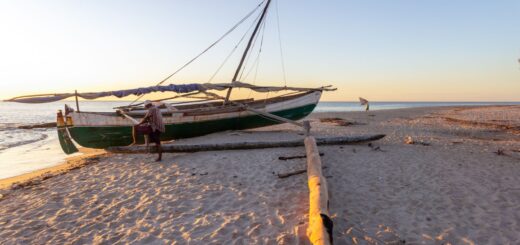
The Vezo Boat-Builders and Their Pirogues
This article contains affiliate links. We may earn a small commission at no extra cost to you if you book through them.
By Jordan Lamont · Last updated 7 October 2026
At a Glance
- Who: the Vezo — “fishing people” of the southwest coast
- The craft: the lakana, an outrigger pirogue from one tree
- Multi-purpose: tool, transport and, for nomads, a tent
- How they fish: free-diving, octopus-gleaning, sailing offshore
- More: Vezo sea-nomad culture
Say it like a local: lakana (LAH-kan) — the outrigger pirogue; Vezo (VEH-zoo) — literally “the people who fish.”
Along the turquoise southwest coast of Madagascar, a slender wooden canoe slips out through the surf at dawn, a single triangular sail filling with the land breeze. Aboard is a Vezo fisherman, and beneath him is the single most important object in his culture: the lakana, the outrigger pirogue. To understand the Vezo, you have to understand their boat — because for them, the two are nearly the same thing.
The people who are their boats
The Vezo — whose name simply means “fishing people” — live along the coast from Itampolo in the south to Morondava in the north, among the most skilled seafarers in the Indian Ocean. Vezo identity is not really about birth; it is about doing — you are Vezo if you live the Vezo life, reading the wind and the reef, free-diving for fish and lobster, and gleaning octopus from the coral. And none of it is possible without the canoe.
A boat carved from a single tree
The lakana is a masterpiece of low-tech design. Its hull is carved from a single tree trunk, then rigged with a mast, a sail and an outrigger for stability. The result is light enough to catch the faintest breeze, fast under sail, and — crucially — repairable anywhere, using materials harvested from the forest. In a region with little money and less machinery, the Vezo build and maintain ocean-going craft from what the land and sea provide.
Tool, transport, and tent
For the Vezo, a lakana is far more than a fishing boat. It is their tool for making a living, their transport between villages and islands, and — for the semi-nomadic families who follow the fish along the coast — even their shelter, the sail and mast pitched over the hull like a tent on the beach. A family’s whole world can travel in a single canoe. Over it all presides, in Vezo belief, an almighty god of the sea who rules the winds and the weather.
Why it matters today
The Vezo and their lakana are one of the purest living maritime cultures on Earth, and a direct echo of the Austronesian seafarers who first reached Madagascar by outrigger canoe. Watching a pirogue being built or sailed is to watch a 2,000-year-old tradition still at work. Discover more in our guide to Vezo sea-nomad culture, explore the southwest coast, and plan with our Madagascar travel guide.
FAQ
Who are the Vezo?
The sea-faring fishing people of southwest Madagascar — “Vezo” means “fishing people” — living along the coast from Itampolo to Morondava.
What is a lakana?
A traditional outrigger pirogue carved from a single tree trunk and fitted with a mast, sail and outrigger — light, fast and repairable with forest materials.
Why does the canoe matter so much?
For the Vezo a lakana is tool, transport and — for the sea-nomads — even a shelter, its sail and mast pitched like a tent. Life revolves around it.
How do the Vezo fish?
By free-diving for fish and lobster, gleaning octopus from the reef, and sailing far offshore under handmade sails.
Travel insurance for Madagascar
Medical evacuation from Madagascar’s interior can cost USD 30,000–80,000, so travel medical cover is worth arranging before you go. SafetyWing is the disclosed partner we mention on this site — a monthly-subscription travel medical plan. Check SafetyWing’s plans.
Plan Your Trip to Madagascar
- Read the full Madagascar Travel Guide
- Explore itineraries by style and duration
- Explore the full destination guide
Where to Stay