Lemur Trekking in Madagascar: Best Parks, Species and Guided Tours 2026
This post contains affiliate links. We may earn a small commission at no extra cost to you.
Essential Trekking Gear for Madagascar
Tsingy, Marojejy, Andringitra — Madagascar’s Hardest Treks Demand Proper Poles
The Tsingy needle-field requires scrambling over razor-sharp limestone. Marojejy’s Camp 3 gains 1,700 metres on muddy, root-tangled trail. Andringitra’s Pic Boby is a 4-hour vertical slog. Cascade Mountain Tech Carbon Fiber Poles are ultralight (under 500g per pair), quick-lock adjustable, sold directly by Amazon at a fraction of the cost of Black Diamond or Leki equivalents.
Check current price and availability on Amazon →
The Lightest Safe Water System on the Market — Built for Madagascar’s Remote Trek Circuits
Carrying a Grayl GeoPress on a 7-day wilderness circuit adds nearly 500 grams to your pack — every gram matters at 1,700 metres of elevation. But streams in Madagascar’s national parks are not safe to drink untreated. The Sawyer SP129 Squeeze weighs just 85 grams and filters 100,000 gallons down to 0.1 microns — removing 99.99999% of bacteria and protozoa. Sold directly by Amazon.
Check current price and availability on Amazon →
The Invisible Barrier That Keeps Malaria Mosquitoes Off Your Clothes
Your repellent only protects exposed skin — but in Madagascar’s humid evenings, mosquitoes bite through thin fabric. Sawyer Permethrin bonds to fabric fibres and kills mosquitoes on contact for up to 6 weeks and 6 washes. Treat your shirts, pants, socks, and tent before you fly — by the time you land in Antananarivo, the protection is already active.
Check current price and availability on Amazon →
Madagascar’s Rainforest Trails Are Infested With Leeches — These Keep Them Out of Your Boots
Andasibe-Mantadia, Ranomafana, Marojejy — Madagascar’s rainforest trails are where leeches thrive. They drop from leaves, emerge from wet soil, and find the gap between your sock and boot in minutes. You don’t feel them until you look down and see blood. Pike Trail Adjustable Leg Gaiters seal that gap physically, blocking leeches, mud, and water. Lightweight, waterproof, 3,600+ Amazon reviews.
Check current price and availability on Amazon →
Madagascar Goes Completely Dark After Sunset — Don’t Navigate It Blind
Outside of Antananarivo’s main streets, Madagascar has virtually no street lighting. Wildlife walks in Ankarana, night lemur spotting in Ranomafana, the path to your bungalow — all navigated in total darkness. The Black Diamond Spot 400-R delivers 400 lumens with a 100-metre beam, USB-C rechargeable, IPX8 waterproof, with red night-vision mode for wildlife observation without disturbing animals.
Check current price and availability on Amazon →
No Grid, No Problem — Charge Your Devices From the Sun in Madagascar’s Remote Parks
Marojejy. Andringitra. Tsingy de Bemaraha. Madagascar’s most spectacular parks are its most isolated — no power outlets, no phone signal. A 3-day wilderness circuit means running on whatever charge you left camp with. The BLAVOR Solar Power Bank pairs 10,000mAh with a fold-out solar panel that recharges itself from sunlight as you trek.
Check current price and availability on Amazon →
You’re Flying 10,000km to See Lemurs, Chameleons, and Fossa — Don’t Document It With a Phone Camera
Indri lemurs calling across the canopy of Andasibe. Panther chameleons in electric blue and orange. The fossa spotted on a night walk in Kirindy. A smartphone sensor in low rainforest light produces grainy, blurred images. The Sony a6400 with Real-Time Eye Autofocus locks onto animal eyes instantly — even through undergrowth and low light. APS-C sensor, 4K video, flip-up touchscreen.
Check current price and availability on Amazon →
Madagascar Has Over 100 Species of Lemur and 280 Species of Bird — You’ll Miss Most of Them Without Binoculars
Sifaka lemurs leap between canopy trees 30 metres up. The Madagascar fish eagle perches on a branch 200 metres across a lake. Without binoculars, you’re looking at distant shapes and taking your guide’s word for it. The Vortex Diamondback HD 10×42 delivers HD optical clarity with edge-to-edge sharpness. Waterproof, fog-proof, backed by Vortex’s unconditional lifetime warranty.
Check current price and availability on Amazon →
At a Glance
- Best park for beginners: Andasibe-Mantadia (Indri lemurs, 3 hrs from Antananarivo)
- Best season: May–October (dry season, lemurs most active at dawn)
- Book guided lemur tours: Browse lemur trekking tours on GetYourGuide
- Travel insurance: Check SafetyWing’s plans
Madagascar is home to more than 100 lemur species found nowhere else on Earth. Watching a family of Indri call across a rainforest canopy at dawn, or a ring-tailed lemur sun itself on a sandstone plateau, ranks among the most extraordinary wildlife encounters available to any traveler. This guide covers the best parks for lemur trekking, which species you can realistically expect to see and how to book the guided experiences that deliver the highest chance of success in 2026.
Plan your Madagascar trip:
Best National Parks for Lemur Trekking
Andasibe-Mantadia National Park, 145 km east of Antananarivo, is Madagascar’s most accessible lemur destination and the only reliable site to hear the haunting territorial call of the Indri — the largest living lemur. The Analamazoatra section hosts habituated Indri groups year-round. Ranomafana National Park in the southern highlands is the place to see golden bamboo lemurs and greater bamboo lemurs, both discovered in the 1980s and found almost exclusively here. Isalo National Park on the central plateau is home to ringtailed lemurs that have become remarkably comfortable around visitors in the canyon camping zones. For the most dedicated lemur enthusiasts, Kirindy Mitea Reserve in the west hosts the rare giant jumping rat and fossa — Madagascar’s apex predator — alongside eight lemur species including Verreaux’s sifaka. Stay inside the parks at wildlife lodges for early morning access before day-trippers arrive.
Lemur Species Guide: What You Can Realistically Expect to See
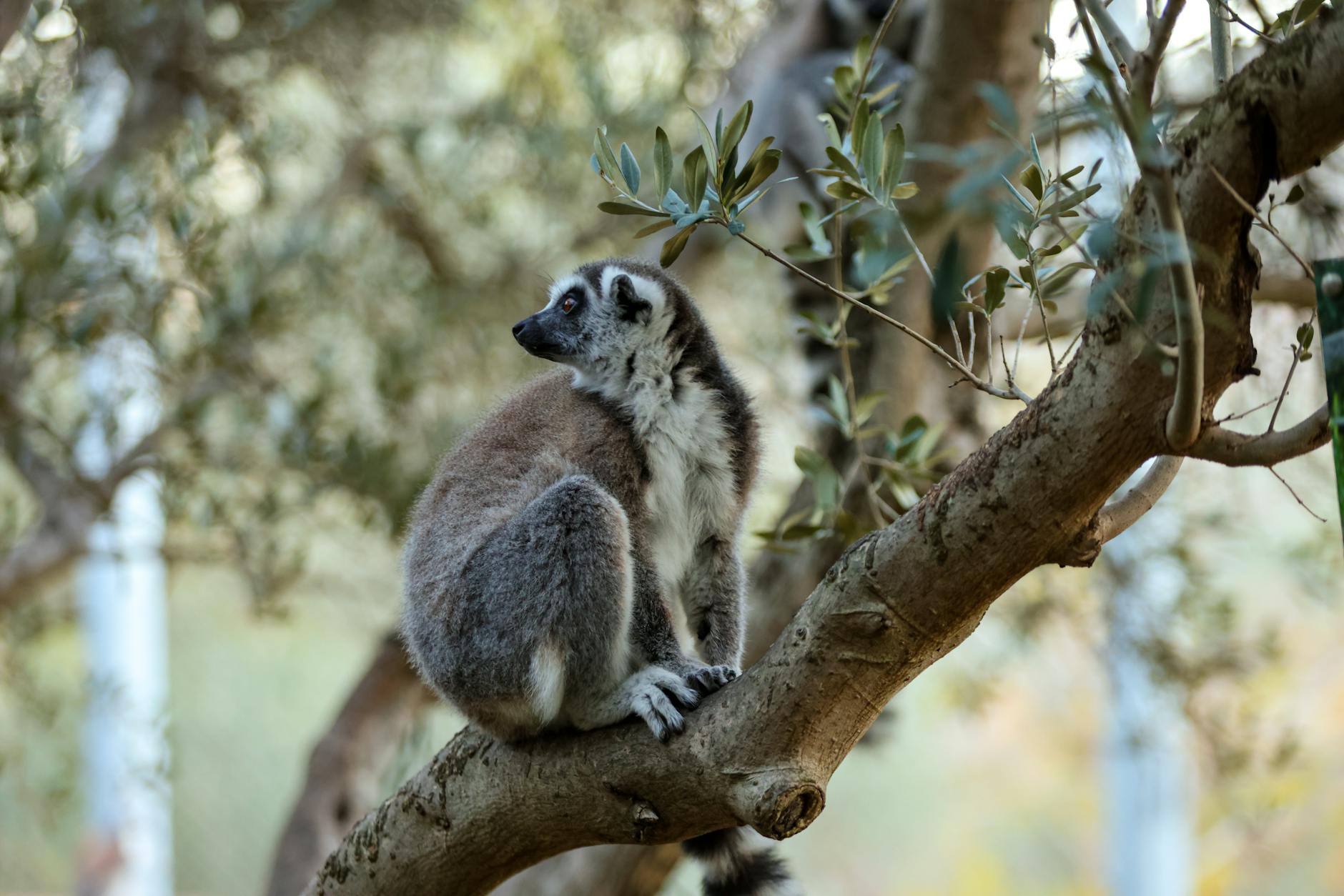
The Indri (Babakoto) is the most sought-after species: black and white, teddy-bear-faced, and capable of calls that carry 3 km through the forest. Guaranteed sightings at Andasibe during morning walks with a guide. Ring-tailed lemurs are the most recognizable species — striped tails, bold personalities, and easily photographed at Isalo, Anja Community Reserve (near Fianarantsoa) and Berenty Private Reserve in the south. Verreaux’s sifaka, the white dancer lemur famous for its sideways leaping motion on the ground, inhabits dry spiny forests in the southwest and Ankarana in the north. The aye-aye — Madagascar’s most unusual primate, with its skeletal middle finger for extracting grubs — is strictly nocturnal and best encountered on night treks at Andasibe or on Nosy Mangabe island. Plan your itinerary around species priority, not park proximity. See the 10-day Madagascar itinerary for a route that covers three distinct lemur habitats.
Read also:
Save money on your Madagascar trip:
Guides, Costs and How to Book Lemur Treks
Mandatory guides at all Madagascar national parks are employed through ANGAP (Madagascar National Parks authority) and stationed at park entrances. Half-day guide fees run $10–20 per group, paid at the park gate. Solo travelers pay full guide rate; groups of four or more split the cost, making a shared guide $3–5 per person for the same experience. Guide quality varies significantly — request an English-speaking specialist guide who knows individual habituated lemur family home ranges. These specialists charge $5–10 more per session and are worth every dollar. Night treks are available at Andasibe ($8–12 additional per group) and reveal mouse lemurs, chameleons and woolly lemurs. Book guided day tours that include transport from Antananarivo if you lack a private vehicle. GetYourGuide lists joinable Andasibe lemur tours departing daily from Antananarivo — book at least 48 hours in advance in July–August peak season.
Getting to Lemur Parks and What to Pack
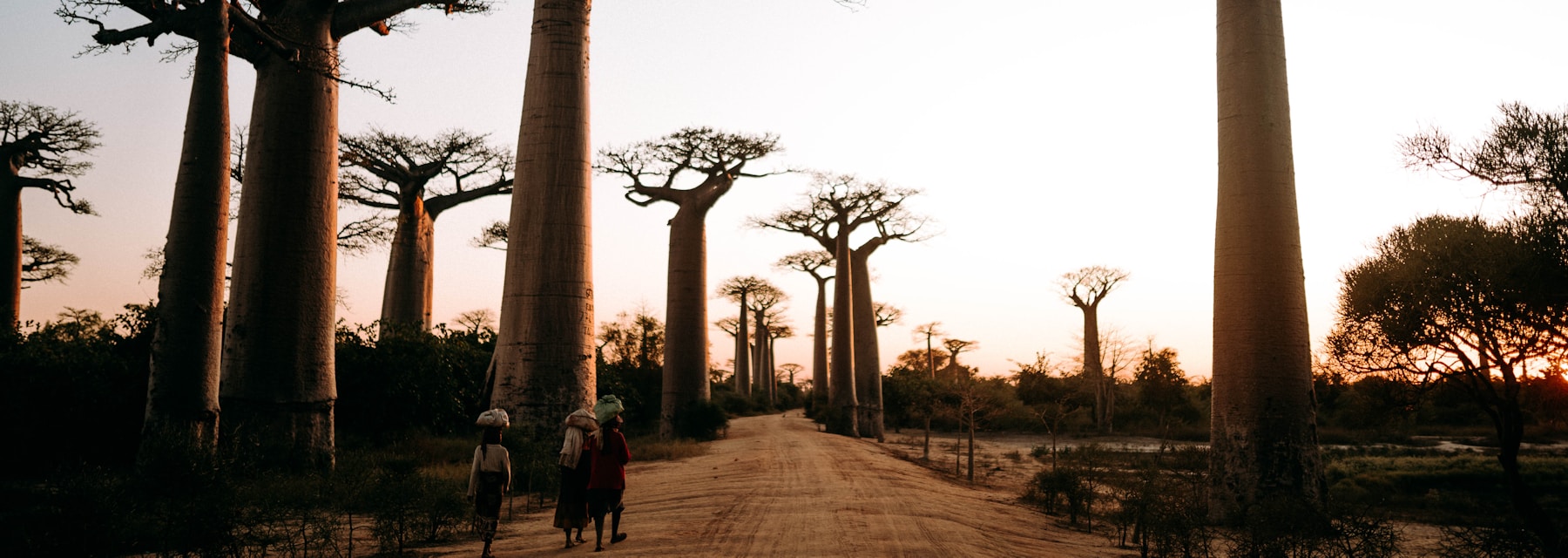
Andasibe is the easiest reach: RN2 east from Antananarivo, paved most of the way, 3 hours by private vehicle or 4–5 hours by shared taxi-brousse. Ranomafana requires a 7–8 hour drive south from Antananarivo via RN7, passing through Fianarantsoa — a spectacular highland route but demanding. Isalo is a further 3 hours south from Ranomafana on the same RN7 highway. Most travelers combine these three in a 10–14 day southern circuit. Kirindy requires a detour west from Morondava (3 hours on dirt road) and is best combined with the Avenue des Baobabs. Pack neutral-coloured clothing — bright colours are unnecessary as lemurs are habituated to human presence. Bring binoculars for canopy sightings, a torch for night treks and insect repellent for dawn walks. Compare 4WD rental prices on Carla — a 4WD is strongly recommended for Kirindy and the dirt roads near Ranomafana in the wet season. Check when to visit Madagascar before booking your dates.
Ready to book your Madagascar trip?
Frequently Asked Questions
Which park is best for seeing lemurs in Madagascar?
Andasibe-Mantadia is the best park for first-time visitors — close to the capital, guaranteed Indri sightings and good infrastructure. For the widest variety of species, a southern circuit covering Ranomafana (bamboo lemurs), Isalo (ring-tailed) and Kirindy (sifaka, fossa) delivers the most comprehensive lemur experience in 10–14 days.
Can you see lemurs without a guide in Madagascar?
No. Guides are mandatory at all Madagascar National Parks and are positioned at park entrances. This is enforced. Independent entry into the forest is not permitted. This is a good rule — expert guides know individual lemur family home ranges and dramatically increase your chance of close-up encounters.
What is the best time of year to see lemurs in Madagascar?
May to October (dry season) is the best period. Lemurs are most active in the cooler mornings and are easier to spot before seasonal foliage thickens. The Indri breeding season (August–September) also produces more frequent calling behavior. Lemur sightings are possible year-round, but wet-season forest density makes tracking harder.
Lemur trekking in Madagascar is not just wildlife tourism — it is a direct encounter with evolution in isolation. These animals evolved without human predators for tens of millions of years and remain astonishingly unafraid. Plan your park selection around target species, hire a specialist guide, and book your first morning trek for dawn when lemurs are most active. The experience justifies the journey from anywhere in the world. Protect your trip with SafetyWing travel insurance — medical evacuation from remote park areas costs $30,000–$80,000 without cover.
Plan Your Trip to Madagascar
- Read the full Madagascar Travel Guide
- Explore itineraries by style and duration
- Explore the full destination guide
Where to Stay
Hotels, lodges, and tours fill fast for July–September — compare availability now.