Lokobe Reserve Half-Day Tour from Nosy Be: Wildlife and Booking
This post contains affiliate links. We may earn a small commission at no extra cost to you.
Essential Gear for Madagascar’s Coastal Activities
Madagascar’s Underwater World Is World-Class — Film It in 5.3K Before It’s Gone
The coral gardens off Nosy Be, the whale sharks of the Mozambique Channel, the humpback whales migrating to Île Sainte-Marie — your phone doesn’t go underwater. The GoPro HERO13 Black shoots 5.3K60 video and is waterproof to 10 metres without any housing. Mount it on your snorkel mask, clip it to your kayak, hand it to your dive guide. Sold directly by Amazon.
Check current price and availability on Amazon →
Madagascar’s UV Index Hits 11+ — Your Skin Needs More Than Sunscreen in the Water
Nosy Be, Île Sainte-Marie, the reefs off Fort Dauphin — spectacular coastal waters under an equatorial sun with UV regularly hitting 11+. Sunscreen washes off within 20 minutes in water. O’Neill’s UPF 50+ long-sleeve rash guard blocks 98% of UV radiation all day, in and out of the water, without reapplication. Stays in place during snorkelling and dives.
Check current price and availability on Amazon →
Snorkelling Madagascar’s Reefs Without UV Protection Is How You Come Home With a Week of Sun Damage
The coral reefs of Nosy Be and Île aux Nattes are some of the most beautiful snorkelling in the Indian Ocean — in direct equatorial sunlight every minute you’re in the water. Hurley’s Women’s UPF 50+ long-sleeve rashguard covers your core, arms, and shoulders with full-spectrum UV protection. Lightweight, fast-drying, designed for real ocean conditions.
Check current price and availability on Amazon →
One Wave, One Pirogue Crossing, One Rain Shower — That’s All It Takes to Lose Your Phone in Madagascar
Madagascar’s water crossings are done in pirogues — narrow dugout canoes with no sides to speak of. One unexpected wave. One overfilled pirogue. One downpour on the RN7 with nowhere to shelter. The JOTO Universal Waterproof Pouch seals your phone in an IPX8-rated case to depths up to 30 metres. Use the touchscreen through the case, take underwater photos. Under $15.
Check current price and availability on Amazon →
Your Camera, Passport, and Valuables Need a Waterproof Shell for Madagascar’s Boat Transfers
Boat transfers to Nosy Komba, dive sites, and the remote beaches of Masoala — waves hit the deck, spray soaks everything unprotected. A wet camera, a soaked passport, or a ruined MacBook is not a one-hour problem in a country where Apple Stores don’t exist. The Earth Pak Dry Bag rolls and clips shut to create a 100% waterproof seal rated to IPX8. NY Times Wirecutter-recommended, 5-year warranty.
Check current price and availability on Amazon →
You’re Flying 10,000km to See Lemurs, Chameleons, and Fossa — Don’t Document It With a Phone Camera
Indri lemurs calling across the canopy of Andasibe. Panther chameleons in electric blue and orange. The fossa spotted on a night walk in Kirindy. A smartphone sensor in low rainforest light produces grainy, blurred images. The Sony a6400 with Real-Time Eye Autofocus locks onto animal eyes instantly — even through undergrowth and low light. APS-C sensor, 4K video, flip-up touchscreen.
Check current price and availability on Amazon →
Madagascar Has Over 100 Species of Lemur and 280 Species of Bird — You’ll Miss Most of Them Without Binoculars
Sifaka lemurs leap between canopy trees 30 metres up. The Madagascar fish eagle perches on a branch 200 metres across a lake. Without binoculars, you’re looking at distant shapes and taking your guide’s word for it. The Vortex Diamondback HD 10×42 delivers HD optical clarity with edge-to-edge sharpness. Waterproof, fog-proof, backed by Vortex’s unconditional lifetime warranty.
Check current price and availability on Amazon →
Madagascar Goes Completely Dark After Sunset — Don’t Navigate It Blind
Outside of Antananarivo’s main streets, Madagascar has virtually no street lighting. Wildlife walks in Ankarana, night lemur spotting in Ranomafana, the path to your bungalow — all navigated in total darkness. The Black Diamond Spot 400-R delivers 400 lumens with a 100-metre beam, USB-C rechargeable, IPX8 waterproof, with red night-vision mode for wildlife observation without disturbing animals.
Check current price and availability on Amazon →
At a Glance
- Location: Southeastern tip of Nosy Be island (15km from Hell-Ville)
- Duration: 4–5 hours (morning half-day)
- Access: 20-minute pirogue from Mahatsinjo village
- Wildlife: Black lemurs, panther chameleons, Nosy Be boas, geckos
- Total cost: $15–$25 per person including transport, entry and guide
- Best time: Depart 07:00–08:00 for peak wildlife activity
- Hotels in Nosy Be: Check availability on Agoda — book ahead in high season
- Insurance: Get SafetyWing before you travel
- World Nomads — covers adventure activities: trekking, diving, motorbikes. Compare both.
Lokobe Reserve is the last surviving primary rainforest on Nosy Be island — a 740-hectare protected fragment of humid littoral forest accessible only by pirogue, keeping visitor numbers low and the wildlife remarkably bold. A morning here delivers black lemurs within arm’s reach, brilliant panther chameleons and a forest atmosphere that the island’s beach resorts cannot replicate.
Why Lokobe Is Worth a Half Day from Any Nosy Be Hotel
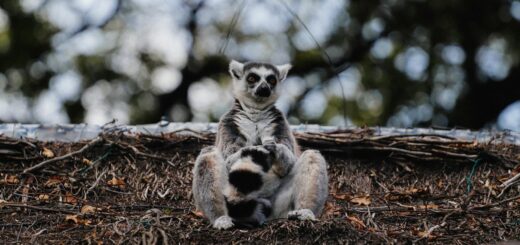
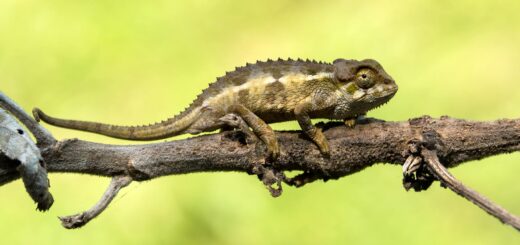
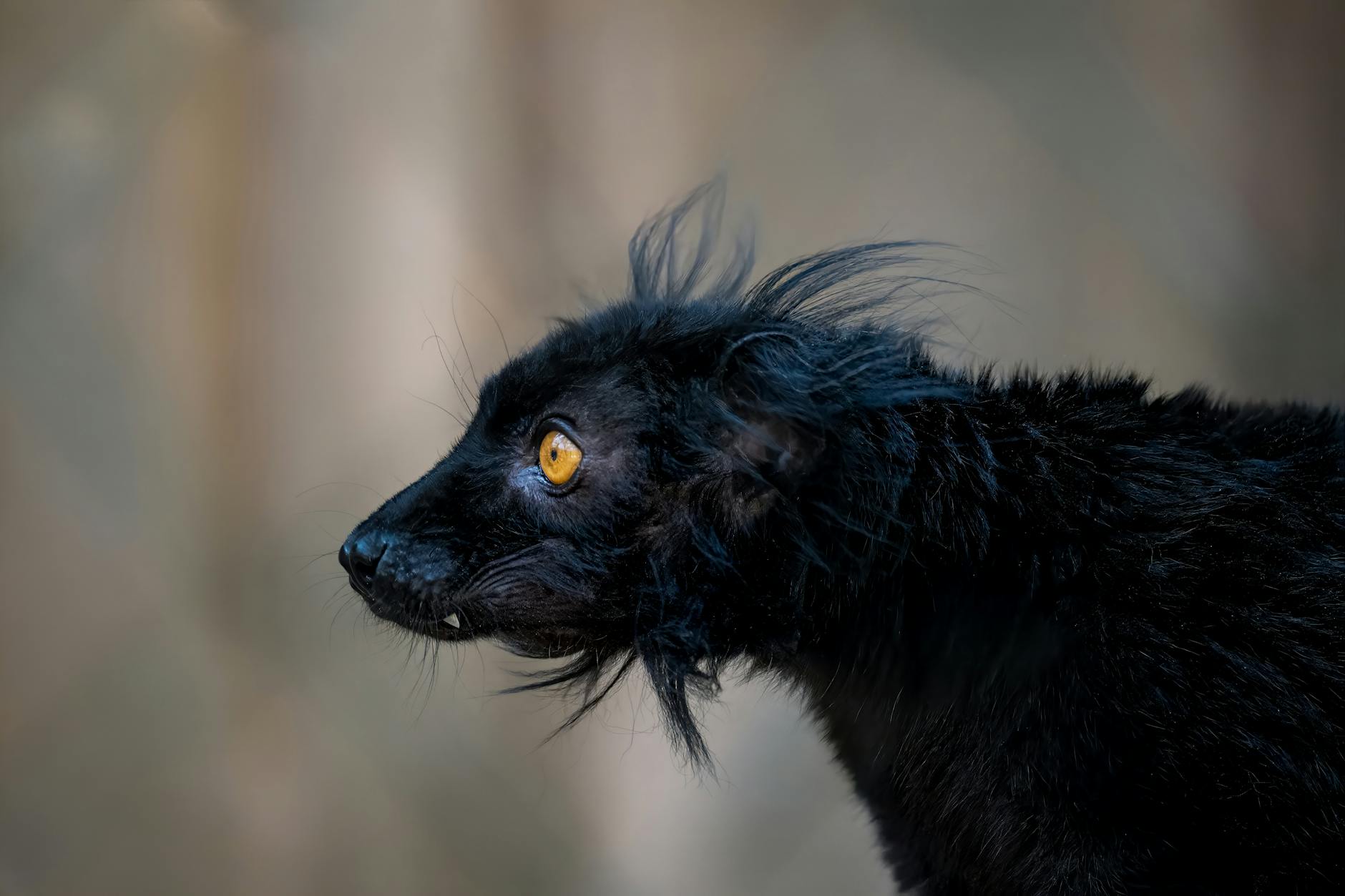
Lokobe Reserve was protected as early as 1927, making it one of Madagascar’s oldest nature reserves. The 740-hectare forest on the island’s southeastern tip is the only remaining primary rainforest on Nosy Be — the rest of the island has been cleared for vanilla plantations, ylang-ylang cultivation and resort development. That rarity makes Lokobe extraordinary: dense canopy, intact understorey, and wildlife that has been protected long enough to become comfortable with visitors. The reserve is home to four lemur species. The black lemur (Eulemur macaco) is the star — sexually dimorphic with jet-black males and russet-brown females with white ear tufts, and bold enough to approach within arm’s reach in habituated groups. The forest also harbours the mongoose lemur, crowned lemur and Sanford’s brown lemur. Panther chameleon density here is among the highest anywhere in Madagascar, with males displaying intense turquoise-and-orange patterns that are genuinely jaw-dropping. The Nosy Be boa (Sanzinia volontany), a non-venomous 2.5-metre constrictor endemic to this island, is regularly found in low branches. Book a half-day Lokobe tour on GetYourGuide to skip pirogue negotiations and go with a vetted guide.
Getting There: Pirogues, Villages and Entry Logistics
Lokobe is accessed exclusively by pirogue from Mahatsinjo village on the southeastern coast of Nosy Be. Taxis from Hell-Ville to Mahatsinjo cost 15,000–20,000 Ar (approximately 30 minutes). From Mahatsinjo’s small beach, pirogue operators charge 10,000–15,000 Ar per person for the 20-minute crossing to the reserve entrance — negotiate both the outgoing and return fare before boarding. Reserve entry costs 20,000 Ar per person (approximately $4). Guides are compulsory and assigned at the entrance post; fees are set at 30,000–40,000 Ar per group depending on the number of visitors. Guides who speak English or French are available on request — arrive early to secure your preferred guide before they are taken by other groups. Many half-day tours also include a walk through the traditional fishing villages of Ambatozavavy and Ampasy adjacent to the reserve, where women produce hand-woven raphia products and the community runs a small lemur education centre. The most productive forest visit combines a pirogue departure at 07:30 with a two-hour forest circuit finished by 11:00, before heat and midday quiet reduce wildlife activity. Renting a car via Carla for your Nosy Be base gives you the flexibility to time the Mahatsinjo departure exactly right.
Wildlife Encounters: What You Will See in the Forest
Black lemurs are the most spectacular residents of Lokobe and reliable in all months the reserve is open. Experienced guides know the troop locations and typically guarantee visual contact within the first 20–30 minutes. The animals are bold — they frequently descend to head height and may attempt to investigate bags or hats. Do not feed them; it disrupts natural foraging behaviour and encourages dependency. Panther chameleons are plentiful on the forest edge and in secondary growth areas: guides spot them resting on branches at eye level, and the colour shifts in response to handling and ambient temperature are genuinely spectacular. The Nosy Be boa is non-venomous and handled by guides throughout visits — they coil around arms readily and make an extraordinary photography subject. Madagascar day geckos (Phelsuma) flash electric green on exposed bark surfaces in sunlit gaps; four species occur in Lokobe. Birdwatchers should watch for crested coua, blue vanga and the endemic Nosy Be scops owl (best on twilight visits with a specialist guide). The forest floor rustles constantly with skinks and ground rollers. One rule applies universally: no flash photography near lemurs or reptiles — it causes stress and disorientation.
Booking Tips, Best Operators and What to Bring
For first-time visitors, the simplest approach is a packaged half-day tour booked from your Nosy Be hotel or online. Organised tours typically include hotel pick-up, return transport to Mahatsinjo, pirogue crossing, reserve entry, guide and return transfer for $25–$45 per person. Check Viator for verified Lokobe tour reviews before choosing an operator — quality varies significantly between guides. For independent visits, budget 80,000–100,000 Ar per person (approximately $16–$20) covering transport, pirogue, entry and guide combined. Essential packing: closed-toe shoes with grip (the forest path has exposed roots and uneven ground), insect repellent with DEET (mosquitoes are active near the water at dawn), and a camera with a macro setting for chameleon and gecko close-ups. A light waterproof jacket protects both you and your gear from unpredictable rain showers. Avoid bright colours — dark green or brown clothing allows you to photograph without startling the lemurs. Most half-day tours return to Hell-Ville by midday, leaving your afternoon free for beach activities or diving preparation. Book your Nosy Be hotel on Agoda — June through September fills fast and requires booking weeks ahead.
Frequently Asked Questions
Can I visit Lokobe Reserve without a guide?
No. A compulsory guide is assigned at the reserve entrance and this rule is enforced without exception. Independent wandering in the forest is prohibited — guides are essential both for wildlife location and for safety on the unmarked paths.
What is the best time of day to visit Lokobe?
Morning is best. Lemurs are most active between 07:00 and 10:00 when they move between sleeping and feeding areas. Afternoon visits are possible but the forest is hotter, quieter and lemur groups have dispersed. Aim to arrive at Mahatsinjo beach no later than 08:00.
Is Lokobe Reserve open year-round?
Yes — unlike national parks, Lokobe has no official closure season. However, heavy rain between December and March makes the forest paths muddy and the pirogue crossing rougher. May through November offers the most reliable conditions.
How do I get from a Nosy Be beach resort to Mahatsinjo?
Most Nosy Be hotels can arrange a taxi transfer to Mahatsinjo for 20,000–40,000 Ar depending on distance. Alternatively, take a shared taxi-be from Hell-Ville market toward the south coast and ask to be dropped at the Mahatsinjo junction.
Lokobe Reserve delivers one of Madagascar’s most intimate wildlife experiences — wild lemurs, spectacular chameleons and a surviving primary forest within half a day of any Nosy Be beach hotel. Leave early, hire a good guide, and you will be back for lunch with photographs that define the holiday. Before you travel: get SafetyWing travel insurance — it covers medical care throughout Madagascar including water-based accidents during the pirogue crossing. Medical evacuation from Nosy Be to a proper facility costs $30,000–$80,000 without coverage.
Plan Your Trip to Madagascar
- Read the full Madagascar Travel Guide
- Explore itineraries by style and duration
- Explore the full destination guide
Where to Stay