Nosy Be vs Île Sainte-Marie 2026: Which Madagascar Island Is Right for You?
Affiliate disclosure: This article contains sponsored links to hotels, tour operators, insurance providers, and other travel services. We earn a small commission if you book through our links, at no extra cost to you.
Nosy Be vs Île Sainte-Marie 2026 — At a Glance
- Nosy Be (northwest): Madagascar’s premier beach island — best beaches, diving, resorts, and island-hopping
- Île Sainte-Marie (east): Quieter, lush, and laid-back — famous for whale watching and pirate history
- Nosy Be is best for: Beaches, diving, comfort, island variety, reliable sunshine
- Sainte-Marie is best for: Whales (Jul–Sep), tranquillity, lush scenery, a quieter pace
- Both: Dry-season island getaways reached by domestic flight
- Can you combine? Possible but they’re far apart (opposite coasts) — connect via Antananarivo
- Flight protection: EU261 €600 per passenger on disrupted European inbound flights
- Travel insurance: SafetyWing Nomad Insurance — essential, including water-activity cover
- Where to stay: Nosy Be stays on Agoda
🎒 Madagascar Trip Essentials
A few inexpensive items make the biggest difference on the ground in Madagascar:
- Picaridin insect repellent — DEET-free protection against malaria mosquitoes. See on Amazon →
- Permethrin clothing spray — treat clothes; kills mosquitoes on contact for weeks. See on Amazon →
- Pop-up mosquito net — budget lodges rarely provide one; packs down tiny. See on Amazon →
- Water filter bottle — tap water isn’t safe to drink in Madagascar. See on Amazon →
- Universal travel adapter (USB-C) — Madagascar uses European-style plugs. See on Amazon →
- 8×42 binoculars — essential for spotting lemurs and chameleons in the canopy. See on Amazon →
As an Amazon Associate we earn from qualifying purchases.
Nosy Be or Île Sainte-Marie — which Madagascar island should you choose? Both are wonderful tropical island getaways, but they offer quite different experiences: Nosy Be in the northwest is the bigger, more developed beach-and-diving destination, while Île Sainte-Marie off the east coast is quieter, lusher, and famous for its whales and pirate history. This guide compares the two head-to-head — beaches, diving, wildlife, atmosphere, access, and cost — so you can pick the island that fits your trip. For the wider region, see our best of Northern Madagascar guide.
The short answer: choose Nosy Be for the best beaches, diving, resorts, and island-hopping, with reliable sunshine and more to do; choose Île Sainte-Marie for whales (July–September), a quieter and lusher setting, and a more laid-back, off-the-beaten-track feel. Both are dry-season island escapes reached by domestic flight, and both are lovely — the right choice depends on what you want from your island time. Read on for the full comparison.
It helps to think of the two islands as serving different instincts. Nosy Be is the classic tropical-island holiday: developed, easy, varied, and sun-soaked, with everything a beach-and-diving trip needs close at hand. Sainte-Marie is the romantic, nature-led escape: quieter, lusher, slower, and defined by its whales and its laid-back charm. Neither is objectively superior — each is the perfect choice for a particular kind of traveller, and the comparison below is designed to help you work out which one you are, factor by factor and traveller type by traveller type.
A Closer Look at Each Island
Nosy Be
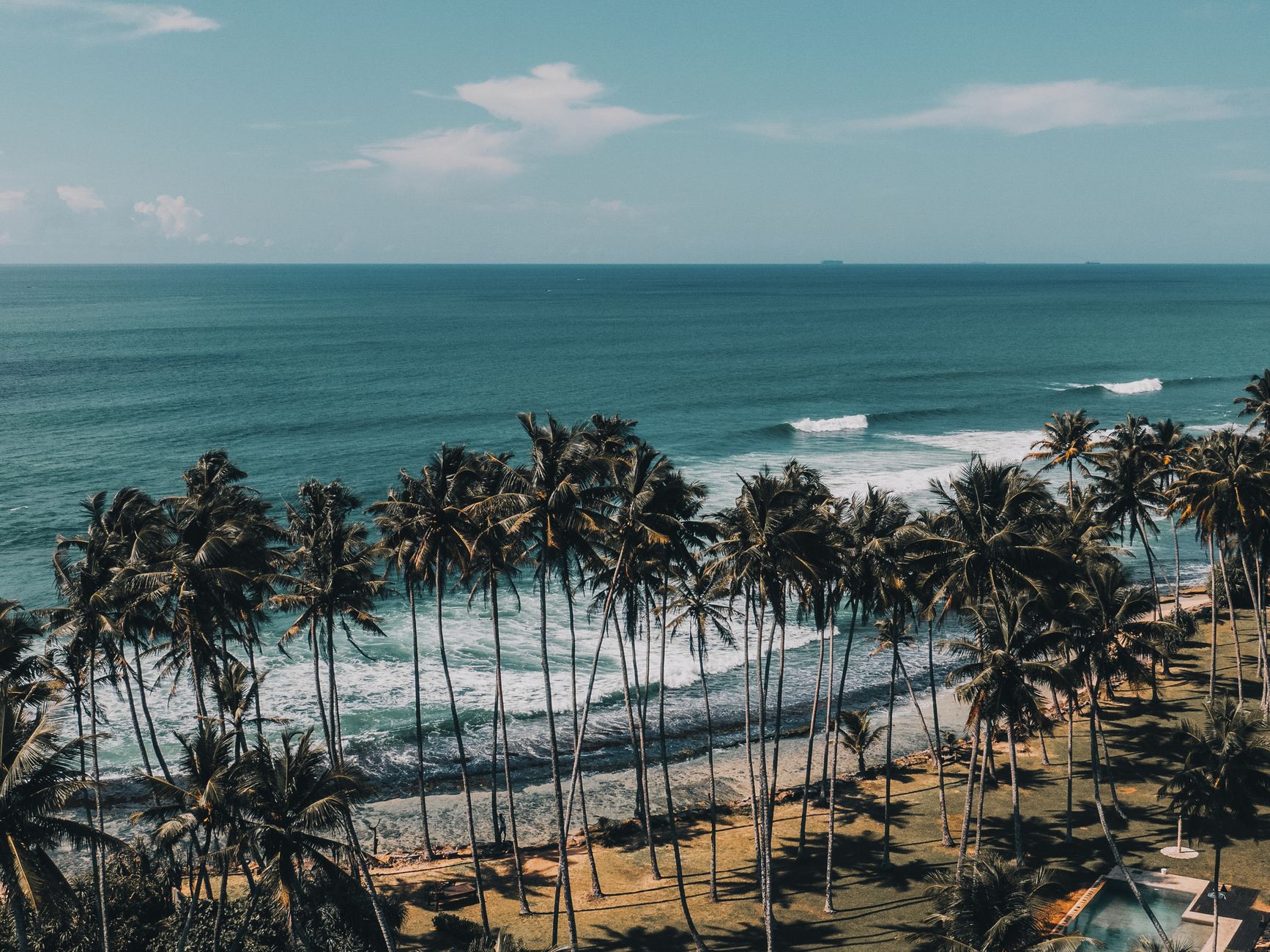
Nosy Be, off Madagascar’s northwest coast, is the country’s premier beach island and most developed tropical destination. It offers the best concentration of beaches, dive sites, and resorts, with warm, calm seas, reliable sunshine, and a constellation of smaller islands — Nosy Komba, Nosy Tanikely, Nosy Iranja — within easy reach for island-hopping. There’s a real range of accommodation from budget to luxury, a lively main town in Hell-Ville, and plenty to do, from diving and snorkelling to wildlife at Lokobe and the seasonal whale sharks. Nosy Be is the easy, comfortable, sun-soaked choice for a Madagascar island holiday, and the busier and more touristed of the two.
That said, “busy” and “touristed” are relative — Nosy Be is far quieter than the famous Indian Ocean resort islands, and it retains a genuine Malagasy character beneath its tourism. The development simply means more choice and more comfort: better hotels, more restaurants and dive centres, easier transfers, and a wider range of things to do. For travellers who want a tropical island holiday that’s straightforward to arrange and rich in options, Nosy Be is hard to beat. As with all island travel, comprehensive travel insurance that covers diving and water activities is essential here.
Île Sainte-Marie
Île Sainte-Marie (Nosy Boraha), a long, slender island off Madagascar’s east coast, is the quieter, lusher, more laid-back alternative. Greener and more tropical than Nosy Be, with swaying palms, quiet coves, and a single coastal road, it has a gentle, unhurried charm and far fewer crowds. Its claims to fame are its whale watching — humpbacks gather offshore from July to September in one of the world’s great whale spectacles — and its pirate history, complete with a famous pirate cemetery. With simpler infrastructure and a slower pace, Sainte-Marie suits travellers seeking tranquillity, nature, and the whales over resort buzz and a wide choice of activities.
The island’s slender shape — about 50 km long and only a few wide — gives it an intimate, away-from-it-all feel, with the idyllic Île aux Nattes at its southern tip a particular gem. Whale season transforms the island each year, when humpbacks pass close to shore and boat trips head out to watch them breach and sing, but even outside whale season Sainte-Marie’s lush calm and gentle pace are a draw for travellers wanting to truly switch off. Its simpler infrastructure is part of the charm, though it means fewer creature comforts than Nosy Be — and, given the remoteness and the boat trips, comprehensive travel insurance covering water activities is essential.
Head-to-Head: The Key Factors
Beaches
Nosy Be edges it for variety, Sainte-Marie for seclusion. Nosy Be has the finest and most varied beaches, plus the spectacular sandbar of Nosy Iranja nearby; Sainte-Marie’s beaches are quieter, lusher, and more secluded, especially around the idyllic Île aux Nattes at its southern tip. For sheer beach quality and choice, Nosy Be wins; for peaceful, palm-fringed seclusion, Sainte-Marie has the edge. Even in its busiest weeks, Sainte-Marie rarely feels crowded, whereas Nosy Be’s main beaches can fill up around the peak holiday periods. Both are lovely — it comes down to whether you want variety or solitude. Nosy Be’s beaches are backed by resorts and amenities, so you’re never far from a drink or a dive boat; Sainte-Marie’s feel wilder and more natural, often with little more than palms and sand. If you picture your ideal beach day as social and well-served, lean Nosy Be; if it’s a deserted strand with no one in sight, Sainte-Marie delivers that more readily.
Diving and snorkelling
Nosy Be wins clearly. Nosy Be is Madagascar’s premier diving destination, with world-class reefs, the protected Nosy Tanikely marine park, and seasonal whale sharks. Sainte-Marie has diving and snorkelling too, but it’s not on the same level. For a dedicated dive trip, Nosy Be is the obvious choice. See our Nosy Be diving guide for the sites and seasons. Nosy Be also has the established dive centres, the variety of sites for all levels, and the calm, clear water that make diving easy and rewarding — Nosy Tanikely’s marine park alone justifies the trip for many. Sainte-Marie’s underwater offering is pleasant but secondary to its whales; if scuba is central to your trip, the northwest is where to go.
Whale watching
Sainte-Marie wins decisively. Île Sainte-Marie is Madagascar’s premier whale-watching destination — thousands of humpbacks gather in its waters from July to September to breed and calve, in one of the world’s great marine spectacles. Nosy Be has its whale sharks (October–December), but for the humpback whales specifically, Sainte-Marie is unmatched. If whales are your priority, the choice is made. See our Sainte-Marie whale watching guide. The whales come remarkably close to Sainte-Marie’s shores, and the island has built a gentle, well-organised whale-watching scene around them, with responsible operators and even an annual whale festival. Outside July to September, though, the whales are gone — so timing is everything for a Sainte-Marie whale trip, and travelling there for whales outside the season would mean missing the island’s main draw.
Atmosphere and pace
Different by design. Nosy Be is busier, more developed, and more resort-like, with more nightlife, dining, and activity; Sainte-Marie is quiet, lush, and laid-back, with a slower, more local feel. Neither is better — it depends entirely on whether you want a lively island with plenty to do or a tranquil, get-away-from-it-all escape. This atmosphere difference is the heart of the choice between them. Think honestly about your ideal holiday rhythm: if you’d be restless somewhere very quiet, or want options for dining and activities, Nosy Be suits you; if your idea of paradise is doing very little in a beautiful, peaceful setting, Sainte-Marie is your island. Most travellers know instinctively which of these they are.
Access
Both by domestic flight; Nosy Be is easier. Both islands are reached by domestic flight from Antananarivo. Nosy Be has more frequent flights and sometimes seasonal direct international charters from Europe; Sainte-Marie is served by smaller planes and can also be reached overland-plus-ferry via the east coast town of Soanierana-Ivongo, though that route is longer and weather-dependent. For most visitors the practical difference comes down to how many connections you’re willing to make and how much of your trip you want to spend in transit rather than on a beach. Nosy Be is generally the easier and better-connected of the two, especially for international travellers. Sainte-Marie’s small airport and the occasional weather-related disruption to its flights mean it can take a little more patience to reach, though it’s far from difficult. For travellers prioritising the smoothest possible journey — or those with tight connections — Nosy Be’s better links are a genuine advantage; for those happy to embrace a slightly more adventurous arrival, Sainte-Marie’s relative remoteness is part of its away-from-it-all appeal.
Flight delayed or cancelled on the way to your island? Both islands are reached by connecting flights through Antananarivo, and domestic and international delays do happen. If your flight is delayed 3+ hours, cancelled, or overbooked, you may be owed up to €600 in compensation. Check your flight with AirAdvisor — it’s free, takes two minutes, and they only take a cut if you win.
Cost
Broadly comparable. Both islands span budget to comfortable accommodation, reached by a similar domestic flight. Nosy Be has more high-end resorts (so a higher ceiling), while Sainte-Marie is generally simpler and can be a touch cheaper at the comfortable end. Neither is dramatically cheaper overall; cost is rarely the deciding factor between them. The bigger budget variable is your travel style and the season — both islands cost more in their peak windows (Nosy Be’s dry-season high, Sainte-Marie’s whale season) and less in the shoulders. As elsewhere in Madagascar, the international and domestic flights are a significant fixed cost on top of either island’s on-the-ground budget. For how island costs fit a wider trip, see our cost by season guide.
The Verdict by Traveller Type
Beach and diving lovers: Nosy Be — the best beaches, the best diving, and the most island-hopping, all in reliable sunshine. Nothing on Sainte-Marie will tempt a dedicated diver away from the northwest’s reefs.
Whale watchers: Île Sainte-Marie, July to September — the humpback gathering is one of the world’s great whale experiences, and Sainte-Marie’s speciality. If the whales are why you’re coming, this is non-negotiable, and the dates are fixed by nature.
Seekers of tranquillity: Île Sainte-Marie — quieter, lusher, and more laid-back, ideal for switching off and slowing down far from any crowds.
First-timers wanting ease and variety: Nosy Be — more developed, better connected, and with more to see and do, it’s the more forgiving and flexible choice, and the easier introduction to a Madagascar island holiday for those who haven’t visited before.
Honeymooners: Either works beautifully — Nosy Be for resort comfort, variety, and a touch of buzz, Sainte-Marie for romantic seclusion, lush calm, and (in season) the whales. Couples wanting pampering and choice lean Nosy Be; those wanting privacy and a slower, more intimate escape lean Sainte-Marie. It comes down to your idea of a romantic getaway.
Nature and atmosphere lovers: Île Sainte-Marie — its lush greenery, gentle pace, and pirate history give it a distinctive, characterful charm that the more developed Nosy Be can’t quite match. If your idea of a perfect island is one where the loudest sound is the surf and the most crowded moment is a handful of pirogues drifting past at dawn, this is your island.
Active travellers wanting lots to do: Nosy Be — with diving, island-hopping, wildlife, and a wider range of excursions and dining, it keeps busy travellers happily occupied in a way the quieter Sainte-Marie doesn’t aim to. You can fill a week here without repeating yourself, and there’s always another reef, market, or sunset cruise to fold into the plan.
What You’d Miss by Choosing One
Choosing one island means forgoing what the other does best, and it’s worth being honest with yourself about which trade-off you’ll regret less once you’re home. Choose Nosy Be alone and you’ll miss the humpback whales — Sainte-Marie’s signature, and one of the world’s great wildlife spectacles in season — along with the east-coast island’s lush, get-away-from-it-all calm. Choose Sainte-Marie alone and you’ll miss Madagascar’s best beaches and diving, the easy island-hopping around Nosy Be, and the wider range of resorts, dining, and activities the northwest offers.
For many travellers the trade-off is clear-cut: a diver or beach-lover happily skips the whales, while someone whose trip is built around the humpbacks won’t mind missing Nosy Be’s reefs. The difficulty comes for those who want both the whales and the diving, or who can’t decide between buzz and tranquillity — and for them, the combining section below, or a return trip, is the answer. Knowing what each island uniquely offers is the key to choosing without regret.
Sample Island Trips
To picture how each plays out, here are two illustrative shapes — not fixed itineraries, but a sense of the rhythm each island settles into once you’re there:
A Nosy Be week (5–6 days): Fly in, settle into a beach base, and mix sand, diving or snorkelling, and island day-trips to Nosy Komba, Nosy Tanikely, and Nosy Iranja, with a half-day at Lokobe for lemurs. A relaxed, varied, sun-soaked island holiday with plenty of options.
A Sainte-Marie whale trip (4–5 days, July–September): Fly in, base on the island or the idyllic Île aux Nattes, and spend your days on whale-watching boat trips, snorkelling, cycling the coastal road, and visiting the pirate cemetery — a quieter, nature-focused escape timed to the humpbacks.
These are starting points — both islands reward tailoring the trip to your pace and interests, and a specialist can shape either into the ideal island getaway.
Can You Combine Them?
It’s possible, but they’re far apart — Nosy Be is in the northwest, Sainte-Marie off the east coast, on opposite sides of a very large island. This isn’t a case of hopping between neighbouring islands; the two are separated by the whole width of Madagascar. There’s no quick route between them, so you’d connect by flying via Antananarivo, which adds flights and time. For most travellers, choosing one island is the sensible approach; combining both really only makes sense on a longer trip (two-plus weeks) that’s already island-and-region-hopping, or if seeing the whales at Sainte-Marie and diving at Nosy Be are both must-dos. The two islands are genuinely far apart — there’s no scenic coastal hop between them as you might find in a smaller archipelago — so any combined trip means a meaningful chunk of time and cost spent on the Antananarivo connection, time you could otherwise spend deepening your experience of one island. More often, travellers pick the island that fits their priorities and combine it with a mainland region instead — Nosy Be with the far north, or Sainte-Marie with the eastern rainforests. A specialist can advise on whether combining the two is worth it for your trip.
If you do combine them, the natural structure is to time it around the whales: visit Sainte-Marie in July–September for the humpbacks, then fly via Antananarivo to Nosy Be for beaches and diving to round out the trip. Outside whale season, there’s less reason to do both, since Sainte-Marie’s main draw is absent and Nosy Be covers beaches and diving more comprehensively. For most travellers, the honest advice is to choose the island that matches your priorities and give it the time it deserves, rather than splitting a shorter trip across two far-apart islands and spending precious days in transit. The exception is the wildlife-and-beach enthusiast on a longer trip, for whom the whales-then-reefs combination is genuinely special.
The Bottom Line
There’s no single “better” island — only the better fit for your trip. Both rank among Madagascar’s loveliest island escapes, and travellers return from each delighted, simply with different memories: reefs and island-hopping from Nosy Be, whales and quiet shores from Sainte-Marie. The “wrong” choice here is really only the one that doesn’t match how you like to travel, so let your instincts — barefoot calm or busy variety — make the call. Choose Nosy Be if you want the best beaches and diving, reliable sunshine, resort comfort, island-hopping, and plenty to do — the easy, varied, sun-soaked choice. Choose Île Sainte-Marie if you want the humpback whales (July–September), a quieter and lusher setting, romantic seclusion, and a laid-back, off-the-beaten-track pace. If you’re torn, let your single biggest priority decide: whales mean Sainte-Marie; diving and beaches mean Nosy Be; tranquillity leans Sainte-Marie; ease and variety lean Nosy Be. A simple test is to picture the single moment you’d most want from your island time — snorkelling a vivid reef and hopping between islands, or watching a humpback breach offshore from a quiet, palm-fringed shore. That image usually settles the choice faster than any feature-by-feature comparison, because it gets at what you’re really travelling for. Both deliver a wonderful Madagascar island escape — the trick is matching the island to what you want most.
And if you simply can’t decide, that’s often a sign you’d be happy with either — both are genuinely lovely, and there’s no wrong answer, only different flavours of island paradise. Many travellers who fall for one return years later for the other, especially if the whales eluded them the first time. Whichever you choose, going with a clear sense of its character — and, for Sainte-Marie, the right timing for the whales — is what turns the decision into a trip you’ll treasure. Both islands reward travellers who arrive knowing what they came for.
Carla / Voyagiste Madagascar (choose the right island)
Madagascar-resident specialist who can match the island to your priorities. Contact Carla directly — tell her whether you’re drawn to Nosy Be’s beaches and diving or Sainte-Marie’s whales and tranquillity, and she’ll advise honestly on which fits your trip and dates, and build the right island getaway. Local knowledge of both islands ensures you choose well and time it right (especially for the whales).
Frequently Asked Questions
Should I visit Nosy Be or Île Sainte-Marie?
Nosy Be for the best beaches, diving, and island variety with reliable sunshine; Sainte-Marie for whales (July–September), tranquillity, and lush, laid-back seclusion. The right choice depends on your priorities — most travellers know instinctively whether they want a lively, varied beach holiday or a quiet, nature-led escape, and that settles it.
Which island is better for whales?
Île Sainte-Marie, decisively — thousands of humpbacks gather there from July to September to breed and calve, passing close to shore in one of the world’s great whale spectacles. Boats launch within minutes of the main beaches, and sightings during peak weeks are close to guaranteed, which is why whale-watchers plan entire trips around the island’s short season. Nosy Be has whale sharks (October–December) but not the humpbacks. See our Sainte-Marie whale watching guide.
Which island is better for diving and beaches?
Nosy Be — Madagascar’s premier diving destination, with the best and most varied beaches, world-class reefs, established dive centres, and easy island-hopping. Sainte-Marie’s underwater offering is pleasant but secondary to its whales, and divers serious about reef variety, marine life, and instruction will get far more out of Nosy Be’s structured dive scene. See our Nosy Be diving guide.
Which island is quieter?
Île Sainte-Marie — lusher, more laid-back, and far less developed than Nosy Be, ideal for tranquillity and slowing down. Its single coastal road, palm-shaded coves, and gentle pace make it the more peaceful of the two by some margin, especially around the idyllic Île aux Nattes.
Can I visit both islands in one trip?
Possible but they’re far apart (opposite coasts), connecting via Antananarivo, which adds flights and time. It only really makes sense on a longer trip (two-plus weeks) or if both the whales and the diving are must-dos; most travellers choose one island and give it the time it deserves, often pairing it with a mainland region instead. Trying to do both on a single short holiday usually means spending more of your trip in airports than on the sand.
When should I visit?
Both are dry-season island getaways. Sainte-Marie’s whales are July–September, so time a whale trip precisely to those months; Nosy Be’s beach-and-dive window runs April–December with whale sharks October–December, giving it a longer, more flexible season that’s easier to slot around school holidays or work commitments. If your dates are fixed, Nosy Be is the more reliable bet outside the whale window. See our Northern Madagascar guide.
🧭 Choose the Right Madagascar Island With Carla
Nosy Be for beaches and diving, Sainte-Marie for whales and tranquillity. Reach out to Carla, our Madagascar-resident specialist, to match the island to your priorities and build the right island getaway.
Plan Your Trip to Madagascar
- Read the full Madagascar Travel Guide
- Explore itineraries by style and duration
- Best Tours and Guided Experiences
Where to Stay