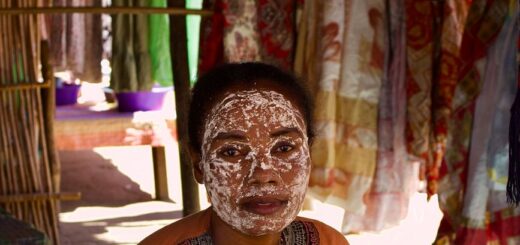
Tromba: Spirit Possession and the Healers of the North-West
This article contains affiliate links. We may earn a small commission at no extra cost to you if you book through them.
By Jordan Lamont · Last updated 7 October 2026
At a Glance
- What: tromba — possession by the spirits of dead royalty
- Where: originally Sakalava, on the west coast; found elsewhere too
- Mediums: mostly women, who live near or at royal tombs
- Function: living archive of royal history and genealogy
- Timing: ceremonies often held at the rising full moon
Say it like a local: tromba (TROOM-ba) — both the possessing spirit and the practice itself.
On Madagascar’s west coast, the dead do not simply rest. On the right night, under a rising moon, the spirit of a long-dead king can return — borrowing the body of a living woman to speak, to judge, and to be consulted on the affairs of the living. This is tromba, one of the most powerful and least-understood traditions on the island, and it is not a performance. To the Sakalava, it is how history talks back.
When a king returns through a medium
Although the word tromba is now used across Madagascar for many kinds of spirit possession, it is strictly a Sakalava term, and the practice grew up alongside the rise of the Sakalava royal dynasties from the sixteenth century. A tromba is specifically the spirit of a dead royal. In ceremony, that spirit takes possession of a medium — most mediums are women — whose movements and words become the spirit’s own. Participants are not acting; they are understood to be temporarily inhabited.
A religion built on remembered kings
For the Sakalava, these royal ancestors are the foundation of religion itself. Because each tromba is a named, historical person, spirit possession doubles as an indigenous form of recorded history: through the spirits, the community keeps alive the genealogies of its kings and, ultimately, the story of who the Sakalava are. The most powerful tromba are the ruler’s own ancestors — and no major decision is traditionally made without first consulting them and receiving their blessing.
The mediums who live with the dead
This is not a casual practice. The most important mediums may live full-time at or beside the royal tombs, devoting their lives to the spirits that speak through them. A ceremony can involve invocation, specific dress and objects associated with the particular king, and ecstatic, trance-like movement as the spirit “arrives.” It is demanding, serious and hedged with rules — closer to serving as a nation’s living memory than to anything a visitor would call entertainment.
How to approach it as a visitor
Tromba is sacred, and it is emphatically not a tourist show. You may hear about it, read about it, and glimpse its echoes in the rhythm and movement of west-coast performing arts — but a possession ceremony is a religious event with real stakes for the community, not a spectacle to be sought out or photographed on demand. The respectful path is curiosity without intrusion: understand what it means, and let access, if it ever comes, be offered rather than requested.
Why it matters today
Tromba is a reminder that in Madagascar the line between the living and the dead is porous, and that history can be carried in bodies as well as books. It underlies much of how power, memory and respect work on the west coast, and it deepens any encounter with Malagasy belief and custom. For the wider cultural picture, start with our Madagascar travel guide.
FAQ
What is tromba?
A form of spirit possession, originally a Sakalava practice, in which the spirits of dead royalty speak and act through living mediums.
Who becomes possessed?
Mediums — most of them women — who are understood to be temporarily inhabited by a named royal ancestor, not performing a role.
Why does it matter to Sakalava society?
Because the spirits are known historical kings, tromba preserves royal genealogy and history — and no major traditional decision is made without their blessing.
Can visitors watch a tromba ceremony?
These are sacred rituals, not shows. They are not tourist events; approach the subject with respect and never assume access.
Travel insurance for Madagascar
Medical evacuation from Madagascar’s interior can cost USD 30,000–80,000, so travel medical cover is worth arranging before you go. SafetyWing is the disclosed partner we mention on this site — a monthly-subscription travel medical plan. Check SafetyWing’s plans.
Sources
Plan Your Trip to Madagascar
- Read the full Madagascar Travel Guide
- Explore itineraries by style and duration
- Explore the full destination guide
Where to Stay