Whale Sharks in Madagascar 2026: The Complete Guide to Swimming with the Gentle Giants of Nosy Be
Affiliate disclosure: This article contains sponsored links to hotels, tour operators, insurance providers, and other travel services. We earn a small commission if you book through our links, at no extra cost to you.
Whale Sharks in Madagascar 2026 — At a Glance
- Where: the waters off Nosy Be, northwest Madagascar
- When: roughly October–December, when whale sharks gather to feed
- How: a snorkel-only, boat-based encounter — no scuba, no touching, follow the code of conduct
- Book a whale shark tour: on GetYourGuide
- Plan it with a local: contact Carla
- Getting there: fly to Nosy Be, then arrange transfers & a car on Carla
- Flight protection: EU261 up to €600 per passenger on disrupted European inbound flights
- Travel insurance: SafetyWing Nomad Insurance
- Where to stay: Nosy Be stays on Agoda
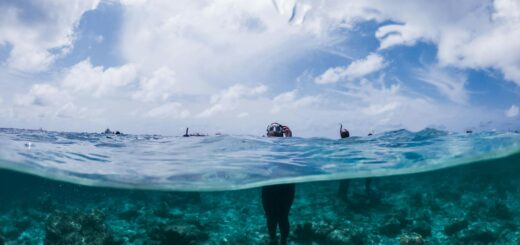
For a few short weeks each year, the sea off the northwest coast of Madagascar turns into one of the Indian Ocean’s great wildlife stages. The currents around Nosy Be push up nutrients, the plankton blooms, and into this rich, warm soup come the largest fish on the planet: whale sharks. They drift in to feed, mouths agape, sieving the water for the tiny life that sustains them — and for a brief season, anyone willing to slip quietly off the back of a boat can swim alongside them. It is calm, unhurried, and utterly humbling: a creature the length of a bus moving past you with no more menace than a passing cloud.
This is not a daredevil pursuit and it is not a dive. It is a snorkel — a surface encounter, on the gentlest terms, with an animal that has no interest in you whatsoever beyond the water you happen to be sharing. The whole experience is built around respect: keep your distance, never touch, let the shark set the pace. Nosy Be is the hub for it, and the season is short and weather-dependent, so it pays to plan. If you are still piecing together where the north of the island fits into your trip, start with our pillar guide to northern Madagascar, Nosy Be and Diego Suarez, then come back here to build the whale shark season around it.
Whale Sharks in Madagascar: What & Where
The whale shark (Rhincodon typus) is, by a comfortable margin, the largest fish in the sea. Adults commonly reach eight to twelve metres, and the biggest individuals are larger still — yet despite the size and the unfortunate word “shark” in the name, they are entirely harmless to people. They have no interest in hunting anything you could see with the naked eye. They are filter-feeders, cruising slowly with their vast mouths open to strain plankton, fish eggs, and the smallest drifting life out of the water. Watching one feed is less like meeting a predator and more like watching a whale graze: a great, patient, unbothered presence moving through the blue.
In Madagascar, the place to find them is the open water off Nosy Be, the island and archipelago that anchor the country’s northwest coast. The bathymetry and currents here, where the Mozambique Channel meets the warm shallows around the islands, conspire to produce the plankton blooms that whale sharks follow. When the conditions are right, the sharks congregate offshore to feed, and the same nutrient-rich water draws in a whole supporting cast of marine life. Nosy Be has long been Madagascar’s beach-and-sea capital — for the lay of its coastline and reefs, our complete guide to Nosy Be beaches sets the scene — but for a few months a year it becomes something rarer still: one of the most reliable places on Earth to swim with the world’s biggest fish.
It is worth being clear about what this is and is not. Whale sharks are not whales — they are sharks, and despite their bulk they are gentle, slow, and indifferent to swimmers. They are not residents you can see year-round; they are seasonal visitors that come and go with the plankton. And the encounter is not staged or fenced or fed: you go out into the open sea, the boat crew and spotters search for a feeding shark, and if one is found, a small group slips into the water to swim alongside it for as long as it tolerates company. Some days are extraordinary. Some days the sea keeps its secrets. That uncertainty is part of what makes a sighting feel earned.
When to Go: The Whale Shark Season
The whale shark season off Nosy Be is short, and getting your timing right is the single most important decision you will make. As a rule of thumb, the sharks are present in the months around the end of the year — roughly October to December — when the seasonal plankton blooms that they feed on are at their peak. Within that window, the experience is at its most reliable, with the highest chance of multiple sightings on a single trip. Come too early or too late and you risk arriving after the sharks have moved on.
The reason is entirely about food. Whale sharks are nomads that follow plankton across the oceans, and they appear off Nosy Be precisely because, for these few months, the water here is unusually rich. When the bloom fades, so does the reason for them to linger. This is why no operator can ever promise a sighting: the sharks are wild animals responding to natural cycles, not a fixed attraction with opening hours. The season is a probability, not a guarantee — but in the heart of it, the odds are very good indeed.
Weather matters too. The encounter happens out on open water, and rough seas or poor visibility can cut a trip short or stop it entirely. The northwest’s weather shifts through the year, and the whale shark window sits at the warmer, building end of it, so calm mornings are usually your friend and afternoons can pick up wind. Plan a few days on the coast rather than a single shot at it — that way a blown-out morning is an inconvenience, not a disaster. For how the season fits into the island’s broader climate calendar, see our guide to the best time to visit Madagascar, which lays out month by month what to expect across the regions.
One more planning note: because the season is narrow and increasingly well known, the best boats and the better Nosy Be accommodation fill up well ahead. If swimming with whale sharks is the centrepiece of your trip, treat the October–December window as a fixed point and build everything else around it, rather than hoping to slot it into a trip planned for other reasons.
What the Experience Is Like
A whale shark trip from Nosy Be follows a simple, calm rhythm. You head out by boat in the morning, when the sea is usually at its flattest, and the crew and spotters scan the surface for the tell-tale signs of a feeding shark — a dark shape just under the water, the tip of a tall dorsal fin, birds working a patch of plankton. There is a fair amount of patient cruising and watching; this is not a theme-park ride but a search across open water, and the anticipation is part of the pleasure. When a shark is found, the boat eases into position, the guide gives the briefing, and a small group slips quietly into the water.
And then, if you are lucky, it happens. A vast, spotted shape materialises out of the blue, moving with extraordinary slowness and grace, mouth open, utterly unbothered by the swimmers fanning out to one side. You finning gently to keep pace, careful to stay back and to the side rather than in front, and for a handful of breathtaking minutes you share the water with the largest fish in the world. It is profoundly quiet — just the sound of your own breathing through the snorkel and the soft hiss of water — and the scale of the animal rearranges your sense of proportion entirely. Most people surface grinning, slightly stunned, already wanting to do it again.
Crucially, this is a surface experience. You watch and swim from the top of the water, looking down, using a mask, snorkel and fins; strong swimmers and freedivers may duck down for a moment, but there is no scuba diving with these animals on a standard whale shark trip. The shark sets the pace and the depth, and you observe from above and alongside. That is by design — it keeps both the sharks and the swimmers calm, and it is central to how the encounter is run responsibly. For a deeper, blow-by-blow account of the day on the water — what to expect, how the spotting works, the etiquette in the moment — see our dedicated guide to swimming with whale sharks in Nosy Be.
Responsible Whale Shark Tourism
Swimming with whale sharks is a privilege, not a right, and the way it is done matters enormously — for the animals first, and for the future of the experience itself. Whale sharks are a protected, globally vulnerable species, and the encounters off Nosy Be work precisely because the better operators run them carefully. As a visitor, the most important thing you can do is choose a responsible operator and follow the rules in the water, every time.
The code of conduct
Responsible whale shark swimming follows a well-established set of rules, and a good guide will brief you on them before you ever get wet. The essentials are consistent the world over: keep a respectful distance from the animal — never crowd it or block its path; never touch, ride, or chase a shark; approach from the side rather than head-on, so you do not get in the way of its mouth or its route; do not use flash photography, which can disturb the animal; and keep the number of swimmers in the water at any one time small. Let the shark lead. If it wants to dive or move off, let it go — there will be other passes, and the encounter is always on the animal’s terms. These are not arbitrary restrictions; they are what keeps the sharks calm enough to keep coming back, year after year.
Why snorkel, not scuba
It is fair to ask why you cannot dive with an animal this spectacular. The answer is partly practical and partly protective. Whale sharks feed at and near the surface, so a snorkel keeps you exactly where the action is — there is no advantage to going deep. More importantly, a cluster of divers releasing streams of bubbles directly beneath a feeding shark is both more disruptive to the animal and harder to manage safely than a small group of snorkellers watching quietly from above. Keeping it to a surface encounter is gentler on the shark, simpler to control, and accessible to far more people, since it asks for no certification — just the ability to swim and use a mask and snorkel.
Choosing an ethical operator
The single biggest decision you make is who you go out with. A good operator limits group sizes, carries trained guides who enforce the code of conduct firmly, never chases or corners sharks, and treats a no-show day as part of the deal rather than a problem to be solved by hassling an animal. Be wary of any operator that promises guaranteed sightings, packs large numbers of swimmers around a single shark, or lets people touch or ride the animals — these are red flags, both ethically and for the quality of your own experience. The responsible operators are also, almost always, the ones who give you the best encounter, because calm sharks stay longer. To compare the available trips and read the conditions carefully before you commit, browse whale shark tours on GetYourGuide — and because the season is so short, the best-run trips book out early, so reserve well ahead of your dates.
Conservation
Whale sharks are slow-growing, late-maturing, and wide-ranging, which makes them especially vulnerable to human pressures across their migratory routes. Well-managed, low-impact tourism is one of the few forces that gives these animals tangible economic value alive rather than dead, and that helps protect both the sharks and the waters they feed in. By choosing a careful operator, following the code of conduct without exception, and keeping your own footprint light — reef-safe sunscreen, no single-use plastic over the side, no souvenirs taken from the sea — you become part of the reason the spectacle survives. The best encounter you can have is the one that leaves the shark exactly as undisturbed as you found it.
What Else You’ll See
The same plankton-rich water that draws the whale sharks turns the whole northwest into a marine wildlife corridor during the season, and a day out on the boat very often delivers far more than the headline act. The supporting cast is a genuine bonus, and on quieter shark days it can become the main event.
- Mobula rays — these graceful relatives of the manta often gather in the same productive water, sometimes in shoals that ripple and leap clear of the surface in spectacular displays. Encountering a group of mobulas mid-trip is one of the great unscripted joys of the season.
- Sea turtles — green and hawksbill turtles cruise the reefs and shallows around the Nosy Be archipelago, frequently spotted on the way to or from the open-water search, and a near-certainty on snorkelling stops at the protected islets.
- Dolphins — pods are commonly encountered in the channels and open water, riding the bow wave or arcing alongside the boat, and a dolphin escort on the run home is a fittingly joyful end to a day.
- Seabirds — flocks working a patch of bait are one of the spotters’ best clues to feeding activity below, and the birdlife over the water is rich and constant.
Add in the chance of game fish boiling at the surface and the ever-changing light over the Mozambique Channel, and even a sharkless day on the water rarely feels wasted. If marine wildlife is a priority for your wider trip, our overview of Madagascar whale watching and marine mammals places the whale shark season within the island’s full marine calendar.
Whale Sharks vs Humpback Whales in Madagascar
Madagascar offers not one but two world-class marine wildlife seasons, and travellers regularly confuse them — so it is worth being precise, because they happen in different places, at different times of year, and deliver completely different experiences. Picking the right one for your dates is essential.
The first is the whale shark season off Nosy Be, in the northwest, running roughly October to December. This is a snorkel-in-the-water encounter with the world’s largest fish — intimate, surface-based, and active: you are in the sea, swimming alongside a single great animal. The second is the humpback whale season off Île Sainte-Marie, on the east coast, running roughly July to September. That is a boat-based whale-watching experience: thousands of humpback whales migrate up the warm east coast to breed and calve, and visitors watch from boats as the whales breach, slap, and sing — a spectacle of breathtaking power, but observed from the deck rather than the water.
| Whale sharks | Humpback whales | |
|---|---|---|
| Where | Nosy Be (northwest) | Île Sainte-Marie (east) |
| When | Roughly Oct–Dec | Roughly Jul–Sep |
| The animal | World’s largest fish (a shark) | A great whale (a mammal) |
| The experience | Snorkel alongside, in the water | Watch from a boat, on deck |
Because the two seasons barely overlap, very few travellers manage both on a single trip unless they are spending a long time in the country and timing it carefully. If you have to choose, choose by the experience you want: get in the water with a giant fish at Nosy Be, or watch giant mammals from a boat at Sainte-Marie. We compare them head to head in our dedicated whale sharks vs humpback whales guide, and for the humpback side specifically, our Sainte-Marie whale watching guide covers that season in full. If you are weighing the two islands more broadly, our Nosy Be vs Île Sainte-Marie comparison looks beyond the wildlife at the whole character of each.
Where It Happens: Nosy Be & Its Waters
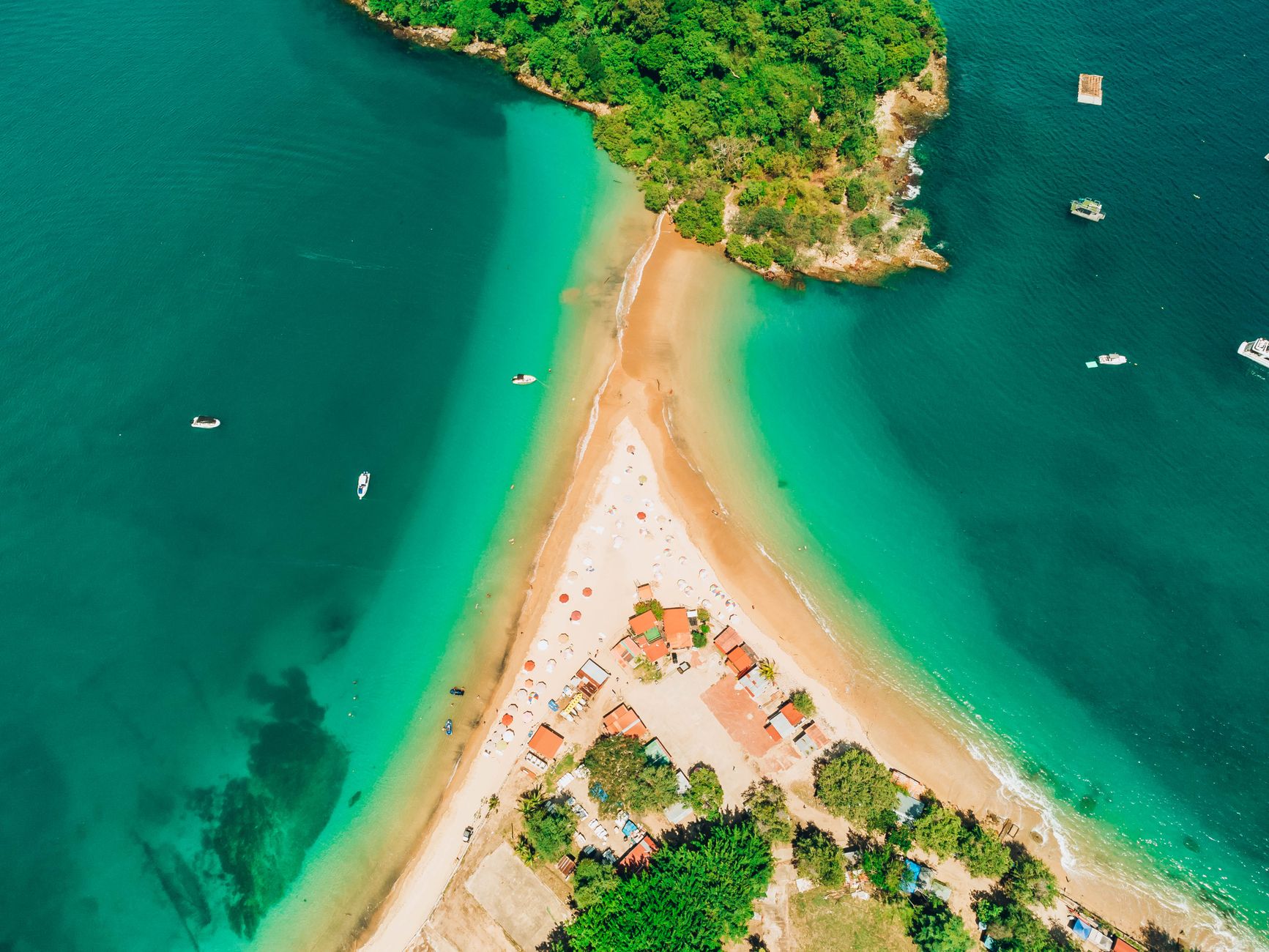
The whale shark encounter is centred on Nosy Be — “Big Island” in Malagasy — and the constellation of smaller islands scattered in the warm sea around it. Nosy Be itself is the largest and most developed island off Madagascar’s northwest coast, a green, volcanic, ylang-ylang-scented place of beaches, reefs, and easygoing resort life. It is the natural base for whale shark trips: the boats depart from here, the accommodation is here, and the open water where the sharks feed lies offshore within reach of a morning’s run.
Around Nosy Be lie the islets that make the archipelago one of the Indian Ocean’s loveliest cruising grounds, and the better whale shark trips often weave them into the day. Nosy Sakatia, the small “orchid island” close off Nosy Be’s west coast, is known for green turtles in its seagrass shallows and gentle snorkelling — a frequent stop on the way out or back. Nosy Tanikely, a protected marine reserve to the south, is one of the region’s best snorkelling sites, its clear water alive with reef fish and turtles. Between them and the open Mozambique Channel beyond, the waters off Nosy Be hold an extraordinary density of life in the season, which is exactly why the whale sharks come.
This matters for planning because it means a whale shark trip is rarely just a whale shark trip. A typical day combines the open-water search with a snorkel stop at one of the protected islets and time simply enjoying the archipelago — so even on a quiet shark day, you are out on some of the most beautiful water in the country. To understand Nosy Be beyond the boat — its beaches, its towns, its rhythm — our Nosy Be beaches guide is the natural companion to this one.
How to Get There & Around
Reaching the whale sharks means first reaching Nosy Be, and that means flying. There is no quick overland route from the capital to the far northwest, so the standard approach is an international flight into Antananarivo followed by a domestic flight to Nosy Be, which has its own airport receiving regular connections. Some seasons also see direct international charters to Nosy Be, but for most travellers the Tana hop is the reliable way in.
Once you are on Nosy Be, the island is compact and easy to move around, but it has no useful public transport for visitors, so you will want a vehicle or arranged transfers to get between your hotel, the boat departure point, and the island’s beaches and villages. The sensible approach is to have your airport transfer and island transport organised before you arrive, rather than negotiating at the kerb. Arrange your transfers and a car on Carla, and book ahead for the October–December window, when the island is busiest and reliable drivers are in demand.
Flight delayed or cancelled? Your international flight into Madagascar will likely connect through Paris, Nairobi, or another European or African hub. If a European-routed leg was delayed, cancelled, or overbooked, EU regulation EC 261 may entitle you to up to €600 per passenger. Check your claim free on AirAdvisor. (Note: this applies to the European inbound flight, not the domestic Antananarivo–Nosy Be hop.)
For the bigger picture on moving around the country — when to fly, when to drive, and how the regions connect — see our guide to how to get around Madagascar.
Where to Stay
Nosy Be has the widest and most comfortable range of accommodation anywhere off Madagascar’s coast, from simple beachside guesthouses to full resorts with dive centres and spas. For a whale shark trip, the priority is to base yourself within easy reach of where the boats depart and on a stretch of coast that suits your taste — the popular western beaches for resort comfort and sunsets, quieter corners for seclusion. Whatever your style, the season is the busy season, and the better-placed hotels fill early.
Because October to December is the whale shark window and a peak time on the island, accommodation gets snapped up well ahead — leaving it late means slimmer choice and higher prices. Check Nosy Be availability on Agoda as soon as your dates are firm, and lock in a base before the season fills. To dig into the coastline itself and decide which beach suits you, our complete guide to Nosy Be beaches breaks down each stretch of sand and what it offers.
What It Costs
A whale shark trip in Madagascar is, in the scheme of bucket-list wildlife encounters, surprisingly accessible — but the total cost depends on far more than the boat ticket itself. The big variables are getting to Nosy Be (the international flight plus the domestic hop), where and how comfortably you stay during a peak-season window, and how many days on the water you build in to improve your odds against the weather. The whale shark excursion itself is a relatively modest line item against those; the trip’s cost is shaped mostly by flights and accommodation in a high-demand season.
We keep figures relative rather than quoting prices that shift constantly, but the practical takeaway is this: budget for a peak-season trip, give yourself more than one shot at the water, and book the flights and hotel early when both are cheaper and more available. For a full breakdown of what to expect and how to budget the trip sensibly, see our dedicated Madagascar whale shark tour cost guide.
Tours & How to Book
You do not arrange a whale shark encounter yourself — you go out with a licensed operator who provides the boat, the spotters, the guides, and the gear, and who runs the trip to the code of conduct. The choice of operator is everything, both for the quality of your encounter and for the welfare of the animals, so book a well-reviewed, responsibly run trip rather than the cheapest option on the dock. Because the season is short and increasingly popular, the best trips sell out well ahead, so reserve before you travel rather than hoping for a space on arrival.
The simplest way to compare available whale shark excursions, read the inclusions and conditions, and reserve with confidence is to browse and book whale shark tours on GetYourGuide — its trips show clear reviews and free-cancellation options on many bookings, which is reassuring given the season’s weather uncertainty. For the full breakdown of trip types, what is included, multi-day options, and how to combine a whale shark excursion with the rest of a Nosy Be stay, see our Madagascar whale shark tour packages guide.
Who It Suits & What to Bring
The great appeal of the whale shark encounter is how accessible it is. Because it is a surface snorkel rather than a dive, you do not need any certification — just the ability to swim confidently in open water and to use a mask, snorkel, and fins. That makes it a genuine option for a wide range of travellers: confident swimmers of almost any age, families with water-comfortable older children, and the large number of would-be wildlife enthusiasts who are not scuba divers and never intend to be. If you are at ease floating face-down in the sea and keeping pace with a slow swimmer, you can do this.
It suits, above all, anyone who has dreamed of a close encounter with a truly enormous wild animal on its own terms. It is calm rather than adrenaline-fuelled, awe-inspiring rather than frightening, and it leaves almost everyone changed a little. It is less suited to non-swimmers, to anyone uneasy in deep open water, or to travellers who need guarantees — the sea does not provide those, and the right mindset is to treat a sighting as a gift rather than an entitlement.
As for what to bring, keep it simple. Most operators provide masks, snorkels, and fins, but bringing your own well-fitting mask is always worth it for comfort and a reliable seal. A rash guard or thin wetsuit top helps against both the sun and the cool of a long time in the water; reef-safe, high-factor sunscreen and a hat are essential for the long stretches of cruising and searching between swims. Bring water, something for seasickness if you are prone to it, and a dry bag for anything that must stay dry. A waterproof camera or housing is a joy to have but never let chasing a photograph compromise the code of conduct — the best souvenir is the memory.
Getting There and Travelling Well
Reaching the whale sharks means an international flight to Antananarivo and then a domestic hop to Nosy Be — and international routings almost always connect through a European or African hub, where connections can be tight and delays are not unheard of.
Flight delayed or cancelled? Flights to Madagascar often connect through Paris, Nairobi, or Addis Ababa. If your European-routed flight was delayed, cancelled, or overbooked, EU regulation EC 261 may entitle you to up to €600 per passenger. Check your claim free on AirAdvisor.
And whatever your route, do not travel uninsured. A whale shark trip means time on boats in open water, swimming offshore, and travelling far from major hospitals — and medical evacuation from Madagascar can cost between €20,000 and €100,000. A good policy is non-negotiable. SafetyWing Nomad Insurance is straightforward and affordable for most trips, with flexible cover that suits both short stays and longer journeys; make sure your plan covers in-water activities and check the detail if you intend to add any scuba diving elsewhere on your trip, since many standard policies treat diving separately. Buying cover before you leave home is always cheaper and simpler than scrambling for it on the road, and a single boat mishap or a missed connection more than pays for the policy.
Plan Your Whale Shark Trip with Carla
The whale shark season is short, weather-dependent, and entirely dependent on getting the timing and the operator right — exactly the kind of trip that runs smoothly when the logistics are handled by someone who lives in the country and knows the season. Rather than stitching together flights, transfers, a Nosy Be base, and the right boat blind, lean on a Madagascar-resident specialist. Arrange your transfers and car on Carla, or contact Carla to plan the whole Nosy Be whale shark trip — timed to the season, built around the right boat — as one seamless journey.
Frequently Asked Questions
Are whale sharks dangerous to swim with?
No. Despite being the largest fish in the world, whale sharks are gentle, slow-moving filter-feeders that eat plankton and tiny marine life. They have no interest in people and pose no threat to swimmers. The encounter is calm and safe, provided you follow the code of conduct — keep your distance, never touch the animal, and let it set the pace.
When is the best time to see whale sharks in Madagascar?
Roughly October to December, off Nosy Be on the northwest coast, when the seasonal plankton blooms the sharks feed on are at their peak. The season is short and weather-dependent, so plan a few days on the coast rather than a single attempt, and book your boat and accommodation well ahead, as the best fill up early.
Do I need to be a scuba diver to swim with whale sharks?
No. The whale shark encounter off Nosy Be is a snorkel — a surface experience — not a dive. You need to be a confident swimmer comfortable in open water and able to use a mask, snorkel, and fins, but no diving certification is required. That makes it accessible to a wide range of travellers, including families with water-confident older children.
Is seeing a whale shark guaranteed?
No. Whale sharks are wild animals that follow the plankton, and no responsible operator will ever promise a sighting. In the heart of the season the odds are very good, but they are never certain — which is why we recommend allowing several days on the coast to improve your chances against the weather and the sea. Be wary of any operator that guarantees a sighting.
What is the difference between whale sharks and the whales at Sainte-Marie?
They are two completely different seasons and experiences. Whale sharks are the world’s largest fish, seen by snorkelling off Nosy Be in the northwest roughly October to December. The whales at Île Sainte-Marie are humpback whales — mammals — watched from boats off the east coast roughly July to September. One puts you in the water with a giant fish; the other has you watching giant mammals from the deck.
🐋 Plan Your Whale Shark Trip — Ask Carla
The season is short — get your Nosy Be whale shark trip timed and booked right by a Madagascar-resident specialist. Reach out to Carla.
Plan Your Trip to Madagascar
- Read the full Madagascar Travel Guide
- Explore itineraries by style and duration
- Best Tours and Guided Experiences
Where to Stay