Madagascar Wine Tasting & Tours 2026: How to Visit Fianarantsoa’s Wineries
Affiliate disclosure: This article contains sponsored links to hotels, tour operators, insurance providers, and other travel services. We earn a small commission if you book through our links, at no extra cost to you.
At a Glance — Madagascar Wine Tours
Yes, Madagascar makes wine — and you can taste it. The vineyards cluster in the cool Betsileo highlands around Fianarantsoa, an easy half-day stop on the classic RN7 highlands route. Expect rustic cooperatives, hybrid grapes, pale vin gris and off-dry whites, and an experience that is far more about terroir, story and warm hospitality than about fine-wine polish. Manage your expectations and you will love it.
- Where: Fianarantsoa, Ambalavao, the Isandra valley and Maromby, in the southern central highlands
- Best time to visit: April–November (dry season); the grape harvest typically falls around the southern-hemisphere autumn (roughly March–April)
- How to do it: easiest as a guided stop on an RN7 tour — browse Madagascar wine-country and RN7 tours on GetYourGuide
- Bespoke route: have Carla build you a custom highlands wine itinerary
- Best base: check Fianarantsoa hotel availability on Agoda
- Insure the trip: Check SafetyWing’s plans
🎒 Madagascar Trip Essentials
A few inexpensive items make the biggest difference on the ground in Madagascar:
- Picaridin insect repellent — DEET-free protection against malaria mosquitoes. See on Amazon →
- Permethrin clothing spray — treat clothes; kills mosquitoes on contact for weeks. See on Amazon →
- Pop-up mosquito net — budget lodges rarely provide one; packs down tiny. See on Amazon →
- Water filter bottle — tap water isn’t safe to drink in Madagascar. See on Amazon →
- Universal travel adapter (USB-C) — Madagascar uses European-style plugs. See on Amazon →
- 8×42 binoculars — essential for spotting lemurs and chameleons in the canopy. See on Amazon →
As an Amazon Associate we earn from qualifying purchases.
Tell a sommelier that Madagascar produces wine and you will usually get a raised eyebrow. Tell them the vines grow on red-laterite hillsides at altitude, just south of the Tropic of Capricorn, and the eyebrow climbs higher. Yet it is true: the cool, mist-prone Betsileo highlands around Fianarantsoa have a small but genuine viticultural tradition, and visiting the wineries is one of the most charming, unexpected things you can fold into an RN7 highlands trip. This is the practical, technically-minded guide to how to actually do it — where to go, what you will taste, how to taste it like a pro, and how to book the visit without wasting a day of your itinerary.
A word of honesty up front, because it shapes everything: these are modest, rustic wines. Nobody is going to mistake a Fianarantsoa vin gris for a Sancerre. The pleasure here is the experience — the cellars, the cooperative spirit, the terroir story, the people who pour for you — not the points on a tasting sheet. Travel with that mindset and a highlands wine stop becomes a highlight rather than a disappointment. For the full background on how wine ended up here at all, read our Fianarantsoa wine country guide; this article is the hands-on companion focused on visiting and booking.
Why does any of this matter to a traveller plotting an RN7 trip? Because a wine stop is one of the few experiences in the southern highlands that combines landscape, agriculture, culture and a genuine sense of discovery in a single short window. You taste something almost no one back home has tried; you meet the families who make it; and you do it surrounded by the terraced rice paddies and granite hills that make the Betsileo country so photogenic. It is low-cost, high-charm, and it breaks up the long driving days beautifully. The trick is simply knowing how to slot it in — which is exactly what the rest of this guide is for. If you would rather skip straight to having it organised for you, tell Carla your dates and let her weave a wine morning into your route.
Where Madagascar’s Wineries Actually Are
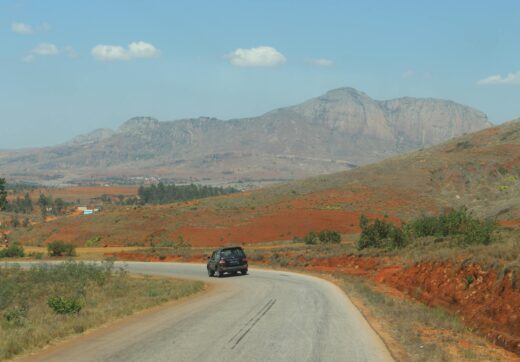
Madagascar’s wine country is compact and centred on the Haute Matsiatra region in the southern central highlands. The hub is Fianarantsoa — the Betsileo capital, sitting at roughly 1,200 metres of altitude, which is precisely why grapes can ripen here without cooking. The vineyards and cooperatives are scattered through the surrounding hills rather than concentrated in one tidy “wine road,” so a guide or driver who knows the back lanes makes an enormous difference.
The main clusters you will hear about:
- Around Fianarantsoa and the Isandra valley: the heartland, with the better-known producers and the most accessible cellars for a tasting.
- Maromby: associated with a long-standing monastic winemaking tradition — the kind of quiet, working cellar that rewards a visitor who arrives with curiosity rather than expectations.
- Ambalavao, to the south on the RN7: better known for its Antemoro paper and zebu market, but firmly within the highlands wine orbit and an easy add-on. For everything else worth doing in the area, see our things to do in Fianarantsoa guide.
Real labels you may encounter include Lazan’i Betsileo, Clos Malaza, Côtes de Fianar and Soavita. Availability, opening arrangements and which cellars receive visitors vary and are not always advertised — another reason a local fixer is worth far more than a guidebook map. The simplest way to guarantee a cellar is actually open and pouring when you arrive is to let Carla arrange the visit in advance.
The Oenological Profile — What You Will Actually Be Tasting
This is where the technically minded traveller gets rewarded, because Malagasy wine is genuinely unusual in the glass. A few things to understand before your first sip:
Hybrid grapes, not classic vinifera
The tropical-highland climate, with its humidity and disease pressure, favours hybrid grape varieties (crosses bred for resilience) over the classic Vitis vinifera cultivars you know from Europe. That single fact explains most of what you will taste. Hybrids tend to carry a distinctive aromatic signature — sometimes described as “foxy,” candied or faintly herbaceous — and they behave differently in the cellar. Don’t go looking for textbook Cabernet structure or flinty Chablis minerality; go looking for the character of the grape that can actually survive here.
Pale vin gris and off-dry styles dominate
The signature highlands style is vin gris — a very pale, barely-pink wine made by pressing red or dark-skinned grapes with minimal skin contact, so you get a whisper of colour and almost no tannin. Alongside it you will meet off-dry to semi-sweet whites and rosés, where a little residual sugar is left in the wine. This is a deliberate, sensible choice: a touch of sweetness balances the often-high acidity of highland-grown hybrid fruit and makes for an easy-drinking, approachable wine in a warm climate.
Acidity, residual sugar and oxidation
Three technical levers shape the local style:
- Acidity is usually the wine’s backbone here — grapes grown at altitude retain crisp acid, which is a genuine strength. It is what stops the off-dry styles from feeling cloying.
- Residual sugar is the deliberate counterweight to that acidity. The semi-sweet framing is a feature, not a flaw — treat these wines as you would a German Kabinett rather than a bone-dry Provençal rosé.
- Oxidative handling — older or more rustic cellars may produce wines with a faintly oxidative (nutty, slightly sherry-like) note rather than a bright, fruity reductive profile. Neither is “wrong”; recognising the difference is half the fun of tasting here.
For a structured comparison with a major Southern-Hemisphere producer, our Madagascar wine vs South Africa piece lays the two side by side and helps calibrate your expectations.
What a Tasting Is Really Like
Forget the polished cellar-door experience of Stellenbosch or the Barossa. A Malagasy tasting is usually informal, warm and a little improvised. You may be poured in a simple room or a working cellar, sometimes by the producer themselves, sometimes by a cooperative member. Glassware will be basic. There may not be a printed price list or a slick tasting flight. What there will be is generosity, pride and a story — and that, honestly, is the point.
Expect a tasting to be short and unhurried at the same time — there is rarely a fixed flight of five wines and a stopwatch. You will likely sample two or three styles: a vin gris, a white, perhaps a red or a sweeter cuvée, poured straight from bottle or sometimes from tank. Spitting buckets are not a given, so pace yourself, especially if you have a long RN7 drive ahead. Snacks may or may not appear; bring water. And do learn a few words — a warm “misaotra” (thank you) or a little French goes a remarkably long way and often unlocks the producer’s best stories about the vines, the harvest and the cooperative.
Because cellars are spread out and visiting hours are loose, the experience is dramatically better with someone smoothing the path. Guided wine-country visits can be booked through GetYourGuide’s Madagascar tours, which bundle the logistics, the introductions and often a Betsileo cultural element into a single half-day. For something tailored entirely to your tastes — specific cellars, a harvest-season visit, a private cellar plus a highlands lunch — contact Carla to design a bespoke wine route. Booking ahead is not just convenient; in a region where cellars do not publish hours, it is often the difference between a memorable tasting and a locked gate.
How to Taste Like a Pro
You don’t need a WSET diploma to taste thoughtfully, and doing so will visibly delight your host. Run through the classic three-step sequence:
Look
Tilt the glass against a white surface. For the vin gris, note just how pale it is — a sign of brief skin contact. Watch for clarity and, in older rustic bottlings, any slight browning at the rim that hints at oxidative ageing.
Smell
Swirl gently and nose it. Hybrid grapes often give that telltale candied, slightly “foxy” or tropical-floral aromatic. Ask yourself: is this bright and fruity (reductive) or nutty and savoury (oxidative)? Both tell you something about how the cellar works.
Taste
Take a small sip and let it coat your palate. Now read the two big levers: acidity (does it make your mouth water? that crispness is the highland signature) and residual sugar (is there a gentle sweetness balancing the acid?). Tannin will be minimal in the gris and whites. Note the finish — short and simple is normal and entirely honest for the category.
One golden rule: taste these wines for what they are, not for what a €40 European bottle would be. Judged on their own modest, characterful terms, they are a delight.
Combining a Wine Stop With an RN7 Highlands Itinerary
The single best way to experience Malagasy wine is not as a dedicated wine pilgrimage but as a flavourful detour on the RN7, the legendary highway threading Antananarivo to the south. Fianarantsoa sits squarely on this route, so a wine-and-cellar morning slots in naturally between the rice-terrace landscapes, the Betsileo villages and onward stops like Ranomafana, Ambalavao and Isalo. Our southern Madagascar RN7 guide maps the whole corridor and shows exactly where a wine stop fits.
For the wineries themselves — the producers, the cellars and the practical visiting notes — our dedicated Betsileo highlands wineries guide goes deeper than we can here.
Because the cellars are scattered and rural, you will want wheels and, ideally, local know-how. That brings us to the perennial Madagascar question.
Self-Drive vs Guided vs Car-and-Driver
There are three ways to reach the highlands wineries, and for most travellers one of them is clearly best.
Self-drive
Possible, but rarely the right call. Madagascar’s roads are demanding, signage to rural cellars is minimal, and arranging a tasting on the spot — in Malagasy or French — is hard without a contact. Self-drive suits confident, experienced overland travellers only.
Guided tour
The easiest entry point. A guided wine-country excursion handles the cellar introductions, the language, the route and the timing, and usually wraps in some Betsileo culture. This is the lowest-friction option for most visitors — browse and reserve highlands and RN7 tours on GetYourGuide before peak season fills the best local guides.
Car and driver — the sweet spot
For the RN7 in general, and wine country in particular, a car with a local driver is the option most independent travellers end up loving. You keep the freedom of your own vehicle and schedule, but your driver knows the lanes, makes the introductions and removes the stress of Malagasy roads. Arrange a car and driver through Carla, or contact Carla directly to combine a driver with a pre-arranged cellar visit so a tasting is guaranteed when you arrive.
Sample Day Plans
Half-day wine taster (on an RN7 trip)
Morning departure from your Fianarantsoa hotel; one or two cellars in the Isandra valley with a guided tasting; a quick highlands lunch; back on the RN7 by early afternoon. Ideal if wine is a curiosity rather than the main event.
Full-day highlands wine and culture
A more relaxed itinerary pairing two or three cellars (Fianarantsoa, Isandra, perhaps the Maromby tradition) with a Betsileo village walk or the old town of Fianarantsoa. This is the day to have a car and driver on hand so you can linger without watching the clock.
Two-day deep dive with an overnight
Wine and Fianarantsoa old town on day one; Ambalavao, Antemoro paper and a final cellar on day two before continuing south. Stay central — Fianarantsoa hotels book up fast in peak season, so check availability on Agoda early. For a fully personalised version of any of these, ask Carla to plan it around your dates.
Getting There and Around
Fianarantsoa is reached overland on the RN7 from Antananarivo — a long, scenic highlands drive, not a quick hop. Most visitors arrive as part of a broader southern road trip rather than flying in. Because the wineries are rural and dispersed, independent transport is essential: compare car-and-driver options through Carla and book at least a week ahead in peak season.
Flight delayed or cancelled on the way to Madagascar? International flights often connect through Paris or Nairobi. If your connection was delayed, EU regulation EC 261 may entitle you to up to EUR 600.
Check your claim free on AirAdvisor.
Seasonality — When to Go
The broad rule for the highlands is the dry season, roughly April to November, when the RN7 is at its best and cellar visits are most comfortable. The grape harvest typically falls around the southern-hemisphere autumn (broadly March–April, varying year to year and by site) — a vivid time to visit if cellars are receiving guests, though it can also be their busiest. Because timing is approximate and varies, confirm before you build a trip around it: Carla can check current cellar arrangements for your travel window.
Etiquette and Buying Bottles
A few simple courtesies go a long way. Arrive with curiosity and patience; cellars are working operations, not visitor centres. A little French (or a guide who speaks Malagasy) smooths everything. It is gracious to buy a bottle or two if you have enjoyed the tasting — it directly supports the cooperative and the families behind it, and these wines are inexpensive. Just remember that rustic bottlings travel less well than industrial wine, so drink local purchases reasonably soon rather than cellaring them for years, and check your home country’s alcohol import allowance before stocking up.
If you do want to bring a bottle home, choose one of the more stable styles — a fresher white or a vin gris — and protect it from heat in your luggage; the back of a 4WD on a hot RN7 afternoon is no friend to wine. Tipping is not expected in the formal sense, but rounding up, buying a bottle, or simply being a gracious, engaged guest is the real currency here. And resist the urge to compare out loud to whatever you drink at home: praise what is in the glass on its own terms, and you will be rewarded with more pours and more stories. The whole encounter is small-scale and personal in a way that the big cellar doors of the wine world have long since lost — lean into that.
Where to Stay
Fianarantsoa is the obvious base for any wine itinerary, with the widest range of accommodation in the region and the best central position for cellar day-trips. Check Fianarantsoa hotel availability on Agoda — the town fills quickly during the dry-season RN7 peak, so booking ahead is wise.
Don’t Forget Travel Insurance
Madagascar is a remote destination and the highlands are far from major hospitals. A medical evacuation can cost between $30,000 and $80,000 — reason enough to never travel uninsured. For most travellers, SafetyWing’s Nomad Insurance, from about , is the simple, budget-friendly choice and covers long, multi-stop trips on a flexible monthly basis. Check SafetyWing’s plans before you set off.
Frequently Asked Questions
Is Madagascar wine actually any good?
It is genuinely interesting rather than world-class. These are modest, rustic wines — pale vin gris and off-dry whites and rosés from hybrid grapes — with crisp highland acidity and real character. Taste them for the experience and the terroir story, not as a rival to fine European bottlings, and you will enjoy them.
How do I actually visit the wineries?
The cellars cluster around Fianarantsoa, Isandra and Maromby and are rural and dispersed, so the easiest way is a guided wine-country tour or a car and driver who knows the lanes. You can browse Madagascar wine and RN7 tours on GetYourGuide, or have Carla pre-arrange the visits so a cellar is open when you arrive.
When is the best time to go?
The dry season, roughly April to November, is best for the RN7 and for comfortable cellar visits. The grape harvest broadly falls around the southern-hemisphere autumn (around March–April), which can be a vivid time to visit, though timing varies year to year — confirm in advance.
Can I do it as a day trip, or do I need longer?
A half-day taster fits neatly into an RN7 itinerary if wine is just a curiosity. If you want to see several cellars and add Betsileo culture, give it a full day with a car and driver, or two days with an overnight in Fianarantsoa.
Should I self-drive?
Usually no. Madagascar’s roads are demanding and rural cellars are hard to find and arrange on the spot. A car with a local driver gives you freedom without the stress — arrange one through Carla — and is the option most independent travellers prefer.
Ready to taste Madagascar’s most unexpected terroir?
Don’t leave a highlands wine stop to chance — cellars keep loose hours, sit down rural lanes, and are far easier to reach with someone who knows the way. Let Carla, our trusted local travel planner, build you a bespoke Fianarantsoa wine-and-RN7 route with cellar visits arranged in advance, a car and driver, and the perfect highlands base.
Contact Carla to plan your Madagascar wine itinerary →
Prefer to book the logistics yourself? Arrange a car and driver through Carla, reserve a guided wine-country tour on GetYourGuide, and Check SafetyWing’s plans before you go.
Plan Your Trip to Madagascar
- Read the full Madagascar Travel Guide
- Explore itineraries by style and duration
- Explore the full destination guide
Where to Stay